LOUISIANA FENCE PLANNING
“`
Underground Utilities Before Fence Installation in Louisiana
Before a fence post goes into the ground, homeowners should know what may already be buried beneath the proposed fence line. Utility markings, private service lines, drainage systems, septic components and servitudes can all affect where and how a fence should be installed.
“`
Quick Answer
Before fence installation in Louisiana, submit a locate request through Louisiana 811 at least two full business days before digging. However, remember that 811 may not identify private lines such as irrigation pipes, pool equipment lines, landscape lighting, septic connections or utilities located beyond the meter. A survey, property records and a careful site inspection may also be needed.
Underground utilities before fence installation deserve just as much attention as the fence material, gate location and property line. A fence may look simple above the ground, but every post requires excavation. Consequently, a poorly placed post hole can damage electrical service, internet cables, water pipes, irrigation systems or other buried components.
This concern is especially important across Ponchatoula, Hammond, Covington, Mandeville, Madisonville, Slidell, Folsom and the surrounding Northshore. Many Louisiana properties have generations of additions, repaired utilities, pool equipment, drainage improvements and landscaping systems that may not appear on a recent utility map.
What This Homeowner Resource Covers
Calling Louisiana 811
Private Utility Lines
Easements and Servitudes
DIY Planning Checklist
Frequently Asked Questions
Call Louisiana 811 Before Fence Installation
Louisiana 811 provides a free notification service for people planning to disturb the soil. After a locate request is submitted, participating utility operators receive notice and mark the approximate locations of their underground facilities.
Louisiana 811 instructs homeowners and contractors to submit the request at least two full business days before excavation begins. Weekends and holidays do not count toward that waiting period. Therefore, a fence project planned for Monday should not wait until the preceding Friday afternoon for utility coordination.
1️⃣
Plan the Fence Line
Identify the area where posts, gates and corner supports may be installed.
2️⃣
Submit a Locate Request
Call 811 or use Louisiana 811’s online homeowner request system.
3️⃣
Wait for Responses
Do not begin digging until the required waiting period and utility responses are complete.
4️⃣
Protect the Markings
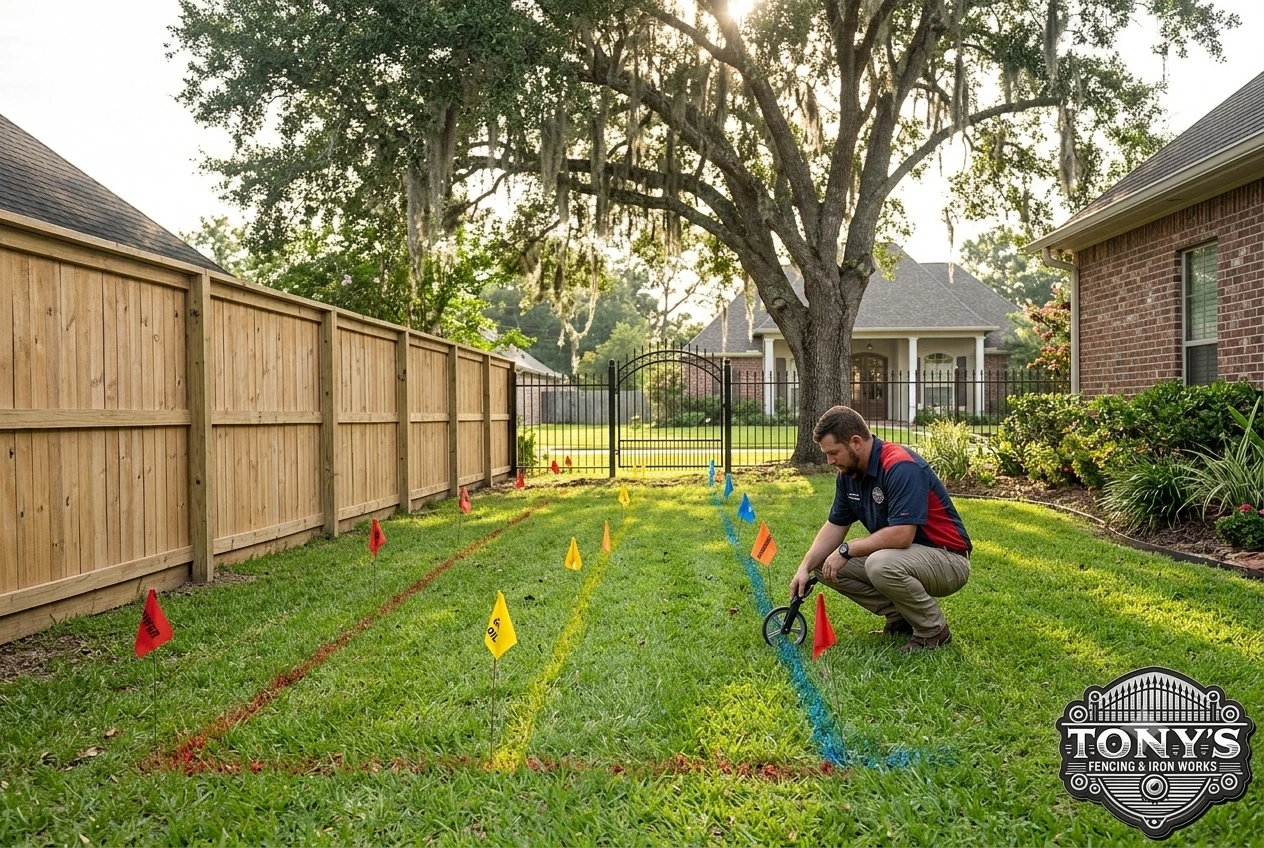
Keep flags and paint visible while the fence project remains active.
Keep the locate-request number after filing. It documents the request and may be needed if a question arises. In addition, utility markings have a limited validity period. If the project is delayed, moved or expanded, an updated request may be necessary.
Homeowners can review the current process through the official
Louisiana 811 homeowner information center
Important: A Clear Area Does Not Always Mean Nothing Is Buried There
Public utility markings generally identify facilities owned by participating utility operators. They may stop at the meter, transformer or service connection. Homeowner-installed and privately owned lines may remain unmarked.
Which Private Lines May Not Be Marked?
Private utility lines create one of the most common misunderstandings during fence planning. A homeowner may see completed utility markings and assume the entire yard is clear. Nevertheless, several important systems may belong to the property owner rather than a utility provider.
Common Private Systems to Identify
Start by reviewing old invoices, construction photographs, surveys and property records. Next, walk the yard and look for visible clues. Valve boxes, cleanouts, meters, conduit, pool equipment, outdoor outlets and irrigation controls can suggest where private lines may travel.
When the route remains uncertain, a private utility locator, electrician, plumber, septic professional or pool contractor may be needed. Spending time locating a private line is usually far less disruptive than repairing a broken pipe or electrical cable after a post hole is dug.
What Do the Utility Marking Colors Mean?
Utility locators use nationally recognized colors to identify different types of underground facilities. Although homeowners should not rely on color alone to make excavation decisions, understanding the markings makes fence planning easier.
How Close Can a Fence Post Be to a Marked Utility?
A utility mark represents an approximate location rather than the exact outer edge of a buried facility. Louisiana 811 describes a tolerance zone that includes the width of the marked facility plus at least 18 inches on each horizontal side.
Excavation inside that area requires extra care and may need non-powered hand tools or another non-invasive method until the line is exposed. Accordingly, shifting a fence post, changing panel spacing or adjusting a gate opening may be the safest solution.
Corner posts, terminal posts and gate posts often require larger or deeper footings than ordinary line posts. Those locations deserve additional review because they may need more excavation and concrete.
Utility Easements and Servitudes Can Affect Fence Placement
Avoiding a pipe or cable does not automatically mean the fence location is acceptable. The proposed fence may also cross a utility easement, drainage servitude, road right-of-way or other restricted area.
An easement or servitude may allow a utility company, parish department or drainage authority to enter part of the property for inspection, maintenance or repair. A fence installed across that area could limit access. In some cases, workers may have the authority to remove part of the fence to reach the facility.
Before Approving the Fence Layout
Review the property survey, subdivision plat, title documents and applicable HOA rules. Local permit or planning offices can also explain whether a proposed fence conflicts with a public servitude, setback, drainage feature or right-of-way.
Requirements can vary between unincorporated St. Tammany Parish, Tangipahoa Parish and incorporated cities such as Covington, Mandeville, Hammond and Ponchatoula. Therefore, homeowners should verify rules for the exact property rather than relying on what was permitted in a neighboring community.
St. Tammany Parish provides current permitting information through its
Permits and Inspections Department
Tangipahoa Parish also maintains an official
Permit Office resource
Underground Utilities and Automatic Gate Installation
Automatic driveway gates add another layer of underground planning. In addition to the gate posts, the project may involve electrical service, control wiring, vehicle-detection loops, keypad wiring, safety devices or communication lines.
The gate must also have enough room to swing or slide without blocking vehicles, drainage or utility access. Furthermore, a heavy gate places greater force on its posts. Those supports usually require careful footing placement and stable soil.
Learn more about
custom iron and automatic gate installation in Louisiana
before choosing the final gate location.
DIY Fence Planning Tips Before Anyone Digs
Homeowners can complete several useful planning steps before the fence contractor arrives. These tips do not replace professional locating, surveying or code review. However, they can reduce surprises and make the estimate more productive.
Walk the Entire Fence Line
Look for meters, valves, irrigation boxes, septic covers, drains, cleanouts, low areas and visible conduit.
Find the Property Survey
A survey can reveal property boundaries, servitudes and other recorded restrictions.
Mark Proposed Gates
Use temporary stakes to test vehicle access, lawn-equipment clearance and daily walking routes.
Check Previous Improvements
Ask prior owners or review old photographs for pool, irrigation, drainage and electrical additions.
Photograph Utility Markings
Take dated photographs before construction in case flags move or paint becomes difficult to see.
Keep the Yard Clear
Move furniture, toys, trailers and loose landscaping materials away from the work area.
DIY Tip: Use White Flags for the Proposed Fence Area
Before requesting a locate, use white paint, stakes or flags to show where excavation is proposed. Clear markings help utility locators understand the work area. Do not use colors reserved for utility identification.
Common Mistakes to Avoid
- Assuming a previous fence proves the entire line is safe.
- Moving utility flags because they interfere with mowing or landscaping.
- Believing hand digging makes a utility request unnecessary.
- Forgetting about private irrigation, pool or landscape-lighting lines.
- Installing directly on an uncertain property boundary.
- Placing permanent posts inside a drainage or utility servitude.
- Changing the fence layout after the locate request without updating it.
- Starting work after the markings or ticket have expired.
What Should You Do If a Utility Line Conflicts With the Fence?
A utility conflict does not always cancel the fence project. Often, the layout can be adjusted before construction begins.
For example, a post may move several inches while panel spacing is redistributed. A gate can sometimes shift to another part of the yard. In other cases, the fence style may change near a drainage feature or utility area to preserve visibility and access.
Nevertheless, never move or alter a utility line without authorization from the appropriate owner or qualified professional. Fence planning should work around essential infrastructure rather than creating a future emergency.
Explore Tony’s Fence Services
Frequently Asked Questions About Underground Utilities and Fences
Do I need to call 811 before installing a fence in Louisiana?
Yes. Fence-post excavation can damage underground utilities. Louisiana law requires notification before excavation, and Louisiana 811 provides the locate-request service free of charge.
How far in advance should I contact Louisiana 811?
Submit the request at least two full business days before digging. Weekends and recognized holidays do not count toward the waiting period.
Does Louisiana 811 mark every line in my yard?
Not necessarily. Participating utility operators mark the facilities they own. Private irrigation, pool, septic, landscape-lighting and customer-owned utility lines may require a private locator or another qualified professional.
Can a fence be built over a utility easement?
Sometimes restrictions or access conditions apply. Review the survey and recorded documents, then verify the proposed layout with the applicable utility provider, parish, municipality or HOA.
Will 811 mark my septic tank and field lines?
Usually not when the septic system is privately owned. Contact a septic professional or review installation records before placing posts near the system.
What happens if the fence line crosses a marked utility?
Pause the project and review the layout. A contractor may be able to move a post, adjust panel spacing or relocate a gate while maintaining the fence’s strength and appearance.
Can I dig carefully without calling 811?
No. Hand digging can still damage shallow cables or pipes. Contacting Louisiana 811 is an essential first step before any planned excavation.
Does an old fence show where the property line is?
No. An existing fence may sit inside, outside or across the legal boundary. Use a current survey when property-line accuracy matters.
Should utility markings be removed after the project?
Leave markings undisturbed while excavation remains active. Once work is complete and the markings are no longer required, temporary flags can generally be removed from the property.
Fence Planning Across the Louisiana Northshore
“`
Tony’s Fencing & Iron Works plans and installs fences, gates and custom ironwork throughout Ponchatoula, Hammond, Covington, Mandeville, Madisonville, Folsom, Franklinton, Abita Springs, Slidell and surrounding Southeast Louisiana communities.
Local soil, drainage, servitudes, property layouts and underground improvements can differ from one neighborhood to the next. That is why a careful site review matters before the first post hole is opened.
“`
Plan First. Dig Safely. Build It Right.
“`
Planning a New Fence or Gate?
Tony brings more than 30 years of hands-on fencing and ironwork experience to properties across the Northshore. Call for a free estimate and practical advice about your fence layout, gate placement and material options.
This information is educational and does not replace a property survey, utility locate, professional inspection, legal advice or instructions from local authorities and utility operators. Requirements may vary by property and jurisdiction.