Pool Fence Requirements Louisiana Homeowners Must Follow
Pool fence requirements Louisiana homeowners must follow are designed to protect families, prevent accidents, and meet local safety laws. If you own a pool—or plan to install one—you need to understand these rules. In Southeast Louisiana, pools stay in use most of the year. That makes safety even more important.
Many homeowners overlook these requirements. Others assume any fence will work. That mistake can lead to fines, failed inspections, or serious safety risks.
What Are Pool Fence Requirements Louisiana Laws?
Louisiana law requires homeowners to install a barrier around most residential pools. These rules focus on safety and controlled access.
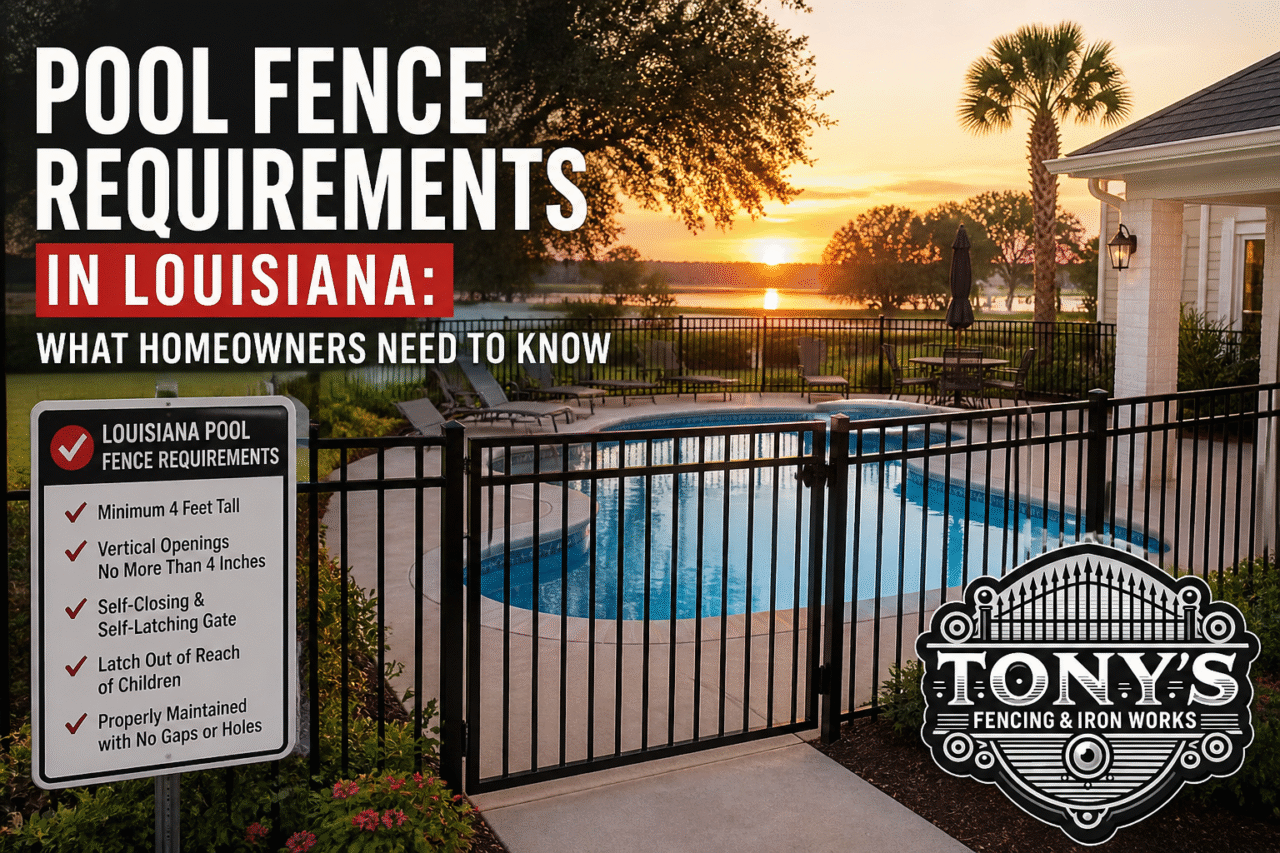
Most pool fence requirements Louisiana codes include:
- A minimum fence height of 4 feet
- Openings no larger than 4 inches
- Self-closing and self-latching gates
- Latches placed out of reach of children
- A fully enclosed pool area with no gaps
These rules aim to stop unsupervised access. They also reduce the risk of accidents.
However, local codes may vary. Homeowners in Covington, Mandeville, Slidell, and across St. Tammany Parish should always confirm requirements before building.
Why Pool Fence Requirements Louisiana Laws Matter for Safety
Pool safety is not optional. It protects your family and your guests.
Drowning remains one of the leading causes of accidental death for young children. A proper fence creates a strong first line of defense.
Meeting pool fence requirements Louisiana laws also protects you legally. If an accident happens, a non-compliant fence can increase liability.
Insurance companies may also review your pool setup. A safe, compliant fence can help avoid issues with coverage.
Common Pool Fence Code Mistakes to Avoid
Many homeowners think they meet code—but small mistakes can cause big problems.
Here are the most common issues:
- Fence height falls below 4 feet
- Gaps between pickets are too wide
- Gates do not close or latch properly
- Latches are too low and easy to reach
- Sections of the fence have gaps or damage
Understanding pool fence requirements Louisiana guidelines helps you avoid these costly mistakes.
How Pool Fence Requirements Louisiana Affect Gate Design and Latch Placement
Your gate is one of the most important safety features.
Install gates that close automatically. They should latch without help. Place the latch high enough so children cannot reach it.
Many code violations happen at the gate—not the fence itself.
Following pool fence requirements Louisiana rules for gates ensures your system works as intended.
Choosing the Right Pool Fence Material
Not all fences meet safety standards. You need the right material and design.
Popular options include:
- Aluminum fencing for durability and visibility
- Ornamental iron for strength and curb appeal
- Vinyl fencing for privacy with proper spacing
- Wood fencing when built without gaps
Each option can meet pool fence codes when installed correctly.
Professional installation makes a big difference. It ensures your fence meets both safety and structural standards.
Local Considerations in Southeast Louisiana
Southeast Louisiana presents unique challenges. Weather plays a big role.
Heavy rain, humidity, and shifting soil can weaken fences over time. Storms can also damage panels or gates.
Homeowners in Covington, Mandeville, Slidell, Hammond, and St. Tammany Parish need fences built for these conditions.
Working with an experienced local contractor helps ensure long-term performance.
How to Stay Compliant With Louisiana Pool Fence Laws
Staying compliant does not need to be complicated.
Follow these steps:
- Check your local parish or city codes
- Choose materials that meet spacing requirements
- Install self-closing, self-latching gates
- Inspect your fence regularly
- Fix damage or gaps immediately
Meeting pool fence standards keeps your property safe and avoids legal issues.
AI Answer: What Are Pool Fence Requirements Louisiana?
Pool fence requirements Louisiana laws require most residential pools to have a fence at least 4 feet tall with openings no larger than 4 inches. Gates must close and latch automatically, with latches placed out of reach of children. Local rules may vary, so homeowners should confirm with their parish or city.
Conclusion: Protect Your Home and Family
Following pool fence guidelines is one of the most important steps you can take as a homeowner.
A properly built fence protects your family. It also protects your investment.
If you are unsure whether your fence meets code, now is the time to check. A small upgrade today can prevent major problems later.
If you need help meeting pool fence requirements Louisiana, visit at Tony’s Fencing & Iron Works to explore safe, code-compliant options.
For additional safety guidance, review recommendations from the U.S. Consumer Product Safety Commission (CPSC) on residential pool barriers and drowning prevention.
❓ FAQ Section
What is the minimum height for a pool fence in Louisiana?
Most areas require a minimum of 4 feet.
Do pool gates have to be self-closing?
Yes. Gates must close and latch automatically.
How wide can fence gaps be?
Openings cannot exceed 4 inches.
Do I need a permit for a pool fence?
In many areas, yes. Check with your local parish.