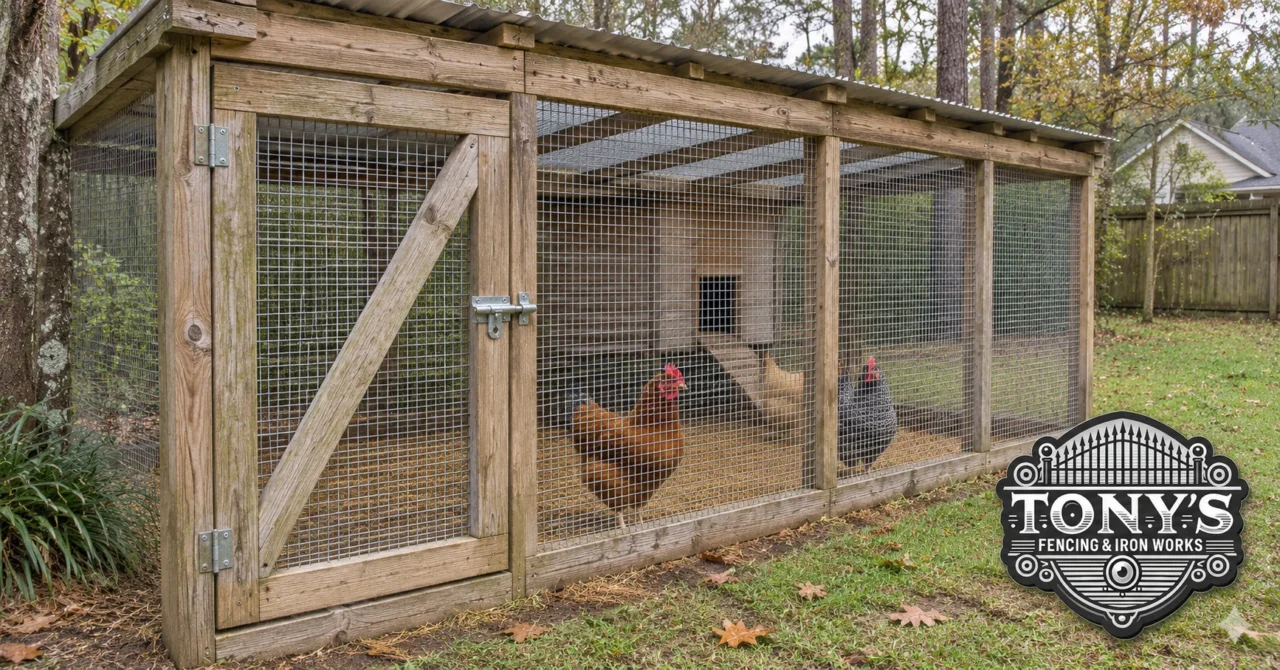
🐔 Building a Safer Backyard Chicken Run on the Louisiana Northshore
If you’re building a chicken fence in Louisiana, start with the spot where your flock spends time when you’re away. That’s where a loose latch, a gap under the gate, or the wrong wire can cause the most trouble.
From Ponchatoula and Hammond to Covington and Mandeville, Northshore homeowners also have to plan for wet ground. Before you buy a roll of mesh, decide how you’ll secure the sides, the top, and the ground around the run.
💡 What’s the best wire for a backyard chicken run?
Use galvanized welded hardware cloth with small openings for a predator-resistant run. Half-inch mesh is a practical starting point for many backyard setups. Pair it with a sturdy frame, a secure latch, an overhead cover, and protection where the wire meets the ground.
🐓 Chicken wire vs. hardware cloth
Chicken wire is easy to shape around a small area. It works well for keeping birds out of a garden while you’re nearby. However, a predator may bend lightweight wire or reach through a wide opening. Hardware cloth has welded joints that hold their shape better when the mesh fits tightly against a sound frame.
| What to compare | Chicken wire | Hardware cloth |
|---|---|---|
| Construction | Twisted wire mesh | Welded wire mesh |
| Best use | Basic chicken containment | Run walls, vents, and small openings |
| Predator resistance | Limited | Better with a strong frame and secure edges |
When you shop, compare the size of the openings and the thickness of the wire. Two rolls with the same mesh size can feel quite different. Also check that the mesh and fasteners can handle outdoor exposure. Pay extra attention to joints and cut edges when you inspect for rust later.
🦝 Close the gaps that predators use
Start at ground level. A dog can dig beneath a run, while a raccoon can climb it or reach through a wide opening. Then look up. Hawks can enter an open run from above, and climbing animals can take advantage of gaps where the cover meets the walls.
For digging animals, consider a buried barrier or an outward-facing wire apron. An apron is a strip of mesh that connects to the bottom of the run and extends flat along the ground outside it. Secure the edges so the mesh stays in place, and check for exposed corners after rain.
For more ways to protect the sides, roof, and floor of a run, see Poultry Extension’s predator management guidance.
Before digging for posts or a buried barrier, submit a locate request with Louisiana 811. Check separately for private lines, such as wiring to a shed or irrigation you installed.
🚪 Check the gate before adding more mesh
Close the run gate and look at the bottom corners. If you see a wider gap on the latch side, the gate may be sagging. First, check whether the hinges are loose. Then test the latch from outside. It should close firmly and resist lifting or pushing from the outside.
If you’re also planning a larger yard or farm gate, measure the widest mower, cart, or piece of equipment you’ll take through it. Leave room to maneuver, especially if the gate opens onto a slope or narrow lane.
🌧️ Plan your chicken fence in Louisiana around rain
Walk the yard after a steady rain before choosing a spot for the run. Look for puddles near the gate, runoff from the coop roof, and soft soil around posts. Over time, a post that shifts can pull the gate out of line and leave a gap an animal can use.
During a November yard cleanup, rake back wet leaves along the fence and check for loose edges. Then shut the birds in the coop before dark. With shorter days, it helps to do that check earlier in your evening routine.
🏡 Give the yard fence and the run different jobs
A perimeter fence can define the area where chickens roam while you’re outside. A covered run attached to the coop gives them a more sheltered area when you’re away. For larger Northshore properties, plan the run around your daily chores and lay out the perimeter fence with mowing and equipment access in mind.
See Tony’s Farm Fencing Projects →
🔨 Weekend DIY chicken run checklist
- Check the frame first. Gently push each post and rail. Fix loose or rotten framing before attaching new wire.
- Look for light around the gate. Close it during daylight and inspect the hinge side, latch side, and bottom corners for openings.
- Fasten the mesh edges. Use exterior-rated screws and wide washers on a sound wood frame. Secure the perimeter and seams so the mesh can’t peel back.
- Cover sharp cuts. Wear gloves and eye protection when cutting the wire. Tuck cut ends behind a wood batten where birds and hands can’t catch on them.
- Recheck after rain. Look for washed-out soil, raised apron edges, and new gaps under the gate.
📖 Related Reading
❓ Chicken fencing FAQs
Is chicken wire strong enough to keep raccoons out?
No. Raccoons may reach through wide openings or pull at weak wire. Secure small-opening hardware cloth to a sturdy frame and use a latch that resists lifting.
Is half-inch hardware cloth good for a chicken run?
Yes. Half-inch galvanized welded mesh is a practical choice for many backyard runs. Check the wire thickness and welds, then secure the edges and seams.
How tall should a backyard chicken fence be?
For an open yard fence, height depends partly on how well your birds fly. For a secure run, use a cover to protect the flock from overhead. If you plan to walk inside, leave enough headroom for feeding and cleaning.
Can I put hardware cloth over existing chicken wire?
Yes, if the frame is sound. Attach the new mesh directly to the frame so it holds even if the older wire bends or pulls away.
How do I stop predators from digging under a chicken run?
Use a buried barrier or attach an outward-facing wire apron at the base of the run. Keep the mesh tight to the frame and inspect it after heavy rain.
Can I keep backyard chickens in Covington or Mandeville?
Check with the city or parish office that covers your address before building. Ask about poultry, enclosure placement, and setbacks. Also check any HOA rules that apply to your property.
Planning a Farm Fence or Custom Gate?
Tell Tony how you use your yard, where the ground stays wet, and what needs to fit through the gate. Tony’s Fencing & Iron Works can help you plan fencing and gates that suit your property.
Serving Ponchatoula, Hammond, Covington, Mandeville, Madisonville, Slidell, and nearby communities.