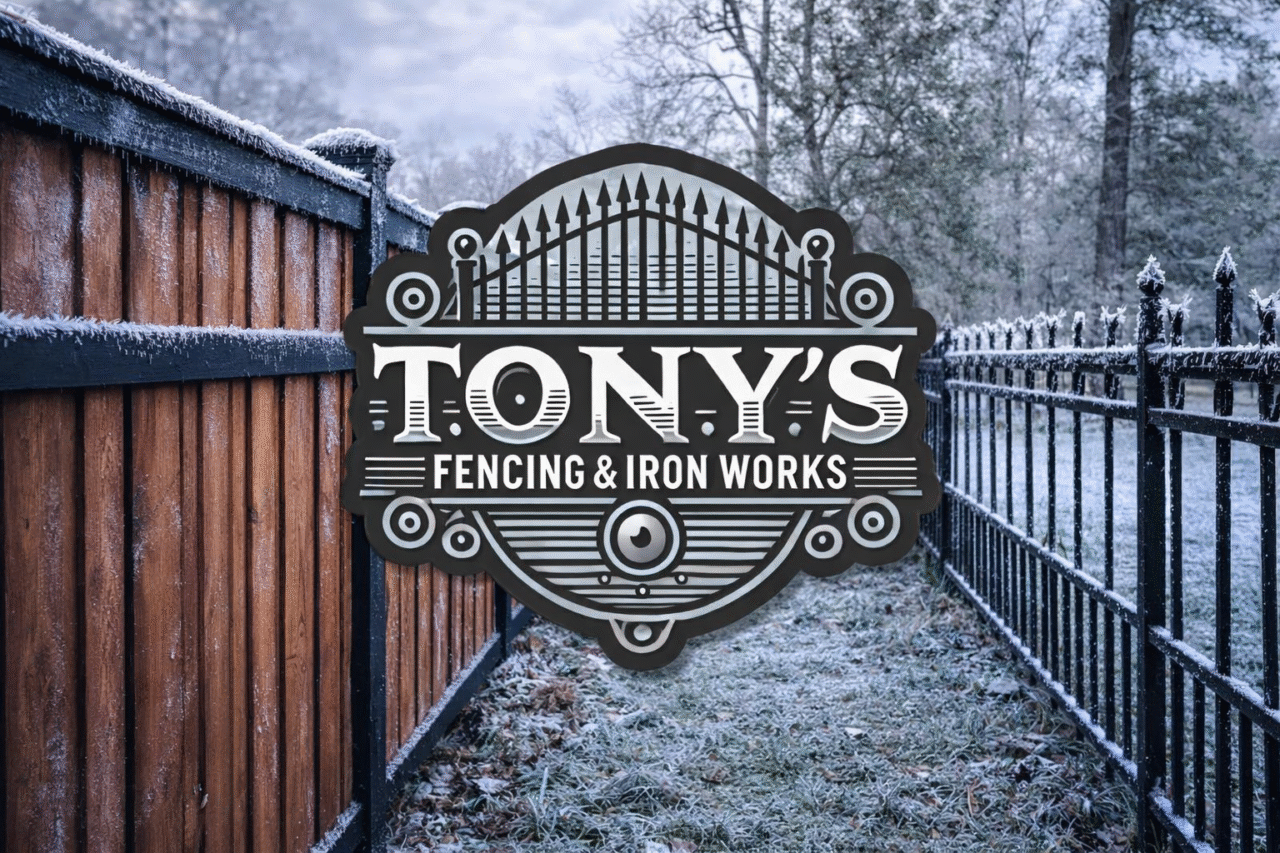
Cold Weather Fence Damage in Louisiana Is More Common Than You Think
Cold weather fence damage in Louisiana often catches homeowners off guard because freezing temperatures are rare—but when they happen, they can be harsh on fencing materials. Sudden cold snaps, fluctuating temperatures, and moisture in the soil all combine to stress fences that were built for heat and humidity, not freezes.
At Tony’s Fencing & Iron Works, we often see fence issues appear after a cold spell passes—when homeowners least expect it.
Why Louisiana Cold Snaps Are Tough on Fences
Louisiana winters don’t usually bring long freezes, but that’s exactly what makes them dangerous for fencing. Materials expand and contract rapidly when temperatures swing from warm days to freezing nights. This repeated movement puts stress on posts, fasteners, and panels.
Moisture is another major factor. When wet soil freezes, it expands. As it thaws, the soil contracts and shifts. That movement can loosen fence posts, cause leaning sections, or create gaps where none existed before.
Cold snaps in Louisiana may be short-lived, but they can still cause real damage to outdoor structures like fences. According to the National Weather Service, freezing temperatures combined with moisture can lead to soil expansion and contraction, which contributes to shifting posts and structural stress on fences—especially after sudden temperature changes . This is why fences in the Gulf South must be installed with proper depth, drainage considerations, and materials designed to handle both heat and unexpected cold.
How Cold Weather Affects Wood Fencing
Wood fencing is especially vulnerable during cold weather. When temperatures drop, moisture inside the wood can freeze and expand, leading to small cracks or splits. Over time, these cracks can worsen, weakening boards and rails.
Cold weather can also cause wood to contract, loosening fasteners and making gates harder to open or close. Cedar and pressure-treated pine handle temperature changes better than untreated wood, but even high-quality materials need proper installation and spacing to withstand Louisiana’s unpredictable winter weather.
What Happens to Metal and Iron Fences in the Cold
Ornamental iron and metal fencing generally performs better in cold weather, but it isn’t immune. Metal contracts in low temperatures, which can stress welds, hinges, and gate hardware. If moisture is present, cold weather can accelerate rust in unprotected areas.
Automatic gates are especially sensitive. Cold temperatures can affect motors, sensors, and moving parts, making winter inspections important even in southern climates.
Signs Cold Weather Has Damaged Your Fence
After a cold snap, homeowners should check for subtle changes. A fence that suddenly leans, gates that drag or won’t latch, new cracks in wood, or posts that feel loose are all signs of cold-related stress. These issues often start small but can worsen quickly if ignored.
How to Protect Your Fence During Louisiana Winters
The best protection starts with proper installation. Fence posts set at the correct depth with concrete footings are far more resistant to soil movement caused by freezing and thawing. Quality materials, correct spacing, and professional installation all help prevent cold weather damage.
Regular inspections after winter weather are also key. Catching small issues early can prevent costly repairs later.
FAQs About Cold Weather and Fences in Louisiana
Can freezing temperatures really damage fences in Louisiana?
Yes. Sudden freezes combined with moisture can cause soil movement, cracking, and shifting even during short cold spells.
Is wood or metal fencing better for cold weather?
Both perform well when properly installed, but wood needs extra attention due to moisture expansion and contraction.
Should I inspect my fence after a cold snap?
Absolutely. Many issues appear once temperatures warm back up.
Do automatic gates need winter maintenance in Louisiana?
Yes. Cold weather can affect motors, hinges, and sensors, even if freezes are brief.
Trust Tony’s Fencing & Iron Works for Cold-Weather Fence Repairs
With over 30 years of experience in Southeast Louisiana, Tony’s Fencing & Iron Works understands how local weather impacts fences year-round—including those rare cold snaps. From wood and vinyl fencing to ornamental iron and automatic gates, our team builds and repairs fences designed to withstand Louisiana’s unique climate.
If your fence looks different after this cold weather, it’s worth having it checked.