
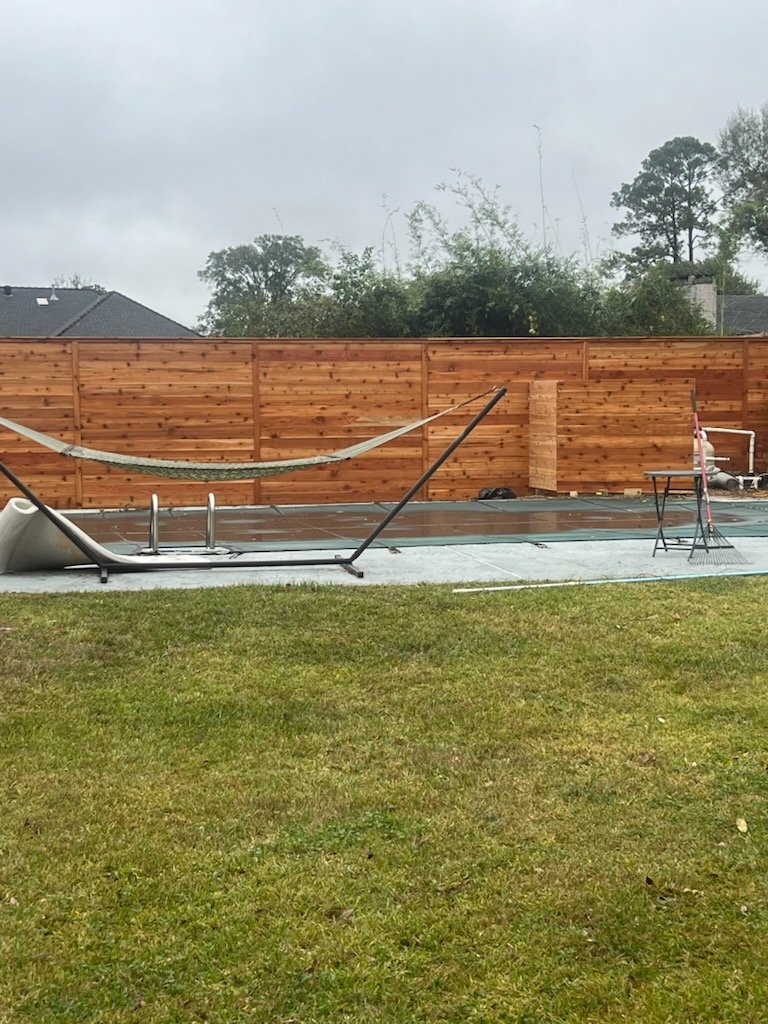
Introduction: More Than Just a Boundary
Most people see a fence as a simple boundary—a line separating their property from a neighbor’s or the street. It’s a backdrop for the garden, a barrier for the dog, and the frame for our outdoor lives. We install it, admire it briefly, and often forget about it. But behind every fence that stands strong for decades—especially in a demanding climate like Southeast Louisiana’s—there’s a deeper story.
The difference between a fence that lasts and one that fails in just a few years isn’t luck. It’s knowledge, timing, craftsmanship, and a clear understanding of what truly makes a fence work. Below are five insights that will forever change how you view your fence—revealing its hidden foundation, its dynamic relationship with weather, and the craftsmanship that defines it.
1. Your Fence Is More Like a Plant Than a Wall
It’s easy to think of a wood fence as a static, unmoving structure, but nothing could be further from the truth. In reality, a wood fence behaves like a “living structure,” constantly responding to temperature, moisture, and sunlight.
In Southeast Louisiana, boards expand in the heat, contract in cooler weather, swell during heavy rains, and dry out under intense sun. This ongoing cycle means your fence is always in motion—adjusting to the climate around it.
Understanding this changes everything. Instead of a “set it and forget it” mindset, homeowners can see why proper maintenance, finishing, and wood selection are essential for long-term durability. Your fence is working harder than you think.
2. Forget Spring — Winter Is the Prime Fencing Season
Most people assume fencing should be installed in spring or summer. However, in Southeast Louisiana, winter often provides the best conditions for building a new wood fence.
Winter brings lower contractor demand, meaning your project can be scheduled faster and receive more focused attention. Soil conditions improve as well, offering cleaner worksites and better post-setting stability.
Because colder weather reduces swelling and moisture absorption, posts secure more predictably and boards settle more evenly. By installing your fence in winter, you get a stronger build—and a beautiful finished product ready for spring.
3. The Real Strength of Your Fence Is Buried Underground
While homeowners tend to focus on the panels and pickets, the most important part of any fence is completely hidden from view: the posts. These underground anchors determine how well a fence withstands wind, rain, shifting soil, and everyday wear.
In a region known for heavy rainfall and soft, moving ground, post selection and installation are critical. The hidden foundation—depth, spacing, concrete quality, and soil preparation—often decides whether a fence will last decades or just a handful of years.
It’s a powerful reminder that the unseen parts of a fence are often the most essential.
4. Blame the Builder, Not the Weather
Louisiana weather is harsh, but it’s not usually the reason fences fail early. Most premature failures come from avoidable contractor mistakes and installation shortcuts—not humidity or storms.
Many homeowners expect their new fence to last 15 to 20 years. Unfortunately, low-quality builds, poor measurements, shallow posts, and incorrect material choices can reduce that lifespan dramatically.
This is why a personal, hands-on guarantee matters. When the owner of a company stands behind every weld, post, and custom design, the work reflects it. “Good enough” is never acceptable, and quality craftsmanship becomes the best defense against failure.
5. A Stumble Can Spark a Decades-Long Passion
Expertise often grows from unexpected beginnings. For Tony, founder of Tony’s Fencing & Iron Works, a 30-year career began with a simple accident. One day, he fell into a fence and damaged it. While fixing it, he realized he had a natural talent for the work.
That moment sparked a passion that grew into decades of craftsmanship. Tony has spent more than 30 years honing his skills, building fences across Southeast Louisiana with the same hands-on dedication he discovered that day. Sometimes expertise isn’t planned—it’s born from solving a problem and discovering what you were meant to do.
Conclusion: A Fence Built to Last Tells a Story
The fence standing on your property line isn’t just a boundary—it’s a reflection of its foundation, its timing, its materials, and the philosophy of the builder who created it. A truly great fence is not passive; it is an active expression of quality, resilience, and expertise.
Now that you understand what contributes to a long-lasting fence, the question becomes:
What does your fence say about its foundation?
Talk to Tony’s Fencing and Iron Works
For homeowners ready to build a fence that lasts, Tony’s Fencing and Iron Works brings over 30 years of Southeast Louisiana craftsmanship to every project. Whether you need wood, iron, vinyl, farm fencing, or custom gates, Tony’s hands-on experience ensures your fence is built with the care it deserves.
Call 985-703-0595 for a free estimate and expert guidance on creating a fence that stands the test of time.


One comment
Amanda Mckee
January 6, 2026 at 7:09 am
I always spent my half an hour to read this weblog’s articles every day along with a mug of coffee.