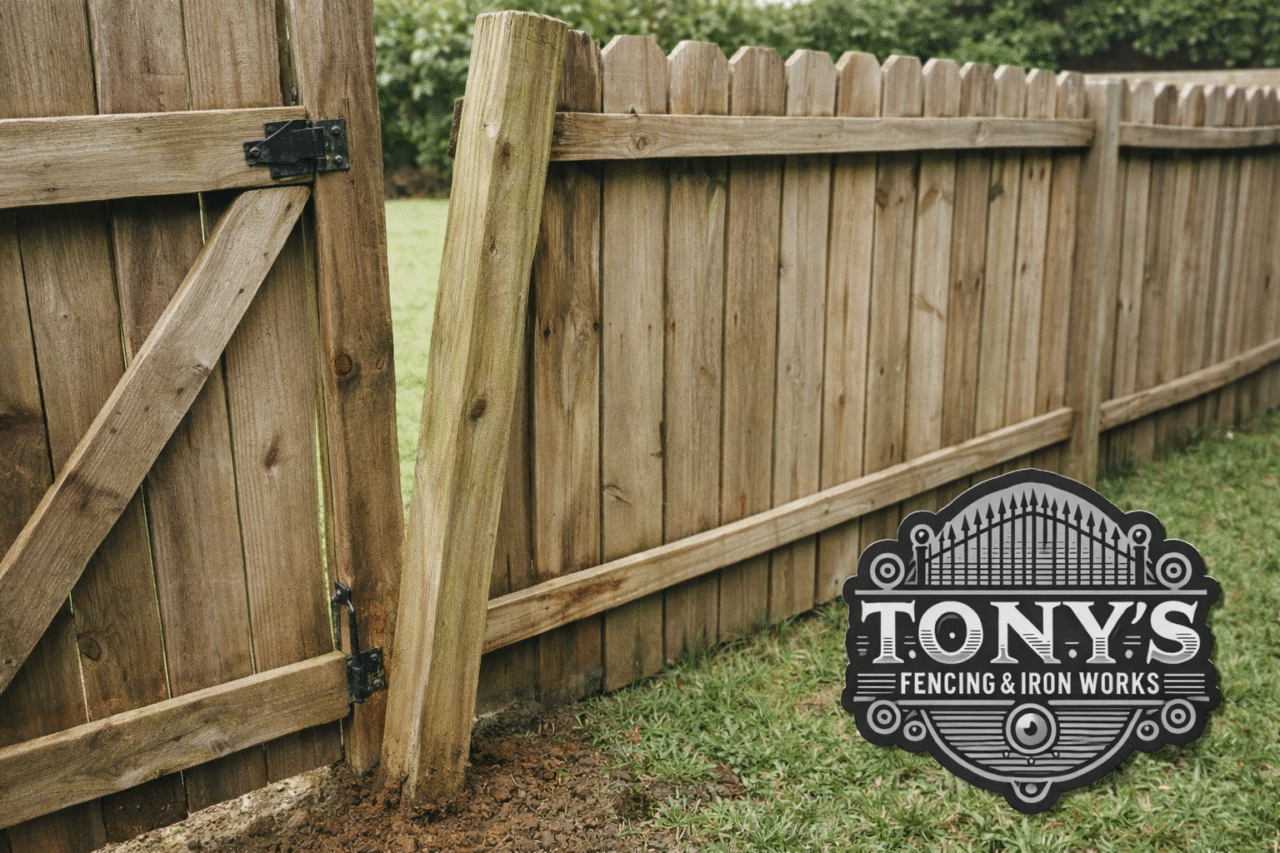
Tony’s Fencing & Iron Works installs fences throughout St. Tammany Parish, and one thing we often hear from homeowners is:
“It looked perfect at first… then things started changing.”
That’s because some of the most serious fence problems don’t appear immediately. In fact, year two is when many hidden installation issues finally reveal themselves—especially in South Louisiana’s soil and climate.
Understanding what happens during this stage can help homeowners spot warning signs early and protect their investment.
Why Year Two Matters More Than Year One
The first year after installation is often considered the honeymoon phase. Materials are new, soil is freshly disturbed, and everything appears straight, tight, and solid.
By year two, however, fences have gone through:
-
Multiple heavy rain cycles
-
Periods of extreme humidity
-
Hot summers that dry and shrink materials
-
Soil expansion and contraction
This is when installation quality—not appearance—determines longevity.
1. Post Movement Caused by Louisiana Clay Soil
In St. Tammany Parish, much of the soil contains clay, which behaves very differently than sandy or loamy soil. Clay expands when saturated and contracts during dry periods.
If fence posts weren’t:
-
Set deep enough
-
Properly sized for the fence height
-
Surrounded by correctly compacted material
they begin to shift slowly, often leaning just enough to throw the entire fence line out of alignment.
This movement usually starts subtly and becomes more noticeable in the second year as soil cycles repeat.
2. Gates That Fail Before the Fence Does
Gates are under constant stress. Every open, close, gust of wind, and temperature swing adds force to the gate posts.
By year two, homeowners may notice:
-
Gates dragging on the ground
-
Latches no longer lining up
-
Hinges loosening or pulling
This typically means the gate post wasn’t reinforced or oversized correctly during installation. Once movement begins, adjustments become temporary fixes rather than long-term solutions.
3. Wavy Fence Lines and Visual Distortion
A fence may still be structurally standing, yet appear uneven—especially when sunlight casts shadows across the panels.
This effect often reveals:
-
Uneven post spacing
-
Panels installed before wood acclimated to local humidity
-
Slight settlement differences along the fence run
While it may look cosmetic, it often signals deeper structural inconsistencies.
4. Hardware Breakdown in High-Humidity Conditions
South Louisiana’s humidity accelerates metal corrosion—even on galvanized fasteners—when lower-grade materials are used.
By year two, this can result in:
-
Rust stains bleeding through wood
-
Loose rails or pickets
-
Weakening gate hardware
Once corrosion begins, it rarely stops without replacement.
5. Rot That Begins Where You Can’t See It
One of the most damaging problems develops below ground level. Wood can look perfectly healthy above the surface while rot forms where moisture is trapped underground.
This often happens when:
-
Posts aren’t rated for ground contact
-
Concrete footings trap water instead of allowing drainage
-
Soil grading directs water toward the post base
By the time surface signs appear, full post replacement is usually necessary.
Why Professional Installation Makes the Difference
Fence longevity depends on much more than materials. Proper installation accounts for:
-
Soil behavior and drainage
-
Load distribution on posts and gates
-
Climate stress unique to Southeast Louisiana
-
Long-term movement—not just day-one alignment
At Tony’s Fencing & Iron Works, every fence is installed with St. Tammany Parish conditions in mind, not generic installation standards.
Homeowner Awareness
For homeowners interested in understanding how soil movement affects outdoor structures, the LSU AgCenter provides valuable insight into Louisiana soil behavior and moisture cycles. Their research helps explain why fences, foundations, and decks shift over time in our region.
👉 https://www.lsuagcenter.com
This type of soil science is exactly why local expertise matters when installing permanent outdoor structures.
Early Warning Signs to Watch For
As your fence approaches the two-year mark, keep an eye out for:
-
Posts no longer perfectly plumb
-
Gates that don’t swing freely
-
Rails pulling away from posts
-
Rust spots or loose hardware
Catching these issues early can often prevent costly replacements later.
Built Right the First Time Always Costs Less
Fence problems that appear in year two are rarely accidents. They’re almost always the result of shortcuts taken during installation.
Investing in experienced, local craftsmanship from the start is the most reliable way to ensure your fence stands strong for decades—not just seasons.
Learn More About Local Fence Installation
If you’re planning a new fence or evaluating an existing one, it’s important to work with a contractor who understands local soil, climate, and building practices. Learn more about professional fence installation in St. Tammany Parish by visiting Tony’s Fencing & Iron Works’ website:
👉 https://tonysfencingandiron.com/
Their experience across Covington, Mandeville, Slidell, and surrounding areas ensures fences are built for long-term performance—not just first impressions.
Frequently Asked Questions About Fence Problems After Installation
How long should a properly installed fence last in South Louisiana?
A professionally installed fence in St. Tammany Parish can last 20–30 years or more, depending on materials, soil preparation, and ongoing maintenance. Premature problems usually point to installation shortcuts rather than normal wear.
Is it normal for a fence to lean after a year or two?
No. Minor seasonal movement can happen, but noticeable leaning is not normal. Leaning typically indicates shallow post depth, insufficient concrete footing, or soil compaction issues—especially common in Louisiana clay soils.
Why do fence problems often appear in the second year?
The second year is when a fence has experienced multiple weather cycles, including heavy rain, humidity, heat, and soil expansion. These conditions expose hidden weaknesses that weren’t visible during the first year.
Can a sagging gate be fixed without replacing the post?
Sometimes—but often only temporarily. If the gate post itself has shifted or wasn’t reinforced properly, adjustments may not hold long-term. Permanent fixes usually require post reinforcement or replacement.
Does humidity really affect fence hardware?
Absolutely. High humidity accelerates corrosion, especially on lower-grade fasteners. Rust can weaken connections long before it becomes visually obvious, making hardware choice critical in Southeast Louisiana.
How can I tell if my fence posts are rotting underground?
Warning signs include:
-
Fence movement despite solid panels
-
Posts that feel soft at ground level
-
Fence sections pulling away from posts
Unfortunately, by the time rot is visible above ground, structural damage is often advanced.
Can early fence problems be repaired, or is replacement required?
Early-stage issues—such as slight post movement or gate misalignment—can often be corrected if addressed quickly. Waiting too long may turn a manageable repair into a full replacement.
What’s the biggest mistake homeowners make when choosing a fencing contractor?
Focusing on price over local experience. Contractors unfamiliar with St. Tammany Parish soil and climate often install fences using generic methods that don’t hold up long-term in South Louisiana conditions.
Should I have my fence inspected even if it looks fine?
Yes. A professional inspection can identify early structural issues that aren’t obvious yet. Catching problems before they worsen can save thousands in future repairs.