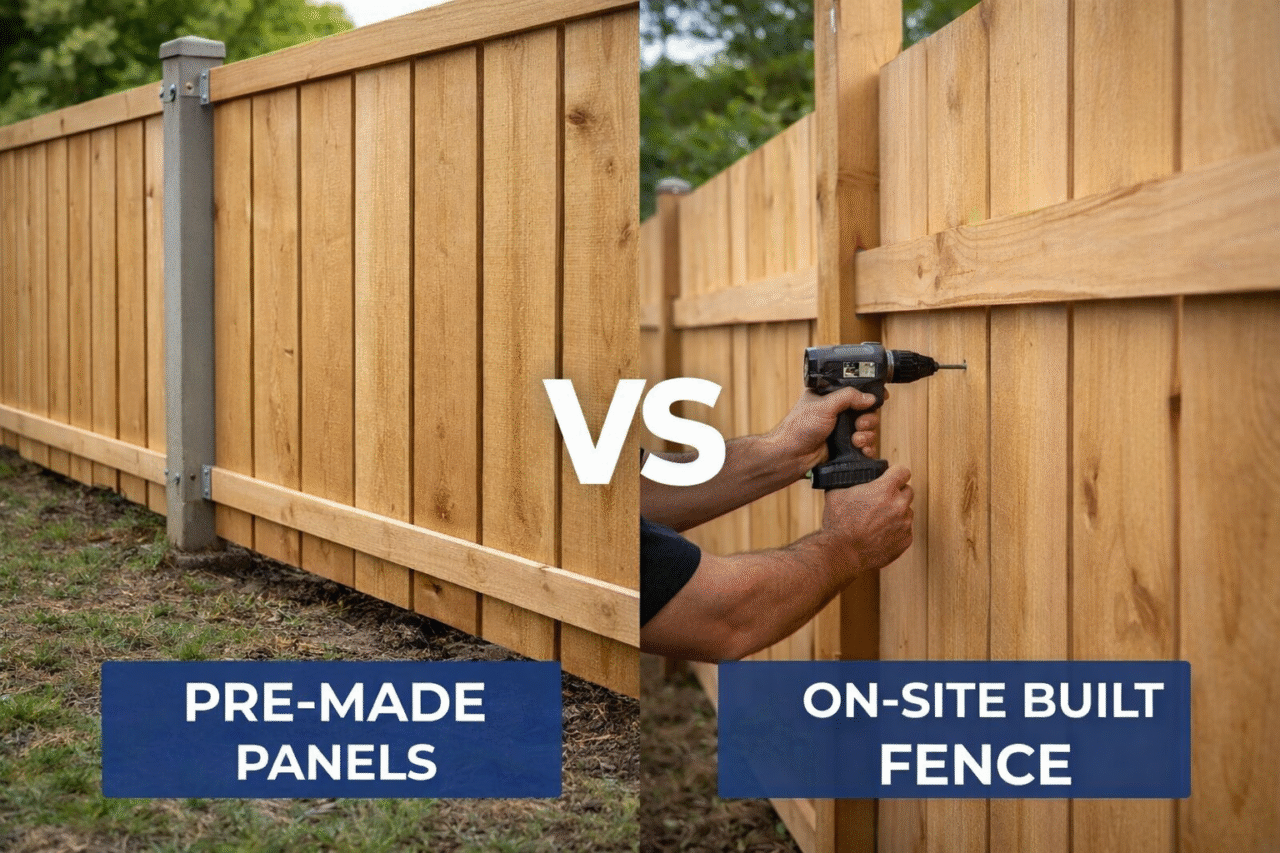
When choosing a fence, many homeowners compare styles and materials but overlook one of the most important factors: how the fence is constructed. Pre-assembled panels may seem convenient and cost-effective, but their design often leads to shorter lifespans compared to fences built on site board-by-board. The difference comes down to engineering, structural stress distribution, and how well the fence adapts to real-world conditions like soil movement and uneven terrain.
Tony’s Fencing & Iron Works frequently repairs fences originally installed using panel systems, and in many cases the issues stem not from material quality, but from how those fences were assembled.
The Structural Difference Most Homeowners Never See
Pre-made fence panels are built in standardized sections at a factory, then transported and attached to posts at the job site. On-site built fences, however, are constructed piece by piece after posts are installed. This means every board, rail, and fastener is positioned specifically for that property’s layout.
From an engineering standpoint, this distinction matters because structural loads are handled differently. Panel fences act like a series of connected rectangles, each carrying its own stress. Custom-built fences act more like a continuous structure, distributing force along the entire run instead of concentrating it at section ends.
Terrain Adaptation and Ground Movement
Very few yards are perfectly level. Even small grade changes can create long-term stress points. Pre-made panels are rigid and must be installed to match their fixed dimensions. If the ground rises or dips, installers must either step the panels or force them into place. Both approaches can create pressure points that weaken joints over time.
By contrast, fences built on site can follow the natural contour of the ground. Each board can be adjusted individually, allowing the structure to remain aligned without forcing any part of the fence into tension. This flexibility helps the fence tolerate soil movement, settling, and seasonal expansion without developing gaps or leaning sections.
Wind Resistance and Structural Load Distribution
Wind pressure is one of the most overlooked forces affecting fences. Solid panel sections behave like large flat surfaces, which means wind hits them all at once. The entire force transfers directly to the posts supporting that panel.
Because panel fences concentrate wind load at specific connection points, repeated gusts can loosen posts or fasteners. Over time, this can cause sections to lean or separate. Custom-built fences handle wind differently because their structure allows slight flex and distributes pressure across multiple attachment points rather than a single panel frame.
Transportation Stress Before Installation
Another rarely discussed factor is what happens before a fence is even installed. Pre-made panels are assembled off-site, stacked, transported, unloaded, and carried into position. During that process, they may experience minor twisting or stress that isn’t immediately visible.
Even small distortions can affect alignment once the panel is installed. Over time, these imperfections can worsen, especially when exposed to humidity and temperature fluctuations. On-site construction avoids this issue entirely because materials are assembled directly where they’ll remain.
Soil Behavior and Post Stability
Fence posts must resist downward pressure, lateral pressure, and soil movement. The soil surrounding posts expands when wet and contracts when dry. According to research from the U.S. Geological Survey, natural moisture cycles can significantly change soil density and structure, which affects how well the ground supports installed structures.
Panel fences are less tolerant of this movement because each section relies heavily on two posts for support. If either post shifts slightly, the entire panel can become misaligned. On-site built fences are more forgiving because their continuous construction distributes stress across multiple posts.
Understanding how soil affects structural stability is essential when installing any permanent outdoor structure. According to the U.S. Geological Survey, natural moisture changes can significantly alter soil density and load-bearing capacity over time. This is one of the main reasons fencing systems must be designed to accommodate ground movement rather than resist it rigidly.
Repair and Longevity Differences
When a panel fence is damaged, the entire section often needs replacement. That’s because the panel functions as a single unit. If one component fails, the structural integrity of that whole section is compromised.
With custom fences, individual boards or rails can usually be replaced without dismantling entire sections. This modular repair approach extends the fence’s lifespan and reduces long-term maintenance costs.
Appearance Over Time
Both fence types can look attractive immediately after installation. The difference becomes noticeable after exposure to weather, soil movement, and daily stress. Panel fences often develop uneven lines, widened gaps, or leaning sections as their rigid structure reacts to environmental forces.
Custom fences tend to age more evenly because they were designed for that specific property’s conditions. Their adaptability allows them to move slightly without losing alignment.
Why Installation Method Matters More Than Materials
Homeowners often focus on wood type or style when choosing a fence, but installation method is just as important. Proper post depth, spacing, and bracing determine how well a fence withstands wind, moisture, and soil movement.
Those planning a new fence can learn more about professional installation methods and construction standards by visiting
https://tonysfencingandiron.com/
where detailed information explains how site-built fences are designed for long-term durability.
Long-Term Value Comes From Custom Construction
Pre-made panels can be appealing because they promise quick installation. But fences are permanent outdoor structures that must handle years of environmental stress. Convenience during installation doesn’t always translate to longevity.
On-site built fences are designed specifically for the property where they’re installed. That customization allows them to perform better over time, resist structural stress, and maintain their appearance longer.
Choosing between pre-made panels and on-site construction isn’t just a design decision—it’s a structural one. Understanding how each type handles stress, movement, and environmental conditions helps homeowners make smarter long-term investments.
Fences built specifically for your property’s layout, soil, and climate are far more likely to stay straight, stable, and secure for years to come.
Choosing a fence isn’t just about style—it’s about performance over time. Understanding how different construction methods affect durability can help homeowners make smarter decisions and avoid premature failures.
For property owners who want a fence built to last, professional installation tailored to local soil and terrain conditions makes all the difference. Tony’s Fencing & Iron Works designs and installs fences engineered for long-term stability, ensuring homeowners get strength, reliability, and value from their investment.
Frequently Asked Questions
Are panel fences always lower quality?
Not necessarily, but their rigid design makes them more vulnerable to ground movement and environmental stress compared to custom-built fences.
Why do panel fences lean sooner?
Because weight and wind pressure are concentrated at panel connection points rather than distributed across the entire fence line.
Do on-site built fences last longer?
In most cases, yes. Their custom construction allows them to adapt to terrain, soil conditions, and weather exposure.
Are custom fences harder to repair?
No. They’re usually easier to repair because individual components can be replaced without removing entire sections.
Which fence type is best for uneven yards?
On-site built fences perform better on uneven terrain because they can be adjusted board-by-board.