Northshore Fence Planning Guide
Shared Fence With a Neighbor in Louisiana: What Homeowners Should Know
A good fence can improve privacy, safety, and curb appeal. A good conversation before the fence goes up can protect the neighbor relationship, too.
A shared fence with a neighbor in Louisiana can be a smart investment for both properties, especially when two homeowners want privacy, pet containment, or a cleaner-looking backyard boundary. However, a shared fence project should start with more than picking a style and splitting a number.
Across Covington, Mandeville, Madisonville, Slidell, Hammond, Ponchatoula, and surrounding Southeast Louisiana communities, the biggest problems usually come from unclear property lines, drainage concerns, gate placement, or assumptions about who owns the existing fence. Planning these details first can prevent a simple backyard upgrade from becoming an expensive headache later.
Quick answer: Before building a fence near a shared property line, confirm the boundary, check local requirements, discuss the plan with your neighbor, call Louisiana 811 before digging, and get the fence layout in writing. A local fence contractor can help identify practical concerns such as drainage, soil conditions, post placement, and gate access.
What Is a Shared Fence?
A shared fence is typically a fence built along or very close to the boundary between two properties. Sometimes both neighbors agree to share the cost. Other times, one homeowner pays for the project but wants to coordinate the style, “good side,” access, and placement with the neighbor.
The key point is this: a fence does not automatically become a shared responsibility just because it sits near two yards. Ownership, maintenance, and replacement expectations should be discussed before construction begins.
Step 1: Confirm the Property Line Before You Build
Do not rely only on an old fence, a row of trees, a neighbor’s memory, or a satellite map. Those clues can be helpful, but they are not always accurate.
A survey or reliable property documents can help identify where your lot ends and where a fence can safely go. This matters even more in older neighborhoods, on irregular lots, near drainage areas, or when a fence line runs close to a driveway, ditch, utility easement, or road right-of-way.
Fence placement mistakes can create disputes, complicate a future home sale, and force costly changes after installation. For a broader pre-construction guide, read our Louisiana fence installation checklist.
Step 2: Have the Conversation Before Ordering Materials
A quick conversation with your neighbor can save everyone frustration. You do not need a complicated legal agreement for every backyard project, but both sides should understand the basic plan before work starts.
Topics Worth Discussing
- Where the fence will sit in relation to the property line
- Who is paying for the installation
- Whether both homeowners agree on the fence material and height
- Which direction the finished side will face
- Whether either homeowner needs a gate for access
- How future repairs, staining, cleaning, or replacement will be handled
- Whether the fence could affect drainage or lawn access
A simple written text message or email recap can be useful after the conversation. It gives both homeowners a record of what was discussed without making the process feel overly formal.
Should a Fence Go Directly on the Property Line?
That depends on the survey, local rules, the neighbor agreement, and site conditions. Some homeowners prefer to place the fence slightly inside their own property line. Doing so can make ownership clearer and may allow the owner to maintain the fence without needing access from the neighboring yard.
However, moving a fence inward can leave a narrow strip of land between the fence and the property line. That strip may be difficult to mow, maintain, or access. A contractor can help you look at the real-world tradeoffs before the first post is set.
Fence requirements vary by parish and municipality, particularly for front-yard fencing, corner lots, taller fences, pool barriers, and commercial properties. Read our guide on Louisiana fence permits and check current local requirements before construction.
Choose a Fence Style Both Properties Can Live With
The best shared fence is not always the most expensive option. It is the one that fits both homes, the intended use, Louisiana weather, and the long-term maintenance expectations.
Popular Shared Fence Options in Southeast Louisiana
“`
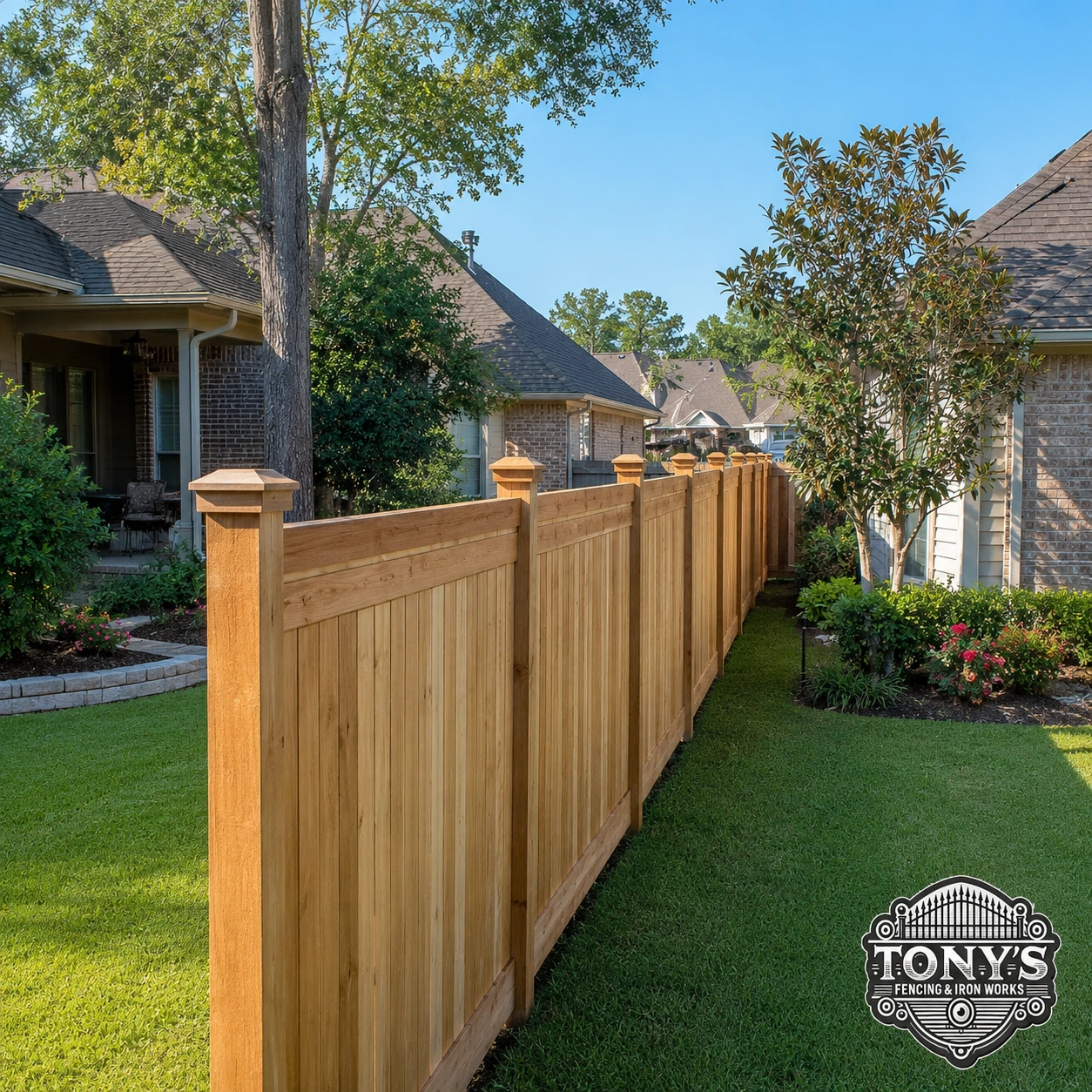
Wood privacy fencing: A popular choice for backyards because it blocks views, creates a finished look, and works well around patios, pools, pets, and outdoor living spaces. Pine and cedar each have different long-term maintenance considerations. Explore wood fencing options.
Vinyl fencing: A clean, low-maintenance option that can work well when both homeowners want a consistent look and less upkeep over time.
Chain link fencing: A practical choice for large yards, pet areas, side yards, and budget-conscious projects. Black vinyl-coated chain link can look more residential than traditional galvanized chain link. Learn more about chain link fence installation.
Ornamental iron or aluminum: These open-style options work well when homeowners want security, pool visibility, airflow, or a more upscale front-yard appearance.
“`
Fence Height Matters More Than Most Homeowners Think
A 6-foot privacy fence is a common choice for backyard privacy in Southeast Louisiana. However, the right height depends on what you are trying to solve. A dog that jumps, a nearby road, a pool area, or a second-story neighboring window may call for a different approach.
Before choosing a height, consider local restrictions, sightlines near driveways, drainage patterns, HOA guidelines, and whether the fence will be installed in a front, side, or backyard. See our guide to choosing the right fence height in Louisiana for more planning details.
Do Not Forget Drainage and Louisiana Soil Conditions
Louisiana fence projects are rarely just about the fence itself. Wet soil, drainage swales, standing water, ditches, and heavy rain can affect how posts perform over time.
When a shared fence line sits near a drainage path, installing posts without a plan can restrict water flow or leave sections vulnerable to settling and leaning. This is especially important around the Northshore, Tangipahoa Parish, low-lying yards, and homes that hold water after summer storms.
Before digging, homeowners should contact Louisiana 811 so underground utilities can be marked. It is also wise to review our article about drainage swales and ditches along fence lines.
Who Pays for a Shared Fence?
There is no one answer. Some neighbors split the total evenly. Others divide costs based on the length each property benefits from. In other cases, one homeowner pays for the fence because they want the privacy or need pet containment sooner.
The important thing is to agree before work starts. Do not assume a neighbor will contribute just because the fence benefits both yards. Likewise, do not assume the homeowner paying for the fence can place it over the property line without confirmation.
A Smart Shared-Fence Budget Conversation Includes:
- Material choice and fence height
- Total linear footage
- Old-fence removal, if needed
- Gate locations and gate hardware
- Special post or drainage requirements
- Staining, sealing, or future maintenance plans
For current local price ranges and the factors that affect quotes, see how much a fence costs in Louisiana.
What About the “Good Side” of the Fence?
This is one of the most common neighbor-fence questions. Many wood privacy fences are built with the finished side facing outward toward the neighbor or public view. It creates a cleaner appearance from both properties and helps the fence look intentional rather than unfinished.
Still, every style is different. Board-on-board fences, shadowbox fences, and some custom designs can look attractive from both sides. Discuss the style during planning so nobody is surprised once installation begins.
When a Professional Fence Estimate Helps Most
A professional estimate is especially helpful when the fence line involves an old fence, a shared property boundary, a slope, a drainage ditch, multiple gates, an automatic driveway gate, or conflicting preferences between neighbors.
Tony’s Fencing & Iron Works has served Ponchatoula, Covington, Mandeville, Hammond, Madisonville, Slidell, and the surrounding Northshore for more than 30 years. Tony can walk the property, discuss practical installation options, and help homeowners plan a fence that fits the land instead of fighting it.
Planning a Fence Along a Shared Property Line?
Get a straightforward, local estimate for wood, vinyl, chain link, ornamental iron, gates, and more.
Call Tony: (985) 703-0595
FAQs About Shared Fences With Neighbors in Louisiana
Can I build a fence without talking to my neighbor?
You may be able to build a fence on your own property, but discussing the plan first is usually the best approach. It can prevent confusion about property lines, fence style, access, drainage, and future maintenance.
Do neighbors have to split the cost of a fence in Louisiana?
Not automatically. Cost-sharing is usually a voluntary agreement between neighbors. Discuss the budget before materials are ordered and document the agreement in writing when both homeowners are contributing.
Can I put a fence directly on the property line?
Possibly, but first confirm the boundary and check local regulations. Property-line fences can create ownership and access questions, so it is smart to discuss placement with the neighbor before installation.
What is the best shared fence for privacy in Louisiana?
A wood privacy fence is one of the most common choices because it provides privacy and can be customized for the property. Cedar and pressure-treated pine are both popular options, while vinyl offers lower maintenance.
Should I call 811 before installing a fence?
Yes. Louisiana 811 should be contacted before digging so utility lines can be marked. This is important for fence posts, gate posts, and any project involving excavation.
Helpful note: This article provides general planning information and is not legal advice. Fence rules, permits, easements, HOA requirements, and property-line issues can vary by location and property.