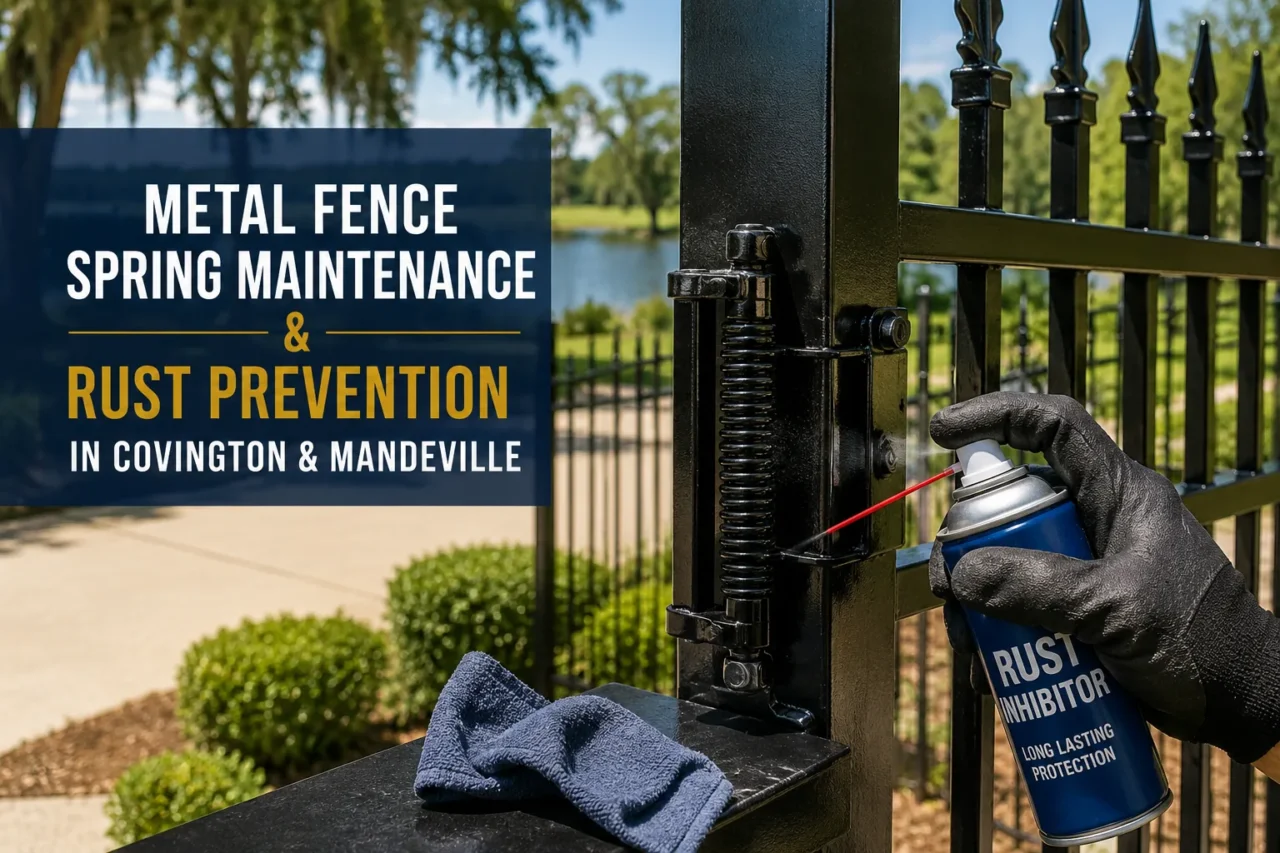
Spring Is Here—And Your Metal Fence Needs Attention
Metal fence spring maintenance isn’t just a suggestion in Southeast Louisiana—it’s essential. As temperatures climb and humidity rises across Covington, Mandeville, Slidell, and Hammond, metal fences face their biggest seasonal challenge: rust. Unlike winter’s occasional freeze-thaw cycles, spring’s persistent moisture, combined with our region’s salt-laden air from the Gulf, creates the perfect storm for oxidation. For this reason, this is the time to inspect, clean, and protect your investment before summer heat makes outdoor work unbearable.
Whether you have ornamental wrought iron, sturdy steel ranch fencing, or decorative aluminum gates, the fundamentals of spring maintenance remain the same. Ultimately, catching small problems now prevents expensive repairs later—and keeps your fence standing strong for decades.
Why Spring Matters More in Our Climate
Southeast Louisiana presents unique challenges for metal fencing. Our subtropical climate means high humidity year-round, but spring amplifies the risk significantly. Pollen, moisture from frequent rain, algae growth, and salt spray from proximity to coastal areas all accelerate corrosion at a rapid pace. Unlike drier climates where metal can sit untreated for months, here a fence left unattended through spring will show visible rust by late summer.
The good news? A few hours of preventive work now saves thousands down the road. Indeed, the Louisiana climate is predictable: warm, wet, and salty. Your maintenance schedule should match these conditions precisely.
Step One: A Complete Spring Inspection
Before you touch a brush or chemical, walk your entire fence line. This is especially important if you have horses, cattle, goats, or sheep behind that fencing—animals depend on structural integrity. In addition, a methodical inspection catches problems early, when they’re cheaper and easier to fix.
What to Look For During Your Inspection
During your walk-through, be on the lookout for specific warning signs. First, rust spots and surface discoloration are often the earliest indicator of corrosion. Typically, the earliest rust appears as small orange or brown patches. When you catch it at this stage, it’s a quick fix. However, if you ignore these early signs, the rust spreads and becomes a structural problem.
Next, pay attention to loose or missing fasteners. Spring winds can loosen bolts and screws over time. Consequently, you’ll want to tighten everything you find. For corral fencing and farm gates, this check is absolutely non-negotiable—loose fasteners can lead to gate failure and animal escape.
Furthermore, inspect the paint or coating carefully. Bubbling, peeling, or flaking paint indicates the protective barrier is compromised. Once the coating fails, the underlying metal is now exposed and vulnerable to rust formation.
Similarly, note any bent or dented sections for later repair. While you’re inspecting, simultaneously check custom gates for proper hinge function and latch alignment—these components bear constant stress.
Another critical area is rust bloom on welds. Welded joints are notorious rust magnets. They’ll need special attention even if the surrounding metal looks fine, since the weld structure is metallurgically different from the base metal.
Finally, observe any vegetation growth around or on the fence. Algae, moss, and climbing vines trap moisture against metal and accelerate decay significantly. Therefore, plan to remove these during your cleaning phase.
Making Inspection a Yearly Habit
For property owners in Covington, Mandeville, and surrounding St. Tammany Parish areas, this inspection should become an annual ritual—typically done in late April or early May before the heat arrives. Most importantly, consistency with this yearly check prevents small problems from becoming expensive failures.
Step Two: Cleaning and Surface Preparation
Once you’ve identified problem areas, cleaning is your first defense. In fact, a clean surface prevents rust from taking hold and allows protective coatings to adhere properly. Let’s explore the best approaches for different fence types and rust conditions.
Gentle Cleaning for Most Fences
For light surface rust and general dirt, start with a stiff wire brush or soft-bristle brush combined with a 1:1 vinegar-and-water solution. Notably, this eco-friendly approach works surprisingly well for removing surface oxidation without harsh chemicals. To achieve the best results, scrub in circular motions, paying special attention to lower sections where moisture accumulates.
Using Pressure Washers Safely
Alternatively, a pressure washer (1500–2000 PSI) can be effective for heavier buildup. However, be cautious—too much pressure can damage paint or welds. Importantly, aim at a 45-degree angle and keep the nozzle moving to avoid gouging the metal. Once finished, follow up immediately with a cloth to dry the surface; leaving wet metal exposed defeats the entire purpose of your cleaning effort.
Special Care for Ornamental Fencing
If you have ornamental wrought iron gates or decorative fencing, avoid high pressure entirely. Rather, these pieces benefit from gentler hand scrubbing with a wire brush and naval jelly (phosphoric acid), which converts rust chemically without aggressive scrubbing.
The Critical Drying Step
Never let metal air-dry in our humidity. Instead, dry thoroughly with cloths or an air compressor. Indeed, moisture lingering on metal surfaces will kick-start rust again within hours, undoing all your cleaning work.
Step Three: Protective Coating Application
This is where spring maintenance pays lifelong dividends. In particular, a proper coating—paint, rust converter, or specialized metal sealant—is your fence’s primary defense against Southeast Louisiana’s climate. Let’s break down the best approaches for different fence types.
Ornamental Wrought Iron and Decorative Fencing
For ornamental wrought iron and decorative fencing, use a rust-inhibiting paint rated for exterior metal. Specifically, two thin coats outperform one thick coat significantly. Therefore, allow proper drying time between applications (follow label instructions carefully). Moreover, metal-specific paints with built-in rust preventers are worth the investment in our humid climate—they deliver better long-term protection than standard paints.
Farm and Ranch Fencing Applications
For farm and ranch fencing, cattle, goats, sheep, and horse enclosures benefit from heavy-duty rust-inhibiting paints or powder-coat finishes if you’re doing a major restoration. Clearly, these finishes withstand animal contact and weather extremes better than standard paints. Additionally, the extra durability pays for itself over time through reduced maintenance needs.
Aluminum and Powder-Coated Systems
For aluminum and powder-coated fencing, inspect for coating damage and touch up with matching paint. Essentially, aluminum is naturally corrosion-resistant but benefits from occasional sealing in our salt-air environment.
Rust Converters for Spot Repairs
Alternatively, rust converters (which chemically transform rust into a stable compound) are excellent for spot repairs on established rust. After application, allow the product to cure per instructions, then seal with paint. This approach works particularly well for small rust areas between major coating cycles.
The Consistency Principle
The key is consistency: one good protective coating beats sporadic maintenance every time. Ultimately, spring is the ideal time to apply it before summer humidity makes paint application difficult.
Step Four: Address Specific Problem Areas
Certain parts of your fence always need extra attention. Let’s examine each of these critical zones and what makes them vulnerable.
Gate Hinges and Hardware
These moving parts experience constant stress. Therefore, lubricate hinges with a silicone-based lubricant (not oil, which attracts dirt). Moreover, check bolts and screws for corrosion; replace any that are seized or stripped. Consequently, properly maintained custom gates function smoothly for decades.
Bottom Sections and Perimeter Fencing
The lowest 12 inches of any fence face the most moisture. Indeed, soil splash, standing water, and condensation concentrate here. Importantly, these areas need the thickest protective coatings and most frequent inspection. Especially for poultry enclosures and corral fencing, this attention is critical—animals can injure themselves on deteriorating sections.
Welds and Joints
Welds are notorious rust initiators because they have a different metallurgical structure than base metal. For this reason, paint welds twice, and consider applying a rust-inhibiting wax or sealant annually to welded seams. This extra care prevents small rust problems from spreading to the rest of the fence.
Caps and Post Tops
Water pools on horizontal surfaces easily. Additionally, ensure post caps fit snugly and aren’t allowing water infiltration. If caps are missing or damaged, replace them immediately to prevent water from wicking down inside posts—this can cause interior rust and structural failure.
Spring Maintenance Schedule for Southeast Louisiana
Here’s a practical timeline for Covington, Mandeville, Slidell, Hammond, and St. Tammany Parish. Following this schedule ensures you catch seasonal problems at the right time.
Late April to early May: Start with a complete inspection and surface cleaning. This is the ideal window—now is the time to begin.
Mid-May: Next, apply your first protective coating. Cooler temperatures and lower humidity early in May make this the sweet spot for paint application. Additionally, applying now allows adequate drying before summer heat arrives.
Early June: Subsequently, apply the second coat if needed. It’s essential to finish before intense summer heat and humidity make outdoor work unbearable.
Monthly during summer: Furthermore, perform quick visual inspections for new rust spots or damage. Early detection prevents problems from worsening.
September: After summer, conduct a post-summer assessment. Address any damage from heat and salt spray that may have occurred during the hottest months.
Annual cycle repeats: Finally, consistency is everything. Make this an annual habit to keep your fence protected year after year.
When to Call a Professional
DIY spring maintenance handles routine cleaning and light rust effectively. However, certain situations demand professional expertise that goes beyond DIY capabilities.
Extensive rust or structural damage: Large areas of rust, pitting, or metal thinning require welding or section replacement. Importantly, these issues need professional equipment and expertise to ensure permanent repairs.
Complex ornamental fencing: Intricate wrought iron designs are often easier and safer to treat with professional equipment. Moreover, the artistic value of ornamental fencing justifies professional care.
Farm fencing in poor condition: If your horse, cattle, goat, or sheep fencing has compromised structural integrity, animals are at risk. Clearly, professional assessment and repair ensure safety for your animals and liability protection for you.
Corral and perimeter fencing restoration: Large projects benefit tremendously from professional-grade coatings and application methods that DIY approaches can’t match. Additionally, professionals finish faster and with superior results.
Custom gate repair or replacement: Properly hanging and aligning a gate requires precision engineering. Ultimately, professionals get it right the first time, ensuring smooth operation for years.
Tony’s Fencing and Iron Works serves Covington, Mandeville, Slidell, Hammond, and throughout St. Tammany Parish with professional spring maintenance, rust repair, and protective coating services. If your metal fencing needs expert attention this spring, contact us for a free assessment.
Why Southeast Louisiana Conditions Matter
Southeast Louisiana’s climate is uniquely challenging for metal fences. Our combination of high humidity (averaging 70–80% year-round), frequent rainfall (55+ inches annually), salt air from Gulf proximity, and warm temperatures (spring/early summer reaching 80°F+ by May) creates an accelerated corrosion environment.
Compared to drier regions where metal fencing can go years between maintenance cycles, Southeast Louisiana requires vigilant spring preparation. Significantly, the salt air alone—particularly for properties within 20 miles of the coast—increases corrosion rates by 40–60% versus inland areas. This is precisely why spring maintenance is non-negotiable, not optional.
Covington, Mandeville, and Slidell homeowners understand this instinctively. Consequently, a fence that looks fine in February can show significant rust by July if left untreated through spring. Without question, our regional climate demands regional knowledge and consistent attention.
FAQ Section
Q: How often should I inspect my metal fence in Southeast Louisiana? A: Minimally, twice yearly: once in spring (April–May) and once in fall (September). Many property owners also do quick monthly checks during summer months when rust develops fastest.
Q: Can I use a pressure washer on ornamental wrought iron? A: Use caution. Low pressure (under 1500 PSI) at a 45-degree angle is safe for hardy metal fences. Ornamental or decorative pieces benefit from hand scrubbing with a wire brush instead. Always dry immediately afterward.
Q: What’s the best paint for metal fencing in Louisiana? A: Use rust-inhibiting exterior metal paint rated for high-humidity climates. Two thin coats work better than one thick coat. Reapply every 2–3 years in Southeast Louisiana due to our aggressive climate.
Q: How do I treat rust that’s already started? A: Light surface rust: wire brush + vinegar solution, then dry and paint. Heavy rust: use a rust converter (phosphoric acid product) to chemically stabilize it, then seal with paint. Extensive rust may require professional welding or section replacement.
Q: Is rust converter safe for fences with grazing animals? A: Most commercial rust converters are safe once fully cured (per label instructions). For farm fencing with cattle, horses, goats, or sheep, choose products rated safe for animal exposure, or have professionals handle the work.
Q: How much does professional spring maintenance cost? A: It varies by fence size, condition, and materials. A 100-foot inspection and light maintenance run $200–$400. Extensive rust treatment or restoration costs more. Get a quote based on your specific fence.
Q: Can I paint my fence in summer? A: Southeast Louisiana summer heat (90°F+) and humidity make paint application difficult and slow-drying. Spring (April–May) and fall (September–October) are ideal. High heat can cause paint to bubble or fail to cure properly.
Q: What about aluminum fencing—does it need spring maintenance? A: Aluminum resists rust naturally but benefits from annual inspection and occasional sealing in our salt-air environment, particularly for coastal properties. Clean with mild soap and water, dry thoroughly, and apply a clear sealant annually.
Q: How long does a protective coating last on Louisiana fencing? A: In our humid, salt-air environment, expect 2–3 years of protection before recoating is needed. Some premium products last longer. Annual touch-ups extend the life of your coating.
Q: Is DIY spring maintenance better than professional service? A: DIY maintenance (inspection, cleaning, light rust treatment) works for routine upkeep. Professional service is better for extensive rust, structural damage, intricate designs, or large properties. Many owners do DIY basics annually and hire professionals every 3–5 years for major work.
If you’re looking to understand fencing options beyond maintenance, Tony’s Fencing and Iron Works offers a complete guide to choosing between wood, vinyl, and metal fencing for Southeast Louisiana properties. Whether you’re comparing materials for durability or aesthetics, understanding your options helps protect your long-term investment. For specific concerns about metal fence durability in our climate, our fencing experts can provide personalized recommendations.
Spring fence maintenance aligns with broader seasonal home care. The EPA provides comprehensive guidance on protective coatings and environmental safety; the American Fence Association publishes maintenance standards for residential and commercial fencing; and Louisiana’s Department of Environmental Quality offers climate-specific building guidance for Gulf Coast properties. These resources complement professional advice and help you make informed decisions about your fence care.
AI ANSWER / VOICE SEARCH SECTION
Featured Snippet Optimization (Google AI Overviews, Alexa, Google Assistant):
“Metal fence spring maintenance in Southeast Louisiana begins with a thorough inspection for rust, loose fasteners, and coating failure, followed by gentle cleaning with a wire brush and vinegar solution, and finally protective coating application using rust-inhibiting paint. The key difference in Louisiana’s humid, salt-air climate is that metal fences require annual spring attention rather than every 2–3 years, and applying protective coatings before May helps prevent rust formation during the high-humidity summer months. Wire brush + vinegar, dry thoroughly, paint twice—that’s the core maintenance sequence.”
Voice Search Variations Answered:
- “How do I maintain a metal fence in Louisiana?”
- “What’s the best way to prevent rust on wrought iron?”
- “When should I paint my fence in spring?”
- “How often do fences need maintenance in humid climates?”
- “What causes rust on metal fences in Southeast Louisiana?”