Quick Answer
Can You Build a Fence Around Outdoor Equipment?
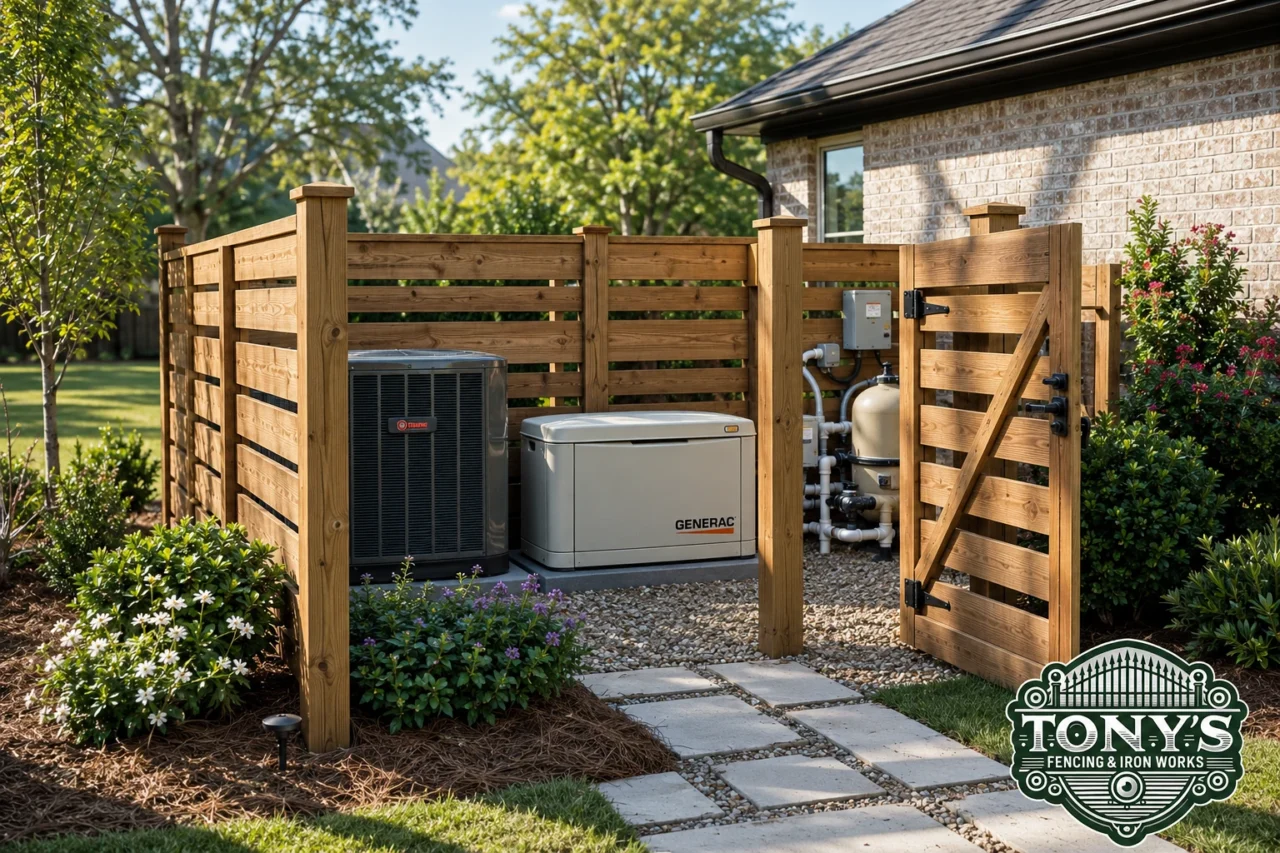
Yes, but the enclosure should never crowd the equipment. First, leave the clearances required by the manufacturer. Next, preserve airflow, provide a wide service gate, direct water away from the area, and keep emergency controls accessible. In addition, portable generators should never operate inside a fenced or partially enclosed space. Before installing posts, call Louisiana 811 and identify any privately installed electrical, gas, irrigation, drainage, pool, or generator lines.
Why Outdoor Equipment Enclosures Require Careful Planning
Generators, air-conditioning condensers, pool pumps, propane tanks, trash cans, and utility meters are essential. Still, they rarely improve a home’s appearance. Therefore, many homeowners search for ways to hide outdoor equipment with a fence, screen, gate, or decorative enclosure.
Across Ponchatoula, Hammond, Covington, Mandeville, Madisonville, Slidell, Abita Springs, Folsom, and nearby Southeast Louisiana communities, equipment screening requires careful planning. Heavy rain, tropical weather, fast-growing vegetation, humid air, soft soil, and frequent maintenance visits all affect the design.
For example, a poorly planned screen may trap heat, block a technician, obstruct a shutoff switch, interfere with drainage, or place fence posts near buried service lines. By contrast, a well-designed enclosure can improve curb appeal while keeping the equipment safe, accessible, and functional.
Why Louisiana Homeowners Add Outdoor Equipment Fencing
Outdoor equipment often sits beside a driveway, near a patio, behind a pool, or along a highly visible side yard. As a result, even a clean installation can make an otherwise finished outdoor space look cluttered.
Improve Curb Appeal
A thoughtfully designed screen can blend mechanical equipment into the home, landscaping, fence, or driveway entrance.
Organize the Yard
Separate utility areas can keep trash cans, pool supplies, hoses, and maintenance equipment away from outdoor living spaces.
Control Access
A properly placed gate may discourage children or pets from entering an equipment area while preserving adult access.
Complement Existing Fencing
Matching materials can make the screen look like an intentional extension of the property instead of an afterthought.
Which Outdoor Equipment Can Be Screened?
Several types of equipment can benefit from visual screening. Nevertheless, each one has different ventilation, clearance, safety, and service requirements.
Standby Generators
A standby generator already includes a weather-resistant cabinet designed to release heat and exhaust. For that reason, it should not be boxed inside another tight structure. Any decorative fence or visual screen must remain outside the clearances listed in the generator’s installation manual.
Technicians and first responders may also need immediate access to the unit, fuel connections, electrical connections, and shutdown controls. Consequently, a locked gate, narrow opening, thick vegetation, or removable panel that requires tools can create unnecessary delays.
Important generator distinction: A portable generator should never operate in a garage, shed, fenced nook, covered patio, crawlspace, or partially enclosed equipment area. Instead, follow FEMA safety guidance and the generator manufacturer’s instructions.
Air-Conditioning Condensers
Outdoor AC units need unrestricted airflow to release heat. Therefore, a solid privacy fence placed too close to the condenser can force hot air back toward the unit. That condition may reduce efficiency and make service more difficult.
Rather than guessing at a universal distance, check the manufacturer’s installation requirements for the exact model. The fence layout should also give an HVAC technician enough room to remove panels, carry tools, clean the coils, and replace components.
Pool Pumps, Filters, and Heaters
Pool equipment areas often include electrical controls, valves, pipes, filters, pumps, heaters, and chemical-storage locations. Because technicians need room to work, the enclosure should allow them to open filter housings, operate valves, and move large replacement parts through the gate.
Furthermore, pool heaters and other fuel-burning equipment may have specific exhaust and combustible-material clearances. Always follow the equipment manual, local code, and instructions from the licensed pool, electrical, plumbing, or gas contractor.
Utility Meters and Shutoff Valves
Electric meters, gas meters, water shutoffs, cleanouts, and communication boxes must remain visible and accessible to authorized workers. Accordingly, do not position a post, latch, panel, planter, or storage item directly in front of them.
Trash Cans and General Storage
Trash-can enclosures offer more design freedom because they do not generate heat or exhaust. Even so, the space should drain after rain, resist wind, remain easy to clean, and provide enough gate width to roll containers in and out without scraping the fence.
Plan Before You Build
7 Rules for a Safe Outdoor Equipment Fence Enclosure
1. Read the Equipment Manual
Clearance requirements vary by manufacturer, fuel type, model, ventilation system, and installation location.
2. Protect Airflow
Use adequate spacing and consider open pickets, ornamental metal, louvers, lattice, or another ventilated design.
3. Preserve Service Access
Plan enough room for technicians, tools, opened panels, replacement parts, hoses, and maintenance equipment.
4. Keep Controls Reachable
Do not block shutoff switches, valves, disconnects, meters, fuel connections, filters, or inspection labels.
5. Plan Louisiana Drainage
Avoid directing roof runoff, sprinklers, downspouts, or standing water toward the equipment or fence posts.
6. Call Louisiana 811
Request utility markings before digging and separately identify privately owned lines that may not be included.
7. Prepare for Storms
Use secure gates, durable hardware, properly installed posts, and a design that will not trap loose storm debris.
Best Fence Materials for Hiding Outdoor Equipment
The best material depends on how much privacy, airflow, security, maintenance, and visual consistency the property needs.
Choosing Between Wood and Iron
For a decorative solution that keeps air moving freely, explore Tony’s custom ornamental iron fencing and gate options.
Meanwhile, homeowners who prefer natural privacy and a traditional appearance can explore Tony’s dedicated wood fencing services in Southeast Louisiana, including custom pine and cedar fence options.
Explore the Options
Wood Fencing
Compare custom wood fencing options for privacy, curb appeal, and dependable performance.
Custom Craftsmanship
Ornamental Ironwork
Create a ventilated decorative screen or custom gate that complements your home.
Plan Better Access
Fence Gate Planning
Learn how gate width, swing direction, equipment access, and drainage affect a project.
Outdoor Equipment Screen Design Ideas
Three-Sided Screen
A three-sided screen can hide equipment from the street or patio while leaving the service side open. In many cases, this layout provides better ventilation than a fully enclosed box.
Wide Double-Gate Enclosure
Double gates work well around larger pool systems, trash cans, landscaping equipment, or areas where technicians may need to replace bulky components.
Staggered Privacy Boards
Alternating or shadowbox-style boards can reduce direct visibility. At the same time, they often allow more air movement than tightly packed solid panels.
Decorative Iron With Landscaping
Custom iron provides ventilation, strength, and an upscale appearance. In addition, carefully positioned landscaping outside the required equipment clearances can add visual softness without creating a tight enclosure.
Fence Extension That Matches the Yard
Whenever possible, use the same material, post style, stain, color, and top detail as the main backyard fence. As a result, the finished area will look planned rather than patched together.
Common Outdoor Equipment Fencing Mistakes
Even a small enclosure can create problems when important details are overlooked. Before construction begins, avoid the following common mistakes:
- Building first and checking the equipment manual later
- Placing solid panels too close to an AC condenser or generator
- Installing a gate that is too narrow for replacement equipment
- Blocking an electrical disconnect, meter, valve, filter, or emergency control
- Allowing the gate to swing into pipes, equipment, or a drainage path
- Digging post holes without identifying underground services
- Assuming Louisiana 811 marks every privately installed line
- Using a portable generator inside a partially enclosed screen
- Planting shrubs where they will eventually fill the required clearance area
- Directing roof water, sprinklers, or downspouts toward the enclosure
- Storing pool chemicals, fuel, leaves, or flammable debris against hot equipment
- Using weak gate hardware that may open during a Louisiana storm
DIY Planning Tips
What Homeowners Can Do Before Requesting an Estimate
Document the Equipment Area
- Photograph the entire area. Include the equipment, walls, roof edges, pipes, meters, wires, drainage features, and nearby fence.
- Find the model number. Then, download or locate the manufacturer’s installation manual and clearance diagram.
- Mark every access point. Identify doors, removable panels, valves, disconnects, filters, switches, and service connections.
- Measure replacement access. In addition to routine service, consider how workers would remove and replace the largest component.
Check Drainage and Underground Features
- Watch water during rain. Note where roof runoff, downspouts, sprinklers, and surface water travel.
- Locate private improvements. For example, identify pool plumbing, landscape lighting, irrigation, generator connections, outdoor kitchens, and detached-building utilities.
Test Access Before Construction
- Test the proposed gate. Use temporary stakes to visualize its width and swing direction.
- Ask the service contractor. Finally, have the HVAC, generator, pool, electrical, plumbing, or gas professional approve the planned access and clearances.
Although these steps improve planning, they do not replace permits, utility locating, manufacturer instructions, professional installation, or trade-specific safety inspections.
Call Louisiana 811 Before Installing Fence Posts
Why Equipment Areas Often Contain Buried Lines
Equipment areas often contain more buried infrastructure than homeowners realize. For instance, gas service, electrical conduit, communication lines, irrigation, pool plumbing, drainage pipes, landscape lighting, and generator wiring may all cross the proposed fence line.
Public Utility Markings and Private Lines
Submit a locate request through Louisiana 811 at least two full workdays before excavation. However, customer-owned or privately installed lines may not be marked through the standard request. Therefore, review property records and coordinate with the contractors who installed those systems.
For more information, Tony’s published a detailed resource explaining underground utilities before fence installation in Louisiana, including private lines, drainage systems, servitudes, and homeowner preparation.
Local Planning for Covington, Mandeville, Hammond, and Ponchatoula
Different Properties Need Different Designs
Outdoor equipment fencing must fit both the equipment and the property. For example, a compact Covington subdivision lot may require a different layout than a rural property near Ponchatoula, Folsom, or Franklinton.
Likewise, homes in Mandeville, Madisonville, Slidell, and lower-lying portions of St. Tammany Parish may need extra attention to drainage and stormwater flow.
Review Local Restrictions and Servitudes
Homeowners should also review subdivision rules, recorded servitudes, local setbacks, utility access requirements, and any applicable permit conditions. In particular, a visual screen should not interfere with a drainage servitude, road sightline, emergency route, or utility company’s right to inspect its equipment.
For additional planning help, review Tony’s Louisiana fence installation checklist and fence gate planning tips.
Frequently Asked Questions
Outdoor Equipment Fence Enclosure FAQ
Can I put a privacy fence around my generator?
A visual screen may be possible, but it must remain outside the clearances required by the exact generator model. In addition, do not create a secondary enclosure, block airflow, obstruct exhaust, or limit access to controls and service panels. Have the generator installer review the design before construction.
Can a portable generator run behind a fence?
No. Do not operate a portable generator inside a fenced nook, shed, garage, covered enclosure, or other partially enclosed space. Because portable generators produce deadly carbon monoxide, always follow FEMA guidance and the manufacturer’s placement instructions.
How close can a fence be to an air-conditioning unit?
There is no single distance that applies to every condenser. Instead, check the manufacturer’s installation manual and ask the HVAC contractor how much space the model requires for airflow, coil cleaning, panel removal, and future replacement.
What fence style allows the most airflow?
Ornamental iron, aluminum pickets, chain link, widely spaced vertical boards, and carefully designed shadowbox fencing generally allow more airflow than solid privacy panels.
Should an equipment enclosure have a gate?
Usually, yes. The gate should provide convenient maintenance access and enough width for the largest component that may need replacement. Furthermore, shutoffs and emergency controls should remain reachable.
Can I attach the equipment screen to my existing fence?
Possibly, but the existing fence must be strong enough to support the added gate, panels, and wind load. In some cases, a separate post layout may provide better stability and keep the enclosure from pulling on the main fence.
Can plants hide outdoor equipment instead of a fence?
Plants can soften the view, but they must remain outside required clearances. Since Louisiana vegetation grows quickly, allow for mature size and keep leaves, vines, mulch, and branches away from air intakes, exhaust openings, controls, and service paths.
Do I need to call 811 for a small equipment screen?
Yes, if posts, anchors, or other work will disturb the soil. Even a short screen may cross electrical, gas, communication, irrigation, drainage, pool, or generator lines.
What is the best material for a trash-can enclosure?
Wood and vinyl provide strong visual privacy, while ornamental iron or chain link offers greater airflow. Ultimately, choose a material that matches the home, handles Louisiana moisture, and supports a gate wide enough for the containers.
Does Tony’s build custom outdoor equipment screens?
Yes. Tony’s Fencing and Iron Works builds custom wood, vinyl, chain-link, ornamental iron, and gate solutions for properties across Ponchatoula, Hammond, Covington, Mandeville, Madisonville, Folsom, Franklinton, Abita Springs, Slidell, and surrounding Northshore communities.
Helpful Safety and Planning Resources
For additional safety and installation information, review the following official resources: