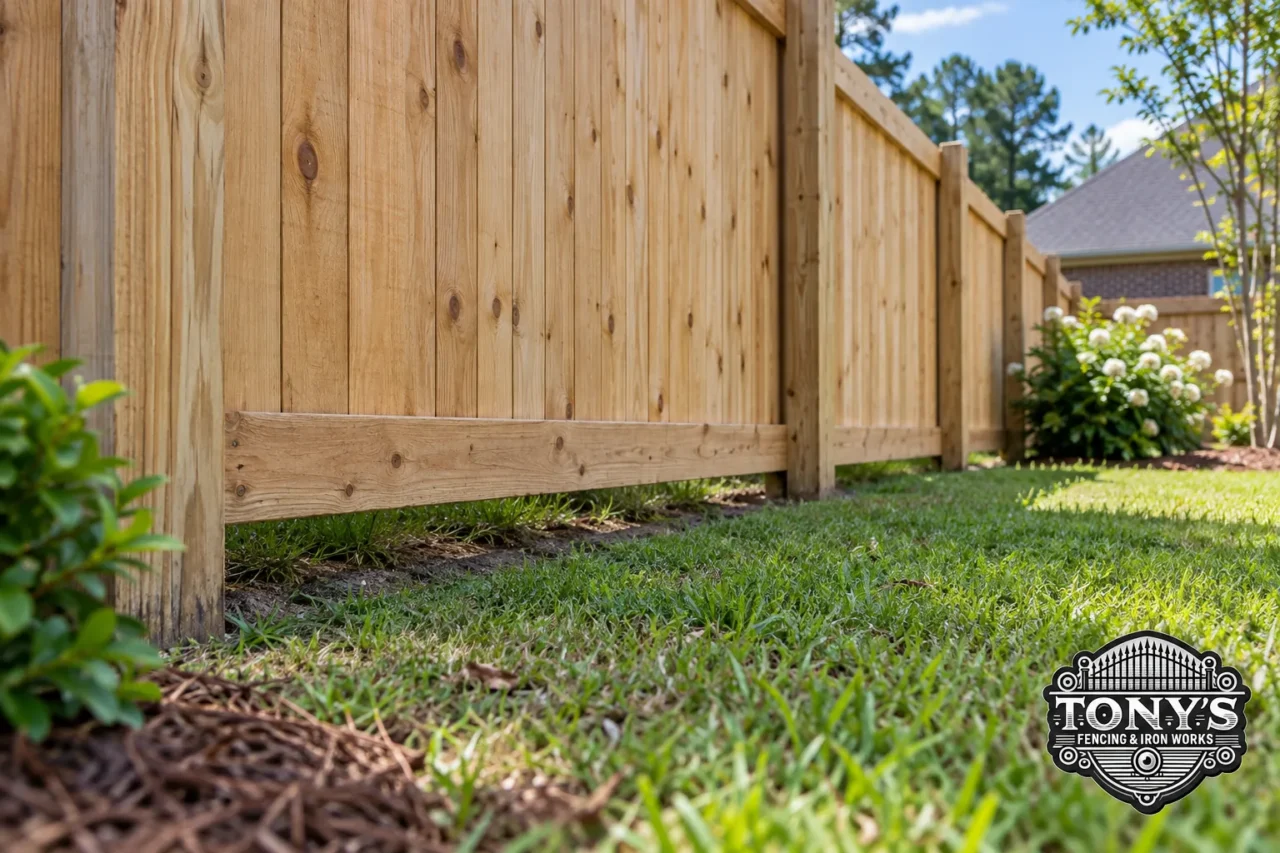
How Much Gap Should Be Under a Fence in Louisiana?
A gap under a fence in Louisiana is not always a construction mistake. In fact, a small amount of clearance can help keep wood away from wet soil, allow water to move through the yard and accommodate uneven ground.
However, too much space can create problems for pets, privacy and security. The right amount depends on the fence material, yard slope, drainage, gate placement and how the property will be used.
Should There Be a Gap Between a Fence and the Ground?
Yes, many fences benefit from a small amount of ground clearance. For wood fencing, keeping the bottom of the boards from constantly touching damp soil can help reduce moisture exposure and make lawn maintenance easier.
There is no single gap that works for every Louisiana property. A relatively flat wood-fence installation may have only a small space below the pickets. A sloped yard may require larger sections of clearance, stepped panels or a custom installation. Pet containment, drainage and erosion must also be considered.
Why the Bottom of a Fence Matters So Much in Louisiana
Southeast Louisiana yards rarely stay completely dry. Heavy thunderstorms, humid conditions, drainage ditches, soft soil and low spots can keep the bottom of a fence exposed to moisture.
Therefore, installing wood directly against the ground may create unnecessary moisture exposure. Dirt, leaves and mulch can also collect against the bottom boards and hold moisture there even after the rest of the fence dries.
At the same time, raising the fence too high can create another set of problems. Small pets may find a way underneath. Rain can erode soil and make the opening larger. In addition, homeowners may dislike the loss of privacy.
The goal is not simply to make the gap as small as possible. Instead, the fence should work with the property.
5 Reasons a Fence May Need Ground Clearance
1. Moisture Protection
Wood that constantly touches damp soil, grass or mulch may stay wet longer. A little clearance allows the bottom of the boards to dry more easily after rain.
2. Yard Drainage
Water needs somewhere to go. A fence should not accidentally create a dam across a natural drainage path. This matters especially in low areas and yards that hold water after Louisiana thunderstorms.
3. Uneven Ground
Very few yards are perfectly level. Small rises and dips can change the space beneath individual fence sections. A professional layout balances appearance with the actual contour of the property.
4. Lawn Maintenance
Leaving appropriate clearance may make mowing and trimming easier. However, lawn equipment should still be kept away from posts and pickets because repeated string-trimmer impacts can damage a fence.
5. Wood Movement
Natural wood responds to changing moisture conditions. Giving boards appropriate clearance from the soil helps separate normal wood movement from problems created by constant ground contact.
Planning a Wood Fence?
Ground clearance is only one part of building a wood fence for Southeast Louisiana conditions. Material selection matters too.
So, How Much Space Should Be Under a Wood Fence?
Homeowners often want a specific number. However, the correct answer depends on the yard.
On many relatively level properties, a small gap keeps the pickets from resting directly in soil or wet grass. Tony’s existing wood-fence maintenance guidance recommends keeping soil and mulch away from the bottom of wood boards rather than allowing moisture-holding material to stay against the fence.
On another property, the clearance may change because the ground slopes. Trying to force every picket against an uneven yard can create a crooked-looking fence or cause wood to contact the soil in low areas.
Tony’s Tip:
Do not judge a fence installation by the bottom gap alone. Look at drainage, grade, post alignment, top-line appearance, pet needs and how water moves through the yard.
What If Your Louisiana Yard Is Sloped?
A sloped yard changes the entire conversation.
If the top of the fence follows one smooth line while the ground drops underneath it, the gap may become larger as the grade changes. Alternatively, fence sections may be stepped to follow the terrain.
Neither method is automatically right or wrong. The better design depends on the slope, fence style, desired appearance and whether a small animal needs to remain inside the yard.
This is one reason measuring only the total fence length is not enough when planning a project. The installer also needs to see the actual grade.
Do Not Block Louisiana Yard Drainage to Close a Fence Gap
This is especially important in Southeast Louisiana.
After a hard rain, watch where the water travels. Some properties naturally move water toward a ditch, swale, drainage inlet or lower section of the yard.
Filling every opening beneath a fence with solid material could interfere with that flow. Therefore, homeowners should understand why the gap exists before closing it.
The LSU AgCenter recommends considering how the contours of a landscape move water and emphasizes the importance of drainage around Louisiana homes and yards.