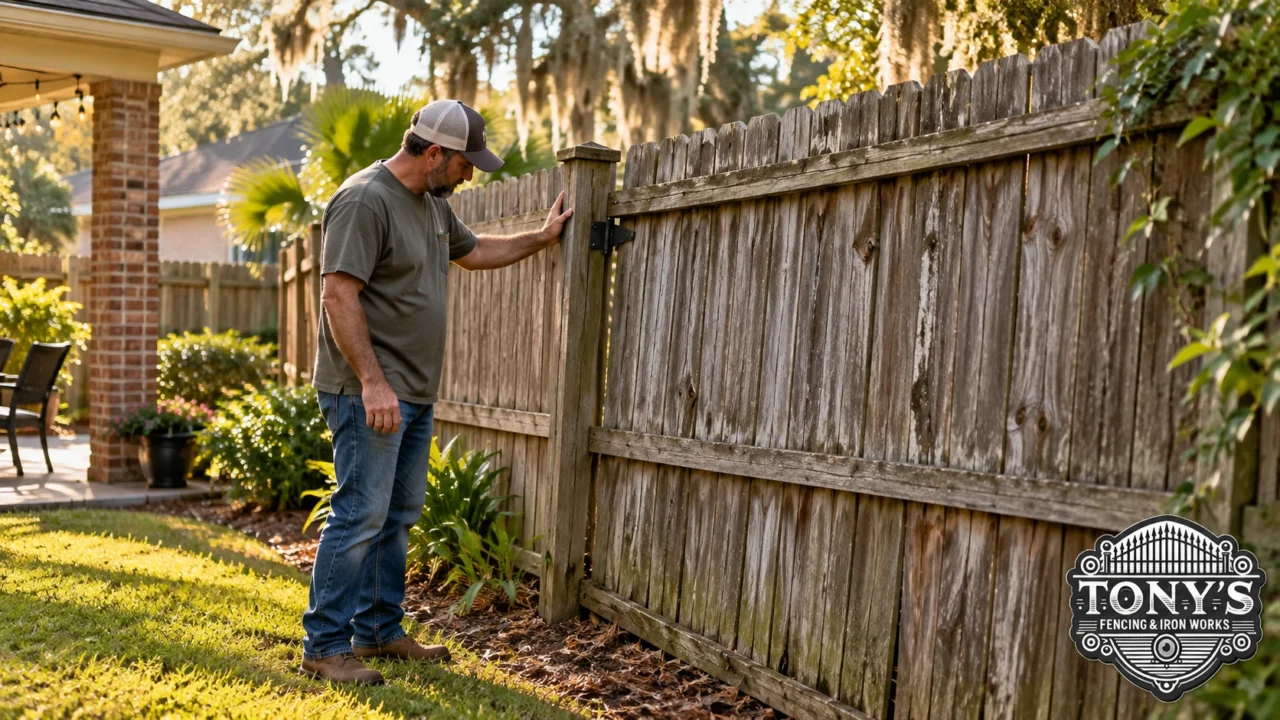
Should You Repair or Replace a Fence in Louisiana? 9 Warning Signs
Deciding whether to repair or replace a fence in Louisiana usually comes down to one important question: is the damage limited to a few parts, or is the fence itself beginning to fail?
Louisiana heat, humidity, heavy rain, soft ground and storm-season weather can all affect fences. However, one broken board does not automatically mean you need a new fence. Knowing what to inspect can help you make a smarter decision before spending money.
Ponchatoula • Hammond • Covington • Mandeville • Madisonville • Slidell • Folsom • Franklinton
When Should You Repair a Fence Instead of Replacing It?
Fence repair often makes sense when the damage is isolated, most posts remain firm and the rails are still structurally sound. Replacement may make more sense when several posts are failing, rot or corrosion appears throughout the fence, large sections lean, or repairs keep appearing in different places.
Why Late Summer and Fall Are Good Times to Check Your Fence
By late summer, a Southeast Louisiana fence has already dealt with months of strong sunlight, high humidity, thunderstorms, heavy rain and regular yard maintenance.
As a result, problems that were difficult to notice earlier may become more obvious. Posts may begin leaning. Gates may start dragging. Boards may loosen, split or shift. Soil may also wash away around a post after repeated rain.
Therefore, walking your fence line now can help you catch smaller problems before they grow into larger repairs.
9 Signs That Help You Decide Whether to Repair or Replace Your Fence
Do not judge your fence by one ugly picket. Instead, look at the entire system, including the posts, rails, boards, gates, hardware and the ground supporting it.
1. Only One or Two Boards Are Damaged
A broken, warped or loose picket does not automatically mean the whole fence needs replacement.
If the surrounding posts and rails remain strong, replacing several individual boards may restore both appearance and function.
Usually points toward: Repair.
2. Several Fence Posts Are Leaning
Fence posts support the entire structure. Therefore, several loose or leaning posts deserve more attention than cosmetic board damage.
Wet soil, erosion, decay and repeated weather exposure may all contribute to post movement. If only one post has a problem, repair may be practical. However, movement throughout a long fence line can indicate a larger structural issue.
Could point toward: Repair or replacement, depending on how widespread the movement is.
3. Your Gate Suddenly Drags or Will Not Latch
A gate that suddenly scrapes the ground can be an early warning sign.
Sometimes the hinges simply need adjustment. However, the supporting gate post may also have shifted.
First, look at the hinges and latch. Next, check whether the gate still appears square. Finally, inspect the supporting posts and nearby fence sections for movement.
Usually points toward: Repair, unless post movement affects a larger section.
4. Rot Appears in Several Areas
Surface discoloration and actual wood decay are not necessarily the same thing.
Wood that feels soft, breaks easily, loses material around fasteners or crumbles under light pressure deserves closer inspection.
Moisture management is especially important for outdoor wood in Louisiana. When decay affects only a few boards, those boards may be replaceable. On the other hand, deterioration affecting posts, rails and multiple sections may make repeated repairs less practical.
Read LSU AgCenter Wood-Decay Information →
Could point toward: Replacement when structural decay is widespread.
5. The Same Fence Keeps Needing Repairs
One fence repair is normal. A damaged rail, loose board or broken gate hinge does not necessarily mean the fence is finished.
However, repairs in different places every few months can change the equation.
If posts, rails, gates and pickets are all failing at different times, homeowners may eventually spend money preserving a fence that is nearing the end of its practical life.
Often points toward: Comparing future repair costs with replacement.
6. A Long Section Moves When You Push It
Some flexibility is normal in a fence. However, a long section that noticeably moves at ground level deserves closer inspection.
Pay attention to where the movement begins. A loose board or rail is different from an entire fence post moving in the ground.
Could point toward: Structural repair or partial replacement.
7. The Bottom of Your Fence Stays Wet
Standing water and drainage problems can work against a fence over time.
In addition, moving water may wash soil away from posts. Simply replacing damaged boards without addressing the moisture problem may allow similar damage to return.
Therefore, determine why an area stays wet before deciding what to repair or rebuild.
8. Storm Damage Is Limited to One Section
A falling branch or windblown object may damage several boards while leaving the rest of the fence stable.
In that situation, repairing one section may make more sense than replacing the entire fence.
However, inspect beyond the obvious impact point. Wind and falling debris may loosen nearby hardware, rails or posts even when those parts still look normal.
Usually points toward: Repair when the surrounding structure remains sound.
9. Your Fence No Longer Does What You Need
Sometimes a fence is not technically failing. Instead, your needs changed.
Maybe you need more privacy, a wider mower gate, better driveway access, a different height or another fence material.
In that situation, spending heavily on repairs may not solve the real problem.
Could point toward: Replacement, redesign or an addition to the existing fence.