NORTHSHORE LOUISIANA • NOVEMBER 2026 • FENCE CARE
Termite Damage on Wood Fences in Louisiana: 7 Warning Signs & What to Do
Termite damage on wood fences in Louisiana can start long before a homeowner notices a broken board or leaning post. Warm weather, moisture, and wood-to-soil contact can create conditions that support termite activity across Southeast Louisiana.
Whether you live in Ponchatoula, Covington, Mandeville, Madisonville, Hammond, Slidell, or a nearby Northshore community, knowing what to look for can help you catch problems before they become expensive fence repairs.
In this guide, we’ll explain how to recognize possible termite damage, how to tell it apart from wood rot, and what you can safely do yourself. We’ll also discuss when it’s time to call a termite professional or a fence contractor.
🔎 Quick Answer: Can Termites Destroy a Wood Fence?
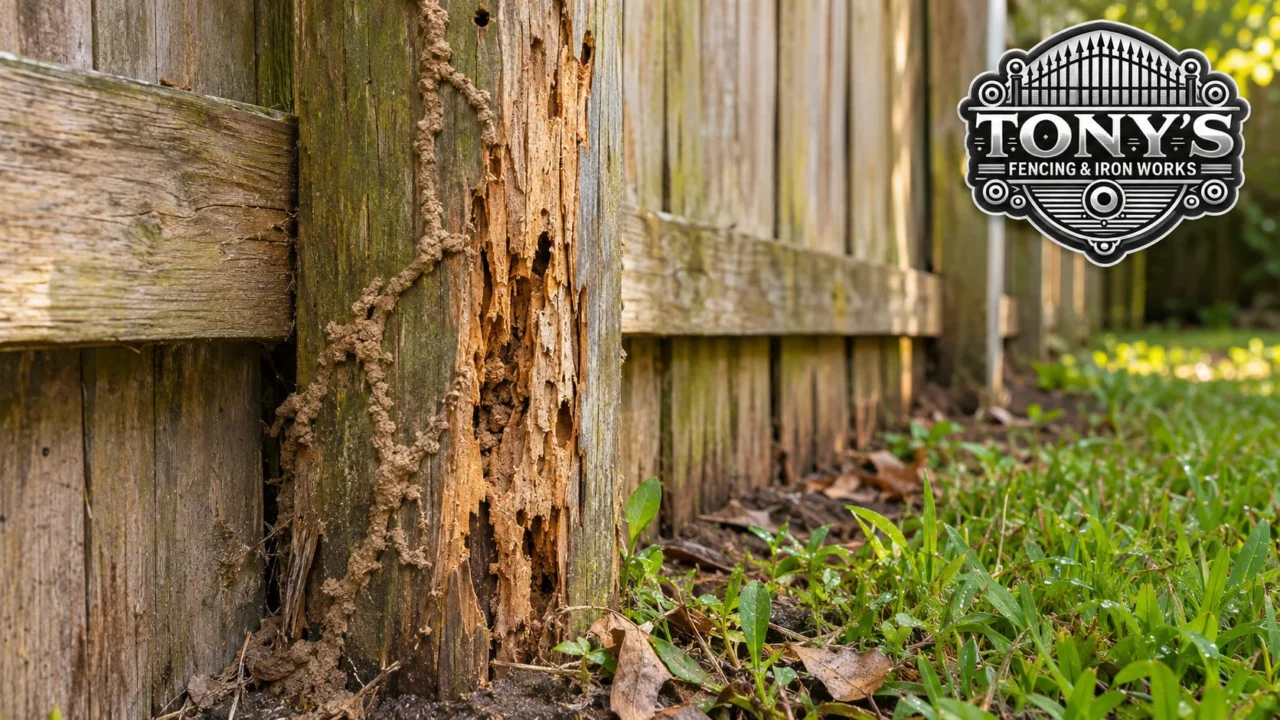
Yes. Termites can damage wood fence boards, rails, and posts. Signs may include mud tubes, hollow sections, internal tunnels, and weakened wood. However, not every damaged fence has termites. Moisture-related decay and other insects can produce similar symptoms. A qualified pest professional can identify the cause.
Why Are Wood Fences Vulnerable to Termites in Louisiana?
Louisiana’s warm, humid environment can support subterranean termites. These insects often travel through soil and protected tunnels to reach wood. As a result, fence posts and other wooden components may provide a food source.
According to the LSU AgCenter’s termite resources, termite prevention involves moisture management, suitable building materials, and reducing conditions that provide hidden access.
Wood fences deserve attention because they are exposed to rain, soil, irrigation, and changing temperatures. Additionally, old lumber and landscaping debris near a fence may make inspection more difficult.
🌧️ Louisiana Homeowner Tip
After heavy rain, inspect areas where water collects around fence posts. Wet conditions do not automatically mean termites are present. However, moisture problems can contribute to wood deterioration and make damage harder to identify.
7 Warning Signs of Termite Damage on Wood Fences
1. Mud Tubes on Fence Posts
Subterranean termites may build narrow, soil-like tubes along wood, masonry, or other surfaces. These tubes provide protected travel routes.
DIY tip: Look around the base of fence posts and nearby structures. Photograph suspicious tubes before disturbing anything. Avoid removing evidence until a pest professional has inspected it.
2. Wood That Sounds Hollow
Termites may consume wood internally while leaving portions of the exterior intact. Therefore, a board may appear relatively normal despite hidden damage.
DIY tip: Gently tap accessible fence boards and compare their sound with nearby undamaged sections. A hollow sound is not proof of termites, but it may justify closer inspection.
3. Unusual Tunnels Inside Damaged Wood
When damaged wood breaks open, you may notice internal galleries or channels. Some subterranean termite galleries contain soil-like material.
DIY tip: Photograph any exposed tunnels. Do not dismantle a load-bearing gate post or unstable fence section just to investigate.
4. Weak or Crumbling Fence Posts
A deteriorating fence post may wobble, split, or lose strength near ground level. Termites are one possible cause. However, fungal decay, poor drainage, and physical damage can create similar problems.
DIY tip: Observe the post without applying force. If it supports a heavy gate or unstable fence section, keep people away until the structure is evaluated.
5. Discarded Wings or Swarming Insects
Termite swarmers may appear during seasonal reproductive flights. In Louisiana, many prominent swarms occur during warmer months, although timing varies by species and weather.
DIY tip: Save a clear photograph or insect sample for identification. Flying ants are sometimes confused with termite swarmers.
6. Damage Hidden Behind Plants or Debris
Dense vegetation, stored lumber, and accumulated debris can hide fence damage. They may also make it harder to notice mud tubes or moisture problems.
DIY tip: Trim vegetation carefully and remove loose debris from the fence line. Avoid disturbing any existing termite treatment system near your home.
7. Multiple Fence Sections Begin Failing
One damaged picket may be an isolated problem. However, several weakened posts or rails can indicate a broader issue involving insects, moisture, installation, or aging materials.
DIY tip: Walk the fence line and record every affected location. This information can help a pest professional and fence contractor evaluate the extent of the problem.
🛠️ Is Your Fence Showing Signs of Damage?
Tony’s Fencing & Iron Works provides wood fence repair and replacement services throughout the Northshore. Let us help you determine the right solution for your damaged fence after any suspected termite activity has been evaluated.
Call Tony: (985) 703-0595
Termite Damage vs. Wood Rot: How Can You Tell?
Termites and wood rot can both weaken a fence. However, they are different problems and require different solutions.
| Warning Sign | Possible Termite Damage | Possible Wood Rot |
|---|---|---|
| Mud tubes | May be present | Not a typical sign |
| Internal tunnels | Possible | Usually different decay patterns |
| Soft or crumbling wood | Possible | Common |
| Dark discoloration | Not diagnostic | May accompany moisture damage |
| Swarming insects | May indicate nearby termite activity | Not caused by rot itself |
Keep in mind that termites and decay can occur in the same piece of wood. Therefore, visual clues alone may not establish the cause.
For additional information on moisture-related fence problems, read our guide to preventing wood fence rot in Louisiana.
DIY Fence Inspection: What Can You Safely Do Yourself?
Fortunately, homeowners can perform a simple visual inspection without specialized equipment. November is a convenient time to check fence conditions as temperatures become more comfortable across Southeast Louisiana.
🔨 Your 15-Minute Fence Inspection Checklist
Step 1: Walk the entire fence line. Look for broken pickets, leaning sections, and exposed damage.
Step 2: Inspect visible post bases. Check for mud tubes, standing water, and deteriorated wood.
Step 3: Examine shaded areas. Use a flashlight to look behind accessible vegetation and along fence rails.
Step 4: Check gate operation. A dragging gate may indicate a loose hinge, shifted post, or weakened support.
Step 5: Photograph suspicious areas. Take close-up pictures and one wider photo showing each location.
Step 6: Remove loose debris. Clear fallen branches, leaves, and scrap wood where safe to do so.
Step 7: Decide who to call. Suspected termites require a qualified pest professional. Structural fence damage may require a fencing contractor.
Important: Do not spray unknown chemicals, disturb suspected termite activity, or attempt to lift a failing fence section. DIY inspection is useful, but it does not replace professional identification or treatment.
How to Help Prevent Termite Problems Around a Wood Fence
Keep the Fence Line Clear
Remove discarded lumber and other unnecessary wood debris. Additionally, keep plants trimmed enough to allow visual inspection.
Address Standing Water
Watch for leaking irrigation lines, blocked drainage, and recurring puddles. Correcting moisture problems may also help reduce wood decay.
Use Suitable Fence Materials
Choose materials rated for their intended exposure. Fence posts that contact soil need appropriate ground-contact-rated materials. Not all pressure-treated lumber is rated for the same use.
Learn about material options on Tony’s wood fencing services page.
Avoid Creating Hidden Paths to Your Home
Fence components, landscaping features, and other wood-to-soil connections can create potential pathways for termites. Be especially careful when a wooden fence or attached structure meets your house.
Schedule Professional Termite Inspections
A licensed pest management professional can evaluate suspicious activity and recommend appropriate treatment. A fencing contractor can then address damaged fence components once the pest issue has been evaluated.
⚠️ Don’t Rely on Fence Stain to Stop Termites
Stains and sealers can help protect wood from weather exposure when properly selected and maintained. However, ordinary decorative fence stain is not a substitute for a registered termite treatment or professional pest management.
Should You Repair or Replace a Termite-Damaged Fence?
The answer depends on the extent of the damage, the condition of the supporting posts, and whether the underlying pest problem has been addressed.
When a Fence Repair May Be Enough
If damage is limited to a few boards or rails and the supporting structure remains sound, targeted replacement may be practical. However, suspected termite activity should be evaluated first.
When Fence Replacement May Be Better
Replacement may make more sense when multiple posts are compromised, the fence leans significantly, or damage affects much of the structure. In these cases, repeated small repairs may not provide a lasting solution.
For a more detailed comparison, visit our Louisiana fence repair vs. replacement guide.
🔧 Not Every Damaged Fence Needs Replacing!
Broken boards, damaged rails, and deteriorating posts don’t always mean it’s time for an entirely new fence. Tony’s Fencing & Iron Works offers professional wood fence repair services to help restore your property’s security, privacy, and curb appeal.
Explore our repair services or contact Tony for a free estimate.
What About Cedar, Pine, Vinyl, and Iron Fences?
Material selection matters in Louisiana. However, no fence material eliminates the need for proper installation and regular inspection.
| Fence Material | Termite Considerations |
|---|---|
| Cedar | Some natural resistance, but not termite-proof |
| Pressure-Treated Pine | Proper treatment improves resistance; rating and installation matter |
| Vinyl | Vinyl itself is not a termite food source |
| Ornamental Iron | Iron is not consumed by termites; corrosion and other maintenance still matter |
For homeowners considering a new fence, Tony’s Fencing & Iron Works offers multiple fencing materials and custom designs. The right choice depends on your property’s layout, budget, privacy needs, and maintenance preferences.
Why Local Fence Experience Matters on the Northshore
Fence installation in Ponchatoula, Hammond, Covington, Mandeville, and surrounding communities requires attention to soil conditions, drainage, material selection, and property layout.
Tony’s Fencing & Iron Works has more than 30 years of experience building fences, gates, and custom ironwork across the Northshore.
Whether you’re replacing damaged wood fencing or considering a different material, professional planning can help you avoid repeating problems caused by poor installation or unsuitable materials.
🏡 Explore More Fence Resources
🌲 Wood Fencing Options for Louisiana Homes →
🔧 Professional Wood Fence Repair Services →
🛠️ How to Prevent Wood Fence Rot →
Frequently Asked Questions About Termite Damage on Wood Fences
Can termites eat pressure-treated fence posts?
Properly treated wood is more resistant to termite damage than untreated wood. However, protection depends on the treatment, intended use, cuts, installation, and exposure. Termites may also travel over treated materials to reach untreated wood.
How do I know if my fence has termites or wood rot?
Mud tubes and internal galleries may suggest termite activity. Soft, decayed wood may indicate fungal deterioration. Because symptoms overlap, a professional inspection is the best way to determine the cause.
Can termites spread from my fence to my house?
Termites do not necessarily move directly from a fence into a house. However, wooden features connected to the ground and home may provide pathways that allow termites to bypass protective barriers. Have suspicious activity near your house evaluated promptly.
Should I remove a fence post that has termites?
Do not immediately remove a suspected infested post without considering safety and pest identification. First, contact a qualified termite professional. Then, have a fence contractor evaluate whether the post needs replacement.
Do termites damage cedar fences?
Yes. Cedar has some natural resistance, but it is not immune to termite activity. Species, wood condition, moisture, and installation all affect durability.
Can I treat termites in my fence myself?
Homeowners can inspect and reduce moisture or debris problems. However, suspected termite infestations should be evaluated by a qualified pest professional. Improper chemical treatment can be ineffective or unsafe.
Are termites active in Louisiana during November?
Termites may remain active outside the main swarming season, especially when conditions are favorable. Therefore, November is still a useful time to inspect fences for damage and moisture problems.
Does Tony’s Fencing & Iron Works repair termite-damaged fences?
Tony’s provides fence repair and replacement services. If termites are suspected, have the pest problem evaluated by a qualified pest professional before completing structural fence repairs.
The Bottom Line: Protect Your Fence Before Small Problems Grow
Termite damage on wood fences in Louisiana is not always obvious. However, routine inspections, moisture management, suitable materials, and timely professional help can reduce the chance of overlooking serious problems.
Start by checking your fence for mud tubes, weakened posts, hidden tunnels, and unusual deterioration. If you suspect termites, contact a qualified pest management professional. If your fence has structural damage, Tony’s Fencing & Iron Works can help evaluate your repair or replacement options.
🌿 Ready to Repair or Replace Your Fence?
From damaged wood fencing to custom gates and new installations, Tony’s Fencing & Iron Works serves homeowners and businesses throughout Ponchatoula, Covington, Mandeville, Hammond, Slidell, and surrounding Northshore communities.
30+ Years of Fencing & Ironwork Experience • Serving Southeast Louisiana
Educational resources: U.S. Environmental Protection Agency and LSU AgCenter. This article provides general fence maintenance information and does not replace professional pest identification or treatment.