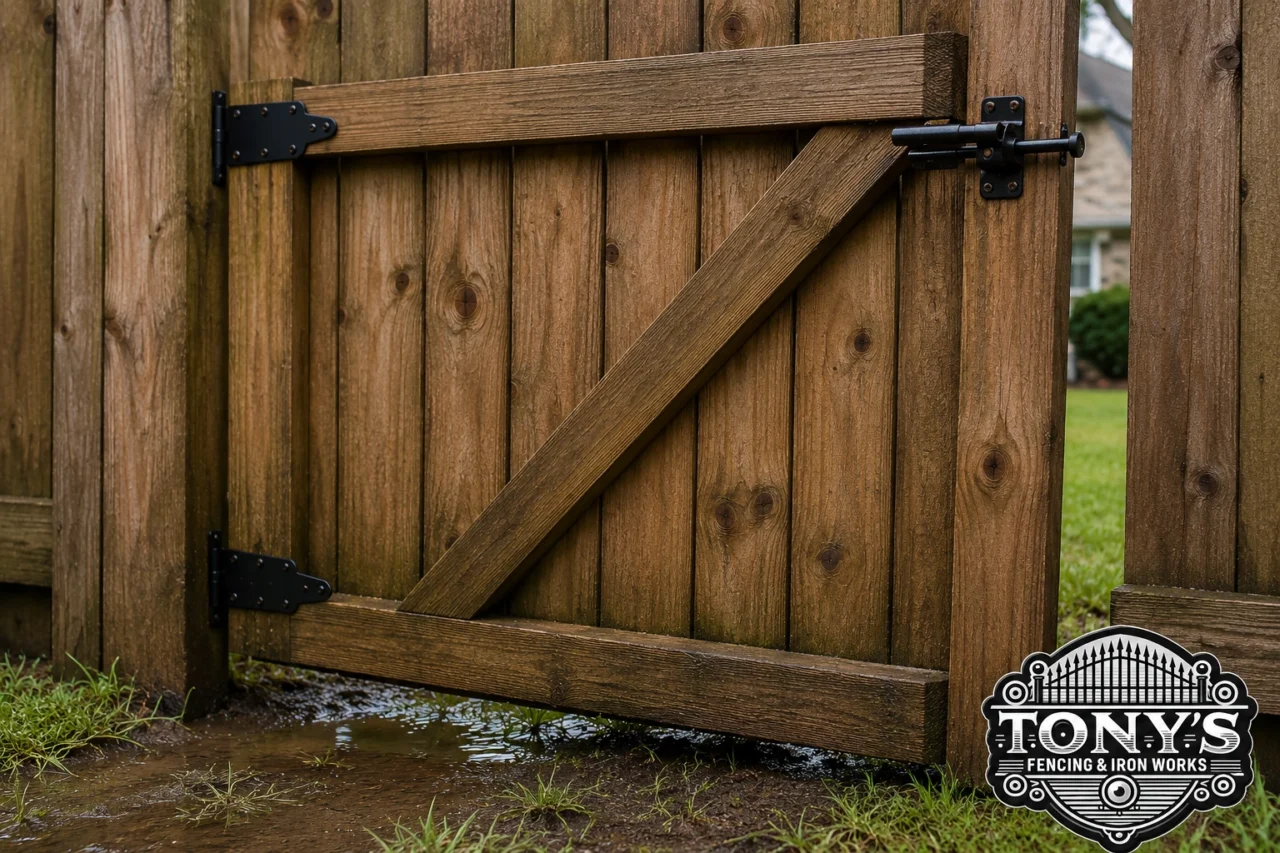
If your fence gate worked fine a few weeks ago but now drags, sticks, or will not latch after a heavy rain, you are not imagining things. A fence gate that won’t close after rain in Louisiana is usually a sign that moisture, soil movement, wood swelling, or post pressure has changed the way the gate lines up.
In Southeast Louisiana, this problem is especially common during summer. Heavy rain, high humidity, soft ground, and tropical weather patterns can all affect fences and gates. According to the National Oceanic and Atmospheric Administration, the Atlantic hurricane season runs from June 1 through November 30, which means summer is the right time for homeowners to pay closer attention to outdoor structures like fences, gates, and pool enclosures.
A gate is one of the hardest-working parts of any fence. Unlike a regular fence panel, a gate moves, swings, carries weight, and depends on both posts staying properly aligned. When the ground gets saturated, even a small shift can make the latch miss, the bottom drag, or the gate frame sag.
For homeowners in Covington, Mandeville, Madisonville, Hammond, Ponchatoula, Slidell, and surrounding Northshore communities, this is not just a convenience issue. A failing gate can affect privacy, security, pets, children, pool safety, and curb appeal.
The good news is that a gate problem does not always mean the whole fence needs to be replaced. In many cases, a professional adjustment or repair can solve the issue before it becomes a larger fence problem. Tony’s Fencing and Iron Works provides local fence repair, gate repair, and custom gate installation throughout Southeast Louisiana.
Why Fence Gates Move After Heavy Rain
Fence gates depend on balance. The hinges hold the gate on one side, while the latch needs to meet the post on the other side. If either post moves even slightly, the gate may stop working correctly.
After heavy rain, the soil around fence posts can soften. When that happens, the post may lean, settle, or twist under the weight of the gate. This is especially common in yards with poor drainage, low spots, or soil that stays wet for several days.
Tony’s Fencing has already covered why drainage matters for fence life in its guide on yard drainage and fence longevity in Louisiana. That same issue can also affect gate performance. When water collects around gate posts, the support system below ground can weaken over time.
Wood also reacts to moisture. When wood absorbs water, it can swell. When it dries out again, it can shrink. Over time, that cycle can cause boards to cup, twist, crack, or pull against fasteners. Even treated wood needs proper installation and maintenance to last in humid climates. The LSU AgCenter also recommends keeping moisture away from wood where possible, especially around ground-contact areas.
That is why a gate may seem fine during dry weather but suddenly become difficult to close after several days of rain.
The Most Common Reasons a Fence Gate Will Not Close
A gate that will not close usually has one or more problems happening at the same time. Understanding the cause matters because the right fix depends on what has shifted or failed.
1. The Gate Post Has Shifted
The hinge post is the main support for the gate. If that post leans, the whole gate moves with it. A small lean at the bottom of the post can create a much larger alignment problem at the latch.
This often happens when the post was not set deep enough, the concrete footing has weakened, or water has softened the soil around the post. In Louisiana, standing water near a gate post is a warning sign.
If the post moves when you push the gate, the problem is probably more than a latch adjustment. The post may need to be reset or replaced.
2. The Gate Frame Is Sagging
A sagging fence gate usually means the gate frame has dropped out of square. The most common sign is a gate that drags on the latch-side bottom corner.
This can happen when a wood gate was not properly braced, the gate is too wide, or the boards have absorbed moisture and added weight. Wider gates need stronger framing and hardware because they put more pressure on the hinge side.
For wood privacy fences, gate construction is especially important. A well-built wood gate should have proper bracing, strong hinges, and enough post support to handle daily use. Homeowners planning a new gate may also want to review Tony’s wood fencing services to understand the different wood fence options available in Southeast Louisiana.
3. The Hinges Are Loose or Too Small
Hinges carry the full weight of the gate. If the hinges are too light for the gate, the screws may pull loose over time. After rain, the added moisture in wood can make this worse.
Loose hinges may cause the gate to drop slightly. At first, the gate may only rub. Later, it may stop latching completely.
A simple hinge adjustment can help in some cases. However, if the screws keep pulling out, the gate may need stronger hardware or structural repair.
4. The Latch Is Misaligned
Sometimes the gate is still mostly square, but the latch no longer lines up with the catch. This is one of the easiest gate problems to notice because the gate almost closes but will not click into place.
A misaligned latch may be caused by a small post shift, loose hardware, or swelling wood. Moving the latch may work temporarily, but if the post or frame continues to move, the problem will return.
5. The Gate Is Too Heavy for the Opening
Some gates are built too heavy for the posts and hardware supporting them. This can happen with tall privacy gates, double gates, decorative wood gates, or custom iron gates.
A heavy gate needs stronger support than a standard fence panel. This is especially true for driveway gates and larger access gates. Tony’s Fencing builds and repairs custom gates and automatic gates for homeowners who need a stronger, longer-lasting entry solution.
6. Rust or Corrosion Is Affecting the Hardware
Iron, steel, and metal hardware can hold up well when properly installed, but Louisiana humidity can speed up rust. Hinges, bolts, screws, and latches are especially vulnerable because they are exposed to rain and moisture.
A rusty hinge may not swing smoothly. A rusted latch may stop catching correctly. If corrosion is ignored, hardware can weaken and eventually fail.
For ornamental iron and metal gates, regular inspections can help prevent small hardware problems from becoming larger structural issues.
Why Louisiana Weather Makes Gate Problems Worse
Southeast Louisiana weather creates a difficult environment for fences and gates. Homeowners deal with humidity, heavy rain, heat, hurricanes, termites, and soft soil. These conditions can affect wood, vinyl, metal, and chain link fencing in different ways.
Wood fences may swell, shrink, rot, or warp if moisture is not managed. Vinyl fences do not rot, but the posts can still shift if the ground moves. Chain link gates can sag when posts lean or hinges loosen. Iron gates are strong, but they still depend on stable posts and properly maintained hardware.
That is why local installation experience matters. A fence gate in Southeast Louisiana needs to be built for the weather and soil conditions here, not just for appearance.
Why Pool Gates Need Extra Attention
Pool gates should always close and latch correctly. If a pool gate sticks, drags, or fails to latch after rain, it should be repaired quickly.
Pool fence gates are part of a safety barrier. A gate that does not self-close or self-latch can create a serious safety concern. The Louisiana Legislature provides state law resources related to swimming pool safety, but local rules and property requirements may also apply.
Homeowners with aluminum pool fencing or other pool enclosures can learn more about Tony’s custom pool aluminum fencing services. If a pool gate is out of alignment, it is better to fix it before summer pool use increases.
Automatic Driveway Gates Can Be Affected by Rain Too
Automatic driveway gates can also have problems after heavy rain. If the post shifts, the gate may no longer open and close smoothly. That puts extra stress on the opener, hinges, wheels, track, or latch system.
Common warning signs include:
- The gate stops before fully closing.
- The opener sounds strained.
- The gate drags or scrapes.
- The two sides of a double gate no longer meet evenly.
- The gate closes, then reverses.
- The latch or lock does not line up.
If an automatic gate starts acting differently after rain, do not force it. The opener should not have to fight a gate that is out of alignment. A structural gate issue can damage the motor if it is ignored.
How to Inspect Your Fence Gate After Heavy Rain
After a major rainstorm, homeowners can do a simple visual inspection. This does not replace a professional repair, but it can help you spot problems early.
First, stand back and look at the full gate opening. The two posts should look straight. The top of the gate should look level. The gap between the gate and latch post should be fairly even from top to bottom.
Next, open and close the gate slowly. Listen for scraping, grinding, or popping. Watch the latch area to see whether the latch lines up naturally or needs to be forced.
Then, check the bottom of the gate. If it is dragging through grass, mud, gravel, or concrete, the gate may be sagging. Do not keep forcing it open and closed because that can make the problem worse.
Finally, look at the hardware. Loose screws, rusted hinges, bent brackets, and cracked wood near the hinge area are all signs that the gate needs attention.
DIY Fixes Homeowners Should Be Careful With
Some small gate problems can be handled by a homeowner. Tightening a loose screw, clearing mud away from the bottom, or lubricating a latch may help. However, many DIY fixes only cover up the real issue.
Be careful with these common quick fixes:
- Moving the latch without checking the posts
- Cutting the bottom of the gate while it is sagging
- Adding bigger screws into weak wood
- Forcing the gate closed
- Tying the gate to the fence
- Ignoring a leaning post
- Using lightweight hinges on a heavy gate
These fixes may work for a few days, but they usually do not solve the structural problem. If the post is moving or the frame is out of square, the gate will likely continue to fail.
When Gate Repair Is Enough
A repair may be enough when the gate is still in decent condition and the posts are solid.
Gate repair may make sense if:
- The latch needs adjustment.
- The hinges are loose but the post is stable.
- The gate is only slightly sagging.
- The hardware is worn but the frame is strong.
- The problem started recently.
- The wood is not rotted.
- The gate opening is still mostly square.
In these cases, Tony’s Fencing may be able to adjust, brace, reset, or reinforce the gate without replacing the full fence.
When a Gate Should Be Rebuilt
Sometimes rebuilding the gate is the better long-term option. This is especially true if the gate has already been adjusted several times and keeps failing.
A gate may need to be rebuilt if:
- The frame is twisted or badly sagging.
- The wood is rotted, cracked, or warped.
- The hinge post is leaning.
- The gate is too heavy for its hardware.
- The opening is too wide for the current design.
- The gate no longer matches the fence.
- The latch problem keeps returning.
- The gate has become a safety concern.
A rebuilt gate can be made stronger with better bracing, better hardware, and a design that fits the opening correctly.
How to Help Prevent Fence Gate Problems
You cannot stop Louisiana rain, but you can reduce the chances of gate failure with proper maintenance.
Homeowners should:
- Keep mulch and soil away from wood posts.
- Avoid letting water pool around gate posts.
- Trim vines and heavy vegetation off the gate.
- Check hinges and latches after major storms.
- Seal or stain wood when needed.
- Watch for early signs of rot or rust.
- Keep sprinklers from spraying directly on posts.
- Do not hang heavy items on the gate.
- Repair small hardware problems early.
- Schedule a professional inspection if the gate starts dragging.
If you already know your yard holds water, drainage should be part of the conversation. A gate repair will last longer when the surrounding conditions are also addressed.
Local Fence Gate Repair in Covington, Mandeville, Madisonville, Hammond, Ponchatoula, and Slidell
Fence gates in Southeast Louisiana need to be built and repaired with local conditions in mind. A gate that works in a dry climate may not hold up the same way in a humid Northshore yard with soft soil and summer storms.
Tony’s Fencing and Iron Works has more than 30 years of experience building fences, repairing gates, installing ironwork, and creating custom entry solutions across the region. Whether the issue is a sagging wood gate, a pool gate that will not latch, an automatic driveway gate problem, or a privacy fence gate that drags after rain, the first step is finding the real cause.
If your gate will not close after rain, do not wait until it damages the fence or becomes unsafe. Contact Tony’s Fencing and Iron Works for a free estimate.
Call Tony at 985-703-0595 or visit the Tony’s Fencing contact page to request service.
Tony’s Fencing proudly serves Ponchatoula, Hammond, Covington, Mandeville, Madisonville, Slidell, Tangipahoa Parish, St. Tammany Parish, and surrounding Southeast Louisiana communities.
FAQ: Fence Gates After Rain in Louisiana
Why won’t my fence gate close after it rains?
Your fence gate may not close after rain because wet soil can shift the posts, wood can swell, and hardware can move out of alignment. In Southeast Louisiana, heavy rain and humidity make this a common problem.
Can a sagging fence gate be repaired?
Yes, many sagging fence gates can be repaired if the posts and frame are still solid. Repairs may include hinge replacement, latch adjustment, added bracing, or post correction.
Why does my gate drag on the ground?
A gate usually drags because the frame has sagged, the hinge post has shifted, or the gate has absorbed moisture and become heavier. The problem should be checked before the hardware or post gets worse.
Should I replace the latch if my gate will not close?
Replacing the latch may help if the latch is the only problem. However, if the gate post has shifted or the frame is sagging, a new latch will only be a temporary fix.
Can poor drainage damage a fence gate?
Yes. Poor drainage can soften the soil around gate posts and cause them to move. Standing water can also speed up wood rot and hardware corrosion.
Do pool fence gates need to close by themselves?
Yes, pool fence gates should close and latch properly for safety. If a pool gate sticks, drags, or does not latch after rain, it should be repaired quickly.
Can rain affect an automatic driveway gate?
Yes. Rain can soften the ground around posts and cause alignment problems. If an automatic gate starts dragging, stopping, reversing, or closing unevenly, the gate should be inspected before the opener is damaged.
Who repairs fence gates in Covington and Mandeville?
Tony’s Fencing and Iron Works repairs and builds fence gates across Covington, Mandeville, Madisonville, Hammond, Ponchatoula, Slidell, St. Tammany Parish, Tangipahoa Parish, and surrounding Southeast Louisiana communities.