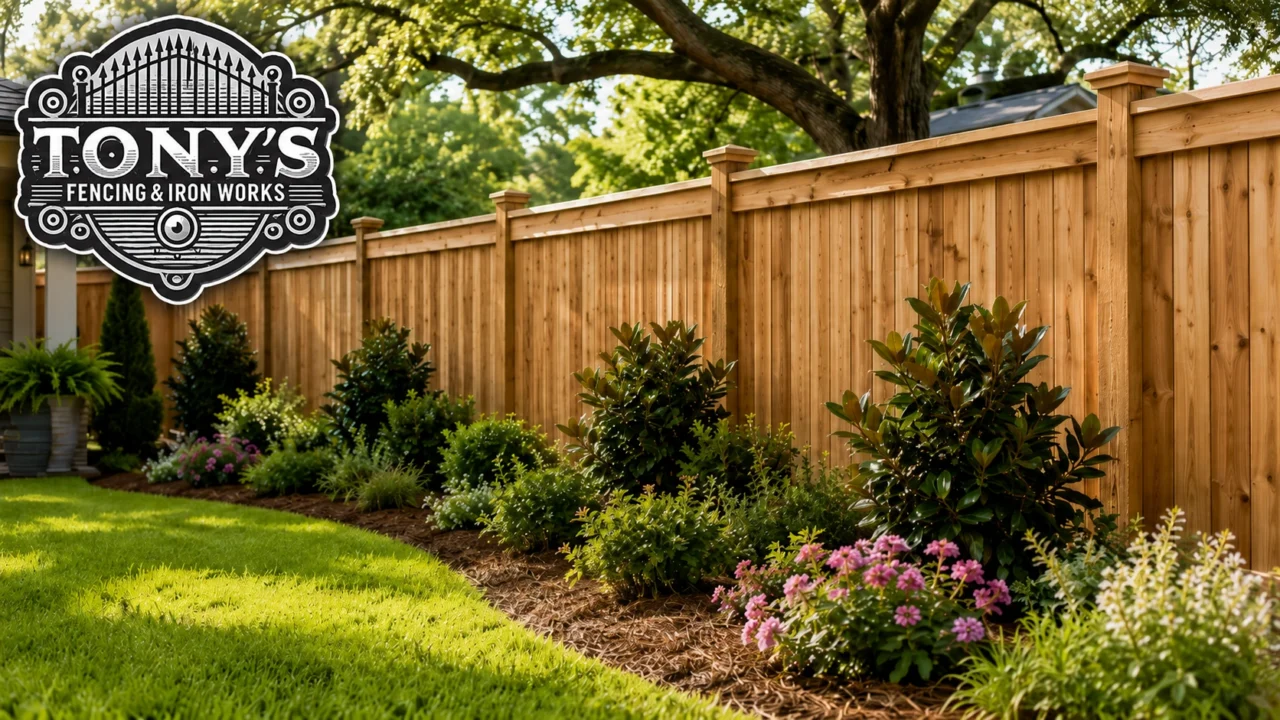
Landscaping around a fence in Louisiana can make a backyard look beautiful, private, and finished. However, the wrong plants, mulch, vines, sprinklers, or drainage choices can shorten the life of your fence. In Southeast Louisiana, fences already deal with heat, humidity, wet soil, fast-growing plants, termites, and heavy lawn maintenance. When landscaping is placed too close to the fence line, small problems can turn into leaning posts, rotten boards, rust, gate issues, and hidden damage.
That does not mean homeowners should avoid landscaping near a fence. It just means the landscaping needs to work with the fence instead of against it. Tony’s Fencing & Iron Works builds wood fences, cedar fences, pine fences, vinyl fences, ornamental iron, chain link, pool fencing, gates, and custom fence layouts across Ponchatoula, Hammond, Covington, Mandeville, Madisonville, Slidell, Abita Springs, Folsom, Franklinton, and the surrounding Northshore. Here is what homeowners should know before planting, mulching, or trimming near a fence line.
Why Landscaping Around a Fence Matters in Louisiana
Landscaping around a fence in Louisiana is different from landscaping in a dry climate. Plants grow fast here. Soil stays damp longer. Mulch holds moisture. Vines spread quickly. Sprinklers can overspray. Termites are a real concern. Lawn equipment also hits posts, pickets, and gates more often than most homeowners realize.
A fence is not just a backdrop for landscaping. It is a structure. It needs airflow, stable soil, clear access, and protection from trapped moisture. When the fence line is planned correctly, landscaping can add privacy, shade, curb appeal, and value. When it is planned poorly, it can hide rot, push panels out of alignment, attract insects, and make repairs harder.
Give the Fence Room to Breathe
One of the most common mistakes homeowners make is planting too close to the fence. Shrubs, flowers, vines, and hedges may look small when first planted, but in Louisiana, they can grow quickly. Over time, they may press against the fence and trap moisture against wood or metal.
That trapped moisture can lead to wood rot, mildew, rust, peeling paint or stain, loose boards, hidden insect activity, and blocked airflow. For wood fences, airflow matters. Cedar and pine both need space to dry after rain, humidity, sprinkler use, or morning dew. If plants are packed tight against the fence, the wood stays damp longer. For ornamental iron fences, trapped moisture can speed up rust around welds, screws, hinges, and bottom rails.
A good rule is to leave a clear maintenance gap between plants and the fence. This makes it easier to trim, inspect, stain, repair, or clean the fence later.
Internal link suggestion:
https://tonysfencingandiron.com/wood-fencing/
Be Careful With Mulch Near Wood Fences
Mulch can make a landscape bed look clean and finished. It also helps plants hold moisture. However, that same moisture can be a problem when mulch is piled against a wood fence.
Homeowners should avoid packing mulch directly against fence pickets, posts, or bottom rails. Mulch can hold dampness at the base of the fence, especially after rain or irrigation. That moisture can encourage rot and make termite concerns worse. This matters even more for fences near flower beds, garden borders, and shaded fence lines.
Mulch should support the landscape, not bury the fence. It is better to keep mulch pulled back from wood posts and boards, use a defined border between the bed and fence, avoid wood chips piled against fence materials, remove scrap wood and yard debris near the fence line, and check the base of the fence during regular lawn care.
External link suggestion:
https://www.lsuagcenter.com/portals/our_offices/parishes/st%20tammany/features/agriculture_horticulture/planting-tips-on-avoiding-termites
Vines Can Be Pretty, But They Can Damage a Fence
Vines are popular because they create a lush, natural look. They can also add privacy and soften the appearance of a fence. However, vines can become a problem if they are allowed to take over.
On wood fences, vines can trap moisture and hide damaged boards. On chain link fences, vines can add weight and pull on the fabric. On iron fences, vines can hold moisture around metal and make rust harder to see. Fast-growing vines can also make it difficult to inspect the fence after lawn work, pet activity, or regular wear and tear.
Before growing vines on a fence, homeowners should think about whether the vine will become too heavy, hold moisture against the fence, make repairs difficult, hide termites, rot, or rust, spread into a neighbor’s yard, or interfere with gates and latches. If you want greenery near the fence, it may be better to plant shrubs or beds near the fence line instead of attaching plants directly to the fence.
Choose the Right Plants for the Right Place
Landscaping around a fence in Louisiana works best when plants are chosen for the location. A sunny fence line, shady fence line, wet area, dry area, and narrow side yard all need different plant choices.
The LSU AgCenter promotes the “right plant, right place” approach because plants perform better when they match the site conditions. That idea matters around fences too. Before planting near a fence, homeowners should consider how wide the plant will get, how tall it will grow, how much trimming it will need, whether it drops limbs or debris, whether it has aggressive roots, whether it holds moisture, whether it blocks access to the fence, and whether it grows into gates or walkways.
A plant may look nice today, but if it grows too large, it can press against the fence, block airflow, and make maintenance harder.
External link suggestion:
https://www.lsuagcenter.com/topics/lawn_garden/master%20gardener/louisiana_yards_neighborhoods/landscape-fundamentals/right-plant-right-place
Watch Out for Sprinkler Overspray
Sprinklers are another hidden fence problem. A sprinkler that hits the fence every day can cause damage over time. For wood fences, repeated water exposure can lead to swelling, staining, mildew, and rot. For iron fences and gates, constant overspray can increase rust risk. For vinyl fences, sprinklers may leave mineral stains or algae buildup.
Homeowners should check their sprinkler pattern and make sure water is aimed at the plants and grass, not directly at the fence. This is especially important near wood privacy fences, cedar fences, pine fences, iron gates, pool fences, side-yard gates, and fence posts near flower beds.
If one area of your fence always looks darker, greener, or dirtier than the rest, sprinkler overspray may be part of the problem.
Internal link suggestion:
https://tonysfencingandiron.com/prevent-wood-fence-rot-louisiana/
Keep Drainage Away From the Fence Line
Drainage is one of the biggest factors in fence performance across Southeast Louisiana. If landscaping redirects water toward the fence, the soil around the posts may stay soft. Over time, that can cause posts to shift, lean, or loosen. It can also create damp areas where wood and metal break down faster.
Homeowners should watch for water pooling near posts, landscape beds sloping toward the fence, soil washing away from the post base, downspouts draining along the fence line, low spots near gates, mulch floating after rain, or fence sections leaning near wet areas.
A fence needs solid, stable ground. If the landscaping traps water along the fence line, the fence may start having problems even if the materials are good.
Internal link suggestion:
https://tonysfencingandiron.com/drainage-swales-ditches-along-fence-lines/
Trim Grass and Edging Carefully
Lawn equipment can quietly damage a fence over time. String trimmers, mowers, edgers, and blowers can chip paint, scar wood, loosen soil, and damage the base of posts. This is common along long fence lines where crews move quickly.
Damage may start small, but repeated hits can leave boards rough, expose untreated wood, or weaken the finish. To protect the fence, homeowners should avoid hitting posts with trimmers, keep grass from growing directly into the fence, use clean edging near fence lines, avoid scraping gates with equipment, check bottom rails after lawn service, and keep soil and grass from building up against wood.
A small border or clean bed edge can protect the fence and make the yard easier to maintain.
Do Not Let Landscaping Block Gates
Gates need clear space to open, close, swing, latch, and lock. Landscaping too close to a gate can create daily frustration. Plants, pavers, mulch, roots, and soil buildup can all interfere with gate function.
Common gate problems include latches blocked by shrubs, hinges hidden by vines, gates dragging through mulch, roots lifting the gate path, plants growing into the opening, soil buildup under the gate, and poor visibility around driveways.
If a gate becomes harder to use, homeowners may push, slam, or force it open. That extra stress can damage hinges, posts, and frames. This is especially important for pool gates, driveway gates, pet gates, and side-yard access gates.
Internal link suggestion:
https://tonysfencingandiron.com/driveway-gate-engineering-louisiana/
Match the Fence Material to the Yard
Some yards are easy on fences. Others are not. If your yard has heavy landscaping, irrigation, pets, shade, drainage issues, or tight side yards, the fence material matters.
Wood fences are beautiful and private, but they need room to dry. Cedar performs well in Louisiana and is a strong option for homeowners who want a natural look with better rot resistance. Pine fencing is a popular choice for privacy and budget-friendly projects, but it needs proper installation, maintenance, and protection from moisture.
Vinyl fencing is low maintenance and handles moisture well, but it still needs proper post installation and drainage. Ornamental iron adds a custom, high-end look, but it should be monitored for rust where water, mulch, or plants stay in contact with the metal. Chain link can work well for pets, utility areas, and large yards, but vines and heavy vegetation can add stress to the fence fabric.
The best fence choice depends on how the yard is used, how much maintenance the homeowner wants, and what conditions exist along the fence line.
Internal link suggestion:
https://tonysfencingandiron.com/cedar-vs-pine-fence-louisiana/
What Should You Avoid When Landscaping Around a Fence in Louisiana?
When landscaping around a fence in Louisiana, homeowners should avoid planting shrubs or vines directly against the fence, piling mulch around wood posts, spraying the fence with irrigation, blocking gates, trapping water near posts, and letting grass or debris build up along the bottom rail. Louisiana’s humidity, termites, wet soil, and fast plant growth can make these problems worse. The best approach is to leave space for airflow, drainage, trimming, inspection, and future fence maintenance.
Frequently Asked Questions About Landscaping Around a Fence in Louisiana
How close should plants be to a fence?
Plants should be far enough from the fence to allow airflow, trimming, and inspection. The exact distance depends on the mature size of the plant. A small shrub may look harmless when planted, but if it grows wide and presses against the fence, it can trap moisture and make maintenance harder.
Is mulch bad for a wood fence?
Mulch is not automatically bad, but it should not be piled directly against wood posts, pickets, or rails. Mulch holds moisture, and constant moisture can increase the risk of rot and insect problems. Keeping mulch pulled back from the fence is a simple way to protect the wood.
Can vines grow on a wood fence?
Vines can grow on a wood fence, but homeowners should be careful. Vines may trap moisture, hide damage, and add weight to the fence. In Louisiana’s humid climate, it is usually better to keep vines trimmed and avoid letting them completely cover the fence.
Can landscaping make a fence lean?
Yes. Poor drainage, wet soil, aggressive roots, and soil erosion near the fence line can all contribute to leaning posts. A fence needs stable ground to stay straight. If landscaping causes water to sit near the posts, the fence may start shifting over time.
What is the best fence for a landscaped backyard?
The best fence depends on the yard. Cedar is a strong choice for natural privacy. Vinyl is low maintenance. Ornamental iron works well for decorative areas. Chain link is practical for pets and large yards. Tony’s Fencing can help match the fence to the property, landscaping, and maintenance goals.
Should sprinklers hit my fence?
No. Sprinklers should be adjusted so they water grass and plants, not the fence. Repeated overspray can cause mildew, staining, rust, and wood damage. If one section of the fence always looks damp or discolored, the sprinkler pattern may need to be adjusted.
Who installs fences in Covington, Mandeville, and Ponchatoula?
Tony’s Fencing & Iron Works installs and repairs fences across Ponchatoula, Hammond, Covington, Mandeville, Madisonville, Slidell, Abita Springs, Folsom, Franklinton, and surrounding Southeast Louisiana communities.
Final Thoughts
Landscaping around a fence in Louisiana can make a yard more beautiful, private, and enjoyable. But the landscaping should protect the fence, not shorten its life.
Homeowners should leave room for airflow, keep mulch away from wood, trim vines and shrubs, watch sprinkler overspray, keep drainage moving away from posts, and make sure gates have room to work properly.
If your fence is already leaning, rotting, rusting, or being swallowed by landscaping, Tony’s Fencing & Iron Works can help you decide whether repair or replacement makes the most sense.
Call Tony’s Fencing & Iron Works at (985) 703-0595 for a free estimate.