🌿 NORTHSHORE LOUISIANA FENCE GUIDE • OCTOBER 2026
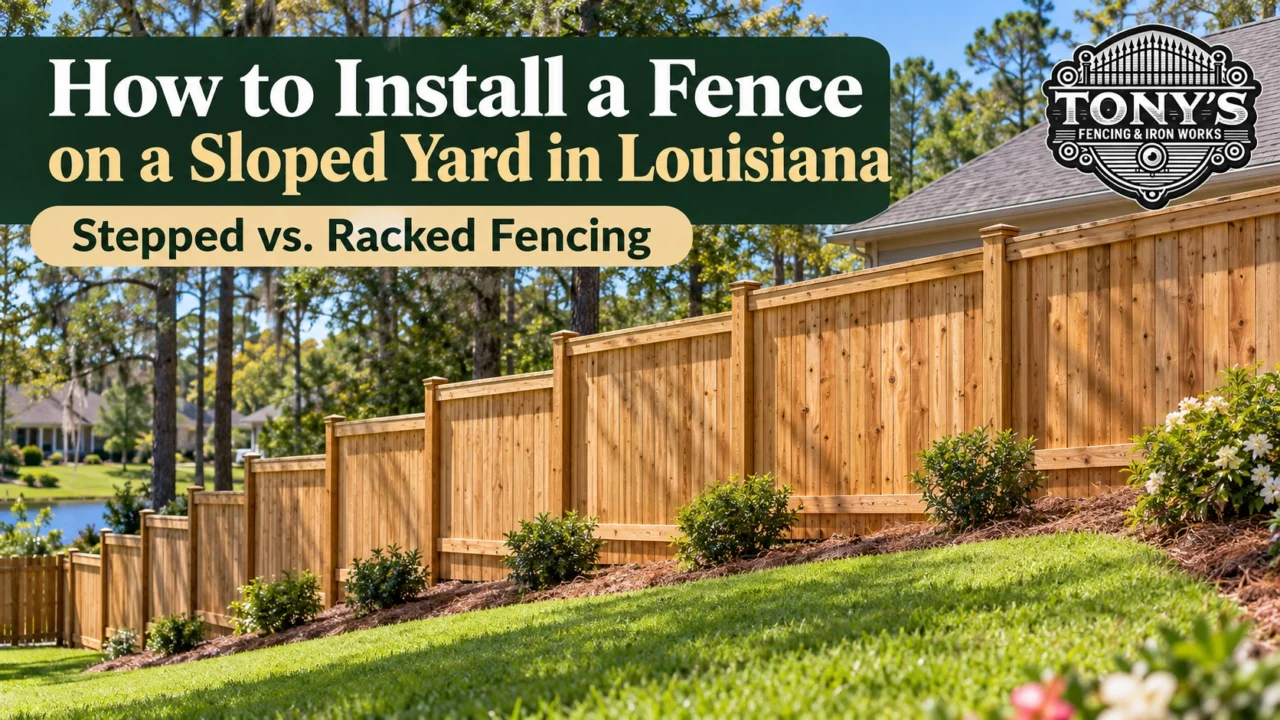
How to Install a Fence on a Sloped Yard in Louisiana: Stepped vs. Racked Fencing
Not every Louisiana backyard is perfectly level. Some properties slope toward drainage ditches. Others have uneven ground near patios, trees, and property lines.
Fortunately, installing a fence on a sloped yard in Louisiana is possible. The key is choosing a design that follows the terrain while protecting privacy, stability, and drainage.
In this guide, we’ll compare stepped and racked fences, explore pine and cedar options, share DIY measuring tips, and answer common questions from Louisiana homeowners.
🌿 Can You Install a Fence on Uneven Ground?
Quick Answer: Yes! A fence can be installed on uneven ground using stepped sections, racked sections, or a custom layout. The best method depends on the slope, fence material, privacy needs, and drainage conditions.
For example, a gentle slope may allow fence sections to follow the ground. However, a steep hill may require individual sections installed at different heights.
In Covington, Mandeville, Madisonville, Slidell, Hammond, and Ponchatoula, drainage is another important factor. A fence should not block existing stormwater flow or cause water to collect near a home.
Before installation, examine the entire fence line. Even small elevation changes can create noticeable gaps underneath a fence.
⚖️ Stepped vs. Racked Fencing: What’s the Difference?
There are two common methods for installing a fence on sloping ground. Each offers different advantages.
🪜 Stepped Fencing
Stepped fencing uses level sections installed at progressively different heights. As a result, the top of the fence resembles a staircase.
Best for: Steeper slopes, traditional wood privacy fences, and layouts requiring level horizontal rails.
- Creates a structured appearance
- Works with many wood fence designs
- Allows individual sections to remain level
- Handles noticeable elevation changes
- May leave triangular gaps underneath
📐 Racked Fencing
Racked fencing follows the natural slope. Instead of creating steps, the fence gradually rises or falls with the terrain.
Best for: Gentle to moderate slopes and fence systems specifically designed to rack.
- Follows the ground contour
- Can reduce uneven bottom gaps
- Creates a continuous appearance
- Works with certain metal fencing systems
- Requires compatible panels or custom work
💡 Tony’s Tip: Not every prefabricated panel can be racked. Always confirm the manufacturer’s slope limits before purchasing materials.
🌲 TONY’S CUSTOM WOOD FENCING SERVICES
Pine vs. Cedar: Which Fence Is Better for a Sloped Louisiana Yard?
Pine and cedar are popular choices for Northshore privacy fencing. Both can be custom-built for uneven properties. However, they differ in price, natural durability, and upkeep.
💰 BUDGET-FRIENDLY CHOICE
🌲 Pressure-Treated Pine Fencing
Looking for backyard privacy without overspending? Pressure-treated pine is a practical and affordable choice for many Louisiana homes.
Because Tony’s builds pine fencing on-site, individual sections and pickets can be adjusted to accommodate the property’s terrain.
Why homeowners choose pine:
- Affordable upfront cost
- Traditional privacy fence appearance
- Customizable for sloped yards
- Can be stained in different colors
- Great for backyard privacy
Maintenance tip: Protect pine from prolonged moisture exposure and maintain the finish as recommended.
✨ PREMIUM NATURAL CHOICE
🌳 Cedar Privacy Fencing
Want a beautiful wood fence with natural resistance to decay and insects? Cedar is an attractive option for homeowners looking for a premium appearance.
A custom cedar fence can accommodate slopes through carefully planned sections and individually fitted boards.
Why homeowners choose cedar:
- Natural resistance to decay
- Attractive grain and warm color
- Beautiful privacy fence designs
- Works with customized layouts
- Premium natural appearance
Maintenance tip: Cedar benefits from proper cleaning and finishing, especially in Louisiana’s humid climate.
🏡 Which would Tony recommend? It depends on your budget, preferred appearance, soil and drainage conditions, and long-term maintenance plans. Both materials can work on a sloped yard when installed correctly.
🏠 What Other Fence Materials Work on Sloped Ground?
Although pine and cedar are common privacy fence materials, other options can also work on uneven Louisiana properties.
🔗 Chain Link Fencing
Chain link can often follow gradual slopes. However, steeper areas may require fabric adjustments, special fittings, or stepped sections.
✨ Ornamental Iron Fencing
Some ornamental fence systems can follow a slope. Others require stepped sections or custom fabrication. The right approach depends on the design.
🏡 Vinyl Fencing
Vinyl offers a clean appearance and relatively low maintenance. However, the manufacturer’s approved slope limits must be considered.
🚜 Farm and Ranch Fencing
Farm fencing can accommodate rolling terrain with proper post placement and installation techniques. Livestock requirements and ground conditions also matter.
📏 DIY Guide: How to Measure the Slope of Your Yard
Before requesting an estimate, you can take a few simple measurements to understand the slope of your proposed fence line.
What You’ll Need
- Two wooden stakes
- String and a line level
- Tape measure
- Notebook or phone
- A helper, if available
Five Easy Measuring Steps
- Mark your fence line. Place stakes at two points along the proposed fence location.
- Stretch a string. Attach the string between the stakes and make it level.
- Measure the horizontal run. Record the level distance between your points.
- Measure the elevation change. Compare the vertical distances from the level string to the ground at each end.
- Calculate the slope. Divide the elevation change by the horizontal run, then multiply by 100.
📐 Example: If the ground changes 12 inches over a 10-foot horizontal distance, your yard has a 10% slope.
For longer yards, repeat the measurements in shorter sections. This helps identify sudden drops that one long measurement may miss.
Extra DIY Tips
- Take pictures from both ends of the fence line.
- Mark areas where water collects after rain.
- Identify roots, landscaping, and nearby structures.
- Measure potential gate locations separately.
- Confirm your actual property boundaries before installation.
⚠️ Safety Reminder: Don’t start digging until underground utilities have been located. Visit Louisiana 811 for information about utility marking. Private lines may require separate locating.
🌧️ Why Drainage Matters When Fencing a Sloped Louisiana Yard
Louisiana receives frequent heavy rainfall. As a result, water runoff and soil erosion deserve attention before any fence installation.
1. Watch for Standing Water
After heavy rain, walk the proposed fence line. Look for puddles, muddy areas, and places where water collects around existing fence posts.
2. Keep Wood Away from Prolonged Ground Moisture
Pickets that remain against wet soil may deteriorate sooner. Therefore, proper bottom clearance helps protect a wood fence.
3. Avoid Blocking Drainage Ditches
Don’t fill a drainage ditch or swale just to simplify fence installation. Doing so could affect neighboring properties and conflict with local drainage requirements.
4. Check for Soil Erosion
Water moving downhill can gradually remove soil around fence posts. Address significant washouts or unstable ground before construction.
5. Inspect the Property After Storms
Rain may reveal hidden problems. Look for exposed roots, washed-out soil, and changes in the ground along the proposed fence line.
💧 Helpful Resource: The EPA’s Soak Up the Rain program explains useful ways to manage stormwater runoff.
🐾 How Do You Keep Pets Safe on a Sloped Fence Line?
For homeowners with pets, gaps beneath stepped fencing can create escape points. Fortunately, careful planning can help reduce the problem.
- Custom-cut pickets: Individually fitted boards can follow uneven ground.
- Appropriate bottom clearance: Balance pet containment with the need to keep wood out of wet soil.
- Properly designed pet barriers: A suitable barrier can help address gaps without blocking water flow.
- Regular inspections: Check low spots after heavy storms because erosion can create new openings.
Also, consider the location of gates. A gate that swings across a slope may need adjusted clearance, a different opening direction, or a customized design.
🚪 Planning a new gate? Learn about choosing the right opening direction, gate width, and installation location.
🛠️ Seven Mistakes to Avoid When Fencing a Sloped Yard
- Assuming the yard is level. Even small elevation changes can affect the finished appearance.
- Buying panels before measuring. Some standard panels cannot accommodate the required slope.
- Ignoring drainage. A new fence should not interfere with natural water movement.
- Leaving oversized gaps. Large openings beneath stepped sections may reduce privacy and allow pets to escape.
- Overlooking erosion. Soil loss may eventually affect post stability.
- Forgetting gate clearance. Gates need sufficient space to open without scraping the ground.
- Changing the grade without checking requirements. Altering drainage or soil elevations may affect neighboring properties and local regulations.
💡 Pro Tip: Choose your fence material and layout together. A beautiful design won’t perform well if the installation method doesn’t suit your property.
💰 Does Installing a Fence on a Slope Cost More?
Sometimes. A sloped yard may require additional layout work, customized sections, specialized hardware, or extra labor.
However, the slope alone doesn’t determine the total installation price. Several factors influence the estimate.
- Total fence length and height
- Pine, cedar, or another material
- Stepped or racked installation method
- Accessibility of the yard
- Gate locations and design
- Soil and drainage conditions
- Removal of existing fencing
For example, a gently sloped backyard with easy access may be straightforward. Meanwhile, a steep property with erosion and limited equipment access can require additional planning.
The most reliable way to understand the cost is to request an on-site estimate based on your property.
🍂 Why October Is a Good Time to Plan a New Fence
Fall is a useful time to evaluate your yard before the next spring growing season.
First, inspect areas where summer rainfall caused erosion or standing water. Next, identify vegetation and trees along the fence line. Finally, decide whether your existing fence provides enough privacy and security.
Planning in October also gives homeowners time to compare materials, discuss drainage problems, and request estimates.
However, tropical weather and heavy rain can still occur in Louisiana during October. Therefore, it’s important to inspect your property after significant storms.
🍁 DIY Fall Tip: Photograph your yard immediately after heavy rain and again once the ground dries. Comparing the pictures may reveal drainage patterns that should influence your fence design.
❓ Frequently Asked Questions About Sloped Yard Fencing
Can you install a privacy fence on a hill?
Yes. Privacy fences can use stepped sections, custom-cut pickets, or other slope-specific designs. The correct method depends on the terrain and material.
Is stepped or racked fencing better?
Neither is better for every yard. Stepped fencing often suits steeper slopes. Meanwhile, racked fencing can create a smoother appearance on gradual slopes.
How do you avoid gaps under a fence on a slope?
Custom picket lengths, careful layout, and suitable fence designs can reduce bottom gaps. However, drainage and ground clearance must also be considered.
Can a wood fence follow uneven ground?
Yes. A custom-built wood fence can accommodate uneven terrain. Individual boards may be adjusted to follow the ground while structural rails remain properly supported.
Is pine or cedar better for a sloped yard?
Both materials can work. Pressure-treated pine is generally less expensive upfront. Cedar provides natural decay resistance and a premium appearance. Proper installation matters for either option.
Does a sloped yard require deeper fence posts?
Not automatically. Post requirements depend on height, soil conditions, wind exposure, loads, and design. Erosion or unstable ground may require additional structural planning.
Can I install a fence near a drainage ditch?
Possibly. However, the fence must not interfere with drainage, easements, or required maintenance access. Check applicable local requirements before construction.
Will a fence on a slope cost more?
It may. Custom sections, difficult access, and additional installation work can increase costs. An on-site estimate provides a more accurate answer.
Do I need a fence permit in Louisiana?
Permit requirements depend on the city or parish, fence height, and property location. Check with the appropriate local authority before installation.
Can you install a fence without leveling the yard?
Yes. Stepped and racked designs often allow installation along existing terrain without extensive grading. Preserving natural drainage is often preferable.
Who installs fences on sloped yards near Covington, Louisiana?
Tony’s Fencing & Iron Works serves Covington, Mandeville, Madisonville, Slidell, Hammond, Ponchatoula, and nearby areas. Call (985) 703-0595 for a free estimate.
📍 Professional Fence Installation Across Southeast Louisiana
Tony’s Fencing & Iron Works has more than 30 years of experience serving homeowners and businesses throughout Southeast Louisiana.
Whether your yard is flat, gently sloped, or uneven, a well-planned fence should complement your property while providing privacy, security, and dependable access.
Tony’s offers pine and cedar privacy fencing, chain link, vinyl, ornamental iron, farm fencing, custom gates, and more.
Serving communities including: Covington, Mandeville, Madisonville, Slidell, Ponchatoula, Hammond, Abita Springs, Folsom, and surrounding St. Tammany and Tangipahoa parish areas.
🏡
Uneven Yard? Let’s Build a Fence That Fits!
Don’t let a sloped backyard stop you from enjoying a beautiful, functional fence.
From custom pine and cedar privacy fences to gates and ornamental ironwork, Tony’s Fencing & Iron Works can help you plan a solution that suits your property.
📞 (985) 703-0595
📞 Call Tony for a FREE Estimate →
✉️ Request Your FREE Estimate →
Proudly serving St. Tammany, Tangipahoa, and surrounding Southeast Louisiana communities.