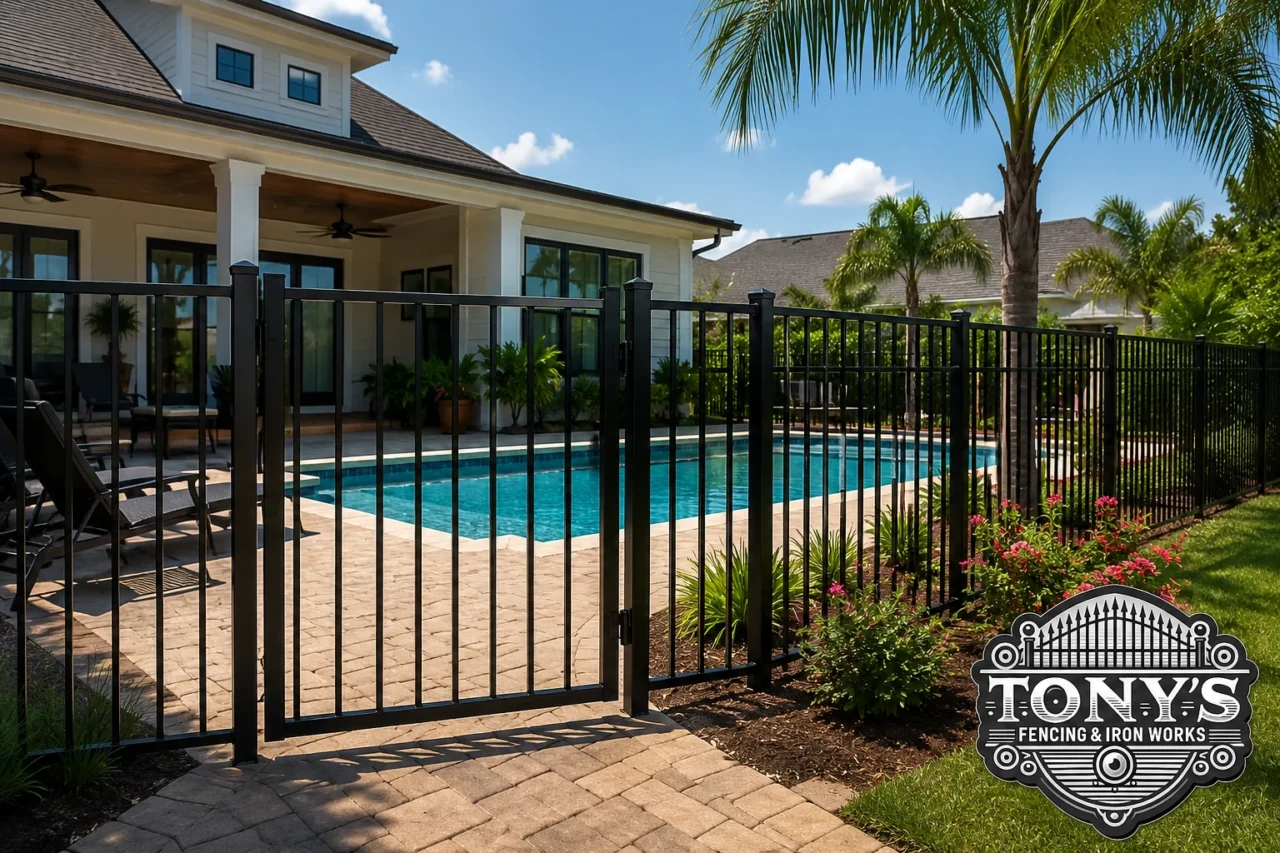
Louisiana Pool Fence Planning
Planning a Pool Fence in Louisiana: Layout, Gates and Materials
A safe pool enclosure begins long before the first fence post goes into the ground. The right layout must control access, preserve visibility, handle Louisiana drainage and fit the way your family actually uses the backyard.
Quick answer: A successful pool fence installation in Louisiana should fully separate the pool from unsupervised access. It should also include a properly positioned self-closing and self-latching gate, avoid climbable areas and account for drainage, equipment access and local permit requirements.
Many Louisiana homeowners begin planning a pool fence by asking, “What style should we choose?” However, the material is only one part of the decision. Gate direction, walking paths, pool equipment, patio furniture and drainage can also affect how well the finished enclosure works.
Careful planning is especially important across Ponchatoula, Hammond, Covington, Mandeville, Madisonville, Slidell and nearby Northshore communities. Because Southeast Louisiana receives frequent heavy rain, homeowners must consider soft soil, standing water and changing ground conditions. In addition, the enclosure should fit the way the family uses the backyard.
Before ordering materials or digging postholes, review the following steps. As a result, you can create a pool enclosure that is safe, convenient and better suited to Louisiana conditions.
Why Pool Fence Layout Matters
A pool fence should control access without making the backyard difficult to use. For example, a poorly planned layout may block a walkway, interfere with maintenance or leave the gate in an inconvenient location.
Nearby furniture, walls, planters and equipment also deserve attention. Otherwise, these objects could make the barrier easier to climb.
For added protection, the Centers for Disease Control and Prevention recommends a four-sided fence that fully surrounds the pool and separates it from the home and yard. In addition, the gate should be self-closing and self-latching. According to the CDC, this type of isolation fence can reduce a young child’s drowning risk compared with a three-sided property-line fence.
1. Decide What the Pool Fence Must Enclose
Some homeowners assume their existing backyard fence provides enough separation. However, a property-line fence may still allow someone to walk directly from the home or play area to the water.
By comparison, a dedicated pool enclosure creates a controlled area around the swimming pool. Therefore, it can help limit access for children, visiting families and pets when swimming is not taking place.
During the planning process, identify:
- The pool deck and surrounding walking area
- Doors leading from the home into the yard
- Outdoor kitchens, patios and entertaining areas
- Pool pumps, filters, heaters and control panels
- Children’s play equipment and frequently used lawn areas
- Drainage swales, ditches and low spots
Once these areas are marked, a professional installer can review the proposed layout. Depending on the property, the pool may need a separate enclosure or a carefully designed section within a larger fenced yard.
Louisiana Planning Tip
Whenever possible, walk the proposed fence line immediately after heavy rain. Standing water, muddy ground and active drainage paths may reveal areas where posts, gates or bottom clearances require additional planning.
2. Choose the Best Location for the Pool Gate
The gate is one of the most important parts of a pool enclosure. Not only must it control access, but it should also remain practical for everyday use.
Rather than placing the gate wherever the shortest fence section happens to be, consider how people naturally move through the backyard. For instance, review the paths between the house, patio, driveway and swimming pool.
A well-planned gate location should:
- Remain visible from the home or main outdoor area when possible
- Avoid steep slopes and areas where water collects
- Allow the gate to open and close without hitting furniture or landscaping
- Provide enough width for routine pool maintenance
- Stay away from objects that children could use as climbing aids
In most cases, pool gates are expected to be self-closing and self-latching. Additionally, local codes may regulate the direction of the gate swing and the location of the latch. Tony’s Fencing & Iron Works can help homeowners choose a gate system that fits the property while accounting for applicable requirements.
Explore Tony’s Custom Gate Services
3. Measure for People, Equipment and Emergencies
A narrow gate may work for someone carrying a towel. Nevertheless, it may not provide enough room for a wheelbarrow, pool-service cart, replacement pump or emergency responder.
Before choosing a gate width, consider everything that may need to pass through the opening during the life of the pool. Common examples include:
- Pool-cleaning equipment
- Furniture and umbrellas
- Landscaping tools
- Coolers and gathering supplies
- Pump, heater or filter components
- Mobility equipment
For some properties, one pedestrian gate and one wider service gate may be practical. Even so, both openings must maintain the safety and latching performance required for the enclosure.
4. Compare Pool Fence Materials for Louisiana
Several materials can work around a swimming pool when the height, spacing, openings and gate system meet local requirements. However, each option provides a different balance of visibility, privacy and maintenance.
Aluminum
Aluminum provides clear sightlines, a clean appearance and strong resistance to rust. Because of these advantages, powder-coated aluminum remains a popular choice for humid Louisiana backyards.
Good for: Visibility, low maintenance and traditional pool-enclosure styling.
Ornamental Iron
Custom iron can complement historic, traditional and upscale homes. Moreover, it offers substantial strength and can include decorative details that match the property.
Good for: Custom designs, entrances and architectural character.
Vinyl
Vinyl can provide privacy without requiring routine painting. On the other hand, solid panels may reduce visibility from the home, so placement deserves careful consideration.
Good for: Privacy and homeowners seeking lower routine maintenance.
Wood
Wood offers privacy and a warm backyard appearance. Still, it generally requires more maintenance in humid conditions. The design must also avoid features that could make the barrier easier to climb.
Good for: Privacy, custom styling and matching an existing yard fence.
5. Preserve a Clear View of the Water
Visibility is another important planning consideration, particularly when adults supervise the pool from a patio, outdoor kitchen or nearby room.
Open-style aluminum and ornamental fencing can help preserve sightlines. By contrast, privacy fencing may block portions of the pool depending on its location and height. Although visibility does not replace direct supervision, it can make the outdoor area easier to monitor.
Before approving the layout, stand in several locations and picture the finished enclosure. Then, check the view from:
- The kitchen or family-room window
- The main back door
- The patio seating area
- The outdoor cooking area
- Other parts of the yard where adults commonly gather
6. Keep Climbable Objects Away From the Fence
Even when a fence meets the required height, nearby objects can make it easier to cross. For that reason, furniture and equipment should not be placed directly beside the barrier.
Keep lounge chairs, storage boxes, coolers, planters, pumps, play structures and stacked materials away from the outside of the enclosure. Likewise, horizontal rails and decorative features should be reviewed because certain configurations may provide footholds.
The U.S. Consumer Product Safety Commission recommends barriers without handholds or footholds that could help a young child climb. Furthermore, openings should be limited so a child cannot easily pass through the fence.
Read the CPSC Pool Barrier Guidelines
7. Plan Around Louisiana Rain and Soil
Southeast Louisiana receives frequent heavy rain, while many local yards contain clay-heavy or moisture-sensitive soil. Consequently, water moving along the fence line can soften the ground, expose gaps beneath panels and contribute to post movement.
A pool fence should not block a drainage swale without a plan for redirecting water. At the same time, the space beneath the fence must remain within the limits established by applicable pool-barrier rules.
During the site review, look for:
- Low areas that remain wet after rainfall
- Downspouts aimed toward the proposed fence
- Erosion around the pool deck
- Existing drainage ditches or swales
- Loose soil near recently completed pool construction
Once drainage conditions are understood, the installer can select suitable post depths, footings and site-preparation methods. Proper installation also helps the gate remain aligned as the soil moves through wet and dry cycles.
Learn How Drainage Affects Fence Longevity
8. Check Permits, HOA Rules and Local Requirements
Pool-barrier rules may vary by parish, municipality and adopted building code. In addition, a homeowners association may regulate fence colors, materials, setbacks and placement.
For example, St. Tammany Parish materials state that swimming pools must be completely enclosed by a permanently constructed fence or wall at least four feet high. Additional rules may apply to openings, gates, latches and inspections. Meanwhile, some municipalities may require taller barriers or other safety measures.
Before construction begins, contact the permitting authority responsible for the property. Do not assume that a fence approved in one community will automatically meet the requirements of another.
Visit St. Tammany Permits and Inspections
DIY Pool Fence Planning Checklist
Homeowners can complete these preliminary steps before meeting with a fence contractor:
✓ Sketch the pool, home, patio and property lines
✓ Mark doors that lead into the backyard
✓ Identify the natural walking path to the pool
✓ Locate pool pumps and service equipment
✓ Mark drainage areas and standing water
✓ Measure large equipment that needs gate access
✓ Photograph the yard from several angles
✓ Review HOA restrictions
✓ Contact the local permit office
✓ Move furniture away from the future barrier
Important: Homeowners can complete preliminary planning and measuring. However, the finished pool barrier should be carefully checked for gate operation, structural stability, allowable openings and local code compliance.
DIY Pool Fence Maintenance Tips
Even a professionally installed pool fence needs routine inspection. Over time, Louisiana rain, soil movement, landscaping and frequent gate use may affect its performance.
Test the gate every month
First, open the gate only a few inches and release it. Next, repeat the test from several wider positions. Each time, the gate should close completely and latch without being pulled or pushed.
Check the ground beneath the fence
After heavy rain, inspect the bottom of the enclosure for erosion, animal digging or washed-out soil. These changes may increase the opening beneath the barrier.
Trim nearby landscaping
Regularly remove vines and branches that interfere with the gate or create climbing opportunities. Also, avoid placing large planters directly against the fence.
Inspect the hardware
During each inspection, look for loose hinges, damaged latches, missing fasteners and shifting gate posts. Prompt repairs can prevent a small issue from affecting the entire gate.
Avoid propping the gate open
A self-closing gate cannot protect the pool while it is held open. Instead, move supplies through the entrance and allow the gate to close immediately afterward.
Common Pool Fence Planning Mistakes
- Choosing the material before deciding on the layout
- Placing the gate in an area where water collects
- Making the only gate too narrow for service equipment
- Allowing furniture or equipment to sit beside the barrier
- Blocking access to the pool pump or filter
- Using a privacy design that removes important sightlines
- Assuming an existing property fence meets pool-barrier rules
- Failing to confirm municipal and HOA requirements
Keep Planning Your Project
Related Pool and Fence Resources
Explore more information about gates, drainage and fence materials before choosing the final design for your Louisiana backyard.
Pool Aluminum Fencing
See why aluminum is a popular low-maintenance option for Louisiana pool enclosures.
View Pool Fencing →
Custom Fence Gates
Learn about custom gate layouts, materials and access options for residential properties.
Explore Gate Services →
Drainage and Fence Longevity
Find out how standing water, erosion and Louisiana soil can affect fence posts and gates.
Read the Drainage Tips →
Frequently Asked Questions About Pool Fence Installation in Louisiana
Pool Fence Installation Across the Northshore
Tony’s Fencing & Iron Works installs pool fencing for homeowners in Ponchatoula, Hammond, Covington, Mandeville, Madisonville, Slidell, Lacombe and nearby areas of Tangipahoa and St. Tammany parishes.
With more than 30 years of fencing experience, Tony understands how Southeast Louisiana rain, soil and humidity affect fence posts and gates. Therefore, each project begins with a property visit, careful measurements and a discussion about how the family uses the yard.
Whether the property needs aluminum pool fencing, a custom ornamental enclosure, a privacy section or a carefully positioned gate, thoughtful planning makes a difference. Ultimately, the goal is to create an enclosure that is safe, practical and visually suited to the home.
Planning a Pool Fence? Tony Can Help.
Plan your pool enclosure before summer gatherings are in full swing. Tony will visit the property, discuss the layout and provide a straightforward estimate.
This information is provided for general planning and safety education. Pool-fence requirements can vary by parish, municipality, property and adopted building code. Therefore, homeowners should confirm current rules with the permitting authority responsible for their address before beginning construction.