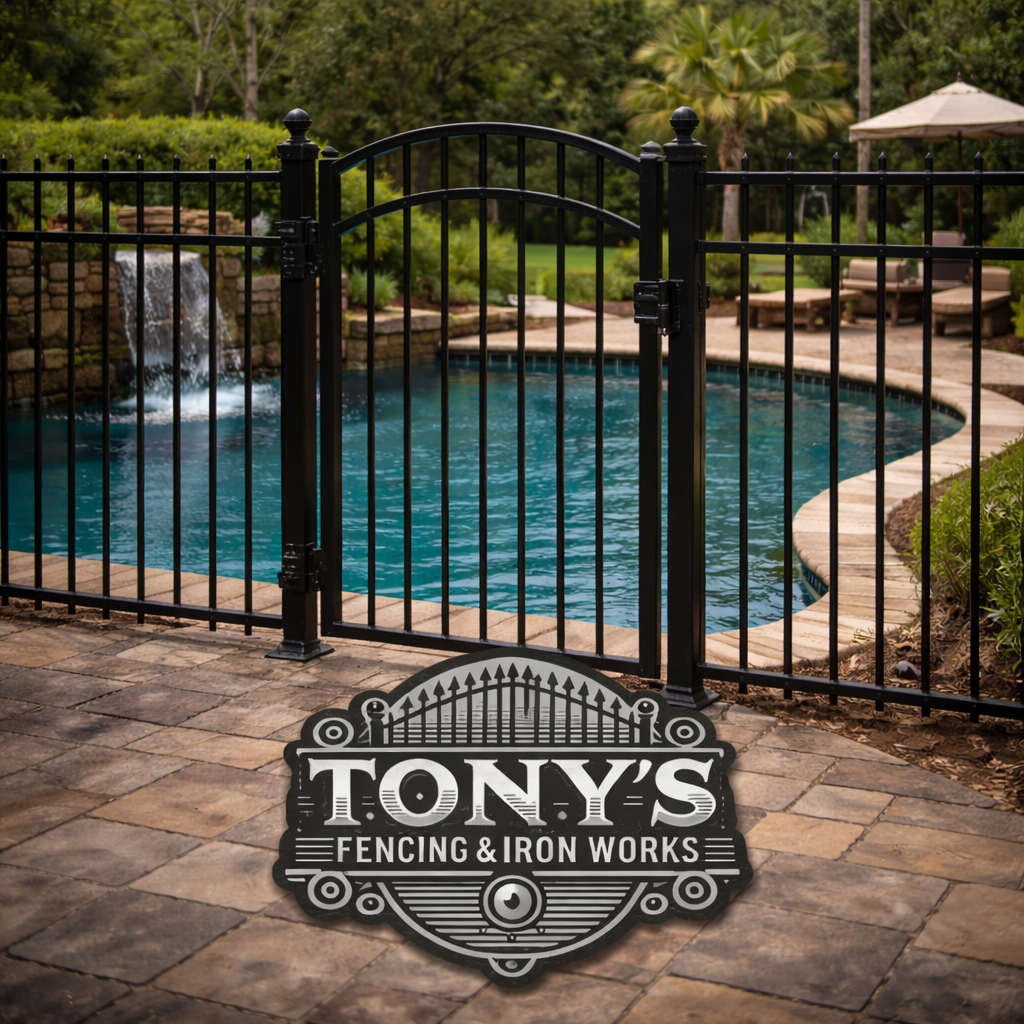
Pool fence laws in Louisiana exist for one primary reason: safety. In a state where backyard swimming pools are common due to our long, hot summers, proper barriers are not just recommended — they are often legally required. Whether you’re building a new pool or upgrading an existing backyard, understanding these regulations protects your family, your guests, and your liability.
In Southeast Louisiana communities like Covington, Mandeville, Slidell, Hammond, and surrounding areas, enforcement may vary slightly by municipality — but the safety principles remain consistent.
At Tony’s Fencing & Iron Works, we regularly help homeowners install pool fencing systems that meet both legal requirements and long-term durability standards.
Why Pool Fence Laws Matter More Than You Think
Drowning is one of the leading causes of accidental death among young children nationwide. That’s why safety barriers are considered the “first layer of protection” in pool safety.
A properly installed fence:
Prevents unsupervised access
Reduces liability exposure
Helps with insurance compliance
Protects pets as well as children
Improves resale value
Pool fencing is not just about passing inspection — it’s about reducing real-world risk.
General Louisiana Pool Barrier Requirements
While exact building codes are typically enforced at the parish or city level, most Louisiana jurisdictions follow similar standards:
Minimum height of 48 inches (4 feet)
No gaps large enough for a 4-inch sphere to pass through
Self-closing, self-latching gates
Latch placed high enough to prevent child access
Gates must swing outward away from the pool area
No climbable structures near the fence
Above-ground pools may qualify as compliant if the pool wall itself meets height requirements and access ladders are removable or lockable.
Outbound Safety Authority Reference
For national safety recommendations, the Consumer Product Safety Commission (CPSC) provides detailed pool barrier guidelines and statistics on drowning prevention. Their recommendations align closely with what most Louisiana municipalities enforce.
You can review their official safety guidance here:
https://www.cpsc.gov
Understanding these national standards helps homeowners make informed decisions beyond just meeting minimum code.
Height, Spacing & Structural Integrity Explained
Let’s go deeper into what inspectors actually look for:
Fence Height
The fence must measure at least 48 inches from the finished ground level. If soil erodes or landscaping changes, that height can technically become non-compliant — something many homeowners don’t realize.
Picket Spacing
Vertical pickets must be spaced less than 4 inches apart. Horizontal rails on the outside can create a “ladder effect,” which is why ornamental iron designs are often preferred.
Gate Mechanics
Self-closing hinges must fully close and latch without assistance. If a gate sticks, drags, or fails to latch securely, it may fail inspection.
Professional installation ensures:
Proper post depth
Concrete footings below frost and moisture movement levels
Reinforced hinge and latch systems
Long-term structural reliability
HOA, Parish & Permit Considerations
In areas across St. Tammany Parish and Tangipahoa Parish, homeowners may face additional requirements:
HOA design approvals
Color or material restrictions
Property line setback rules
Required permits before installation
Skipping permit review can cause delays during inspections or even fines. Working with a contractor experienced in Southeast Louisiana regulations simplifies the process significantly.
Best Fence Materials for Louisiana’s Climate
Louisiana humidity, salt air (near coastal regions), heavy rainfall, and hurricane winds require durable materials.
Ornamental Iron
Extremely strong
Excellent wind resistance
Clean visibility for pool supervision
Meets strict spacing requirements
Aluminum
Rust-resistant
Lower maintenance
Lightweight yet durable
Cedar Wood
Naturally resistant to moisture
Provides privacy
Must be properly sealed and maintained
Because our climate accelerates corrosion and rot, installation technique matters just as much as material selection.
Inbound Resource for Fence Options
If you’re evaluating materials beyond pool safety fencing, our guide on custom iron fencing in Southeast Louisiana provides additional insight into long-term durability and design options:
https://tonysfencingandiron.com/iron-fencing/
Many homeowners choose to coordinate their pool fence with perimeter fencing for a cohesive look and added security.
Liability & Insurance Considerations
Homeowners insurance providers may require compliant fencing around pools. In some cases:
Premiums increase without proper barriers
Claims may be denied if safety standards are not met
Liability exposure increases significantly
A code-compliant fence is often viewed as a protective legal safeguard — not just a structural upgrade.
Common Mistakes Homeowners Make
Installing decorative fencing that doesn’t meet spacing rules
Using non-self-closing gate hinges
Placing latch mechanisms too low
Leaving climbable objects (planters, furniture) near the fence
Not verifying HOA approval
These small oversights can cause inspection failures or safety hazards.
Why Professional Installation Is Critical
Pre-manufactured panels installed without proper depth or leveling often shift in Louisiana’s soft soil conditions. Over time, gates sag and latches fail.
At Tony’s Fencing & Iron Works, we custom-build fencing on-site to ensure:
Structural integrity
Code-compliant spacing
Proper gate alignment
Long-term durability
Aesthetic customization
With over 30 years serving Southeast Louisiana, we understand how local soil, moisture, and storm exposure affect fence performance.
❓ FAQ: Pool Fence Laws in Louisiana
Is a pool alarm required in Louisiana?
Some municipalities recommend or require alarms when the home acts as part of the barrier.
Do removable mesh pool fences meet code?
In some cases yes, but they must still meet height and latch requirements.
Does an above-ground pool need fencing?
Often yes, unless the pool wall meets height standards and access is restricted.
Can I install my own pool fence?
You can, but improper installation may fail inspection and create liability risk.
What is the safest fence type for pool visibility?
Ornamental iron and aluminum provide clear sightlines while meeting spacing standards.
Protect What Matters Most
Pool fence laws in Louisiana are not just bureaucratic requirements — they are life-saving safeguards. A properly installed fence protects children, reduces liability, and enhances property value.
If you’re planning a pool installation or need to upgrade an existing fence to meet code, Tony’s Fencing & Iron Works can design a custom solution built for Southeast Louisiana’s climate and regulations.
📞 Call 985-703-0595 to schedule a consultation.