Can You Build a Fence Near a Septic System in Louisiana?
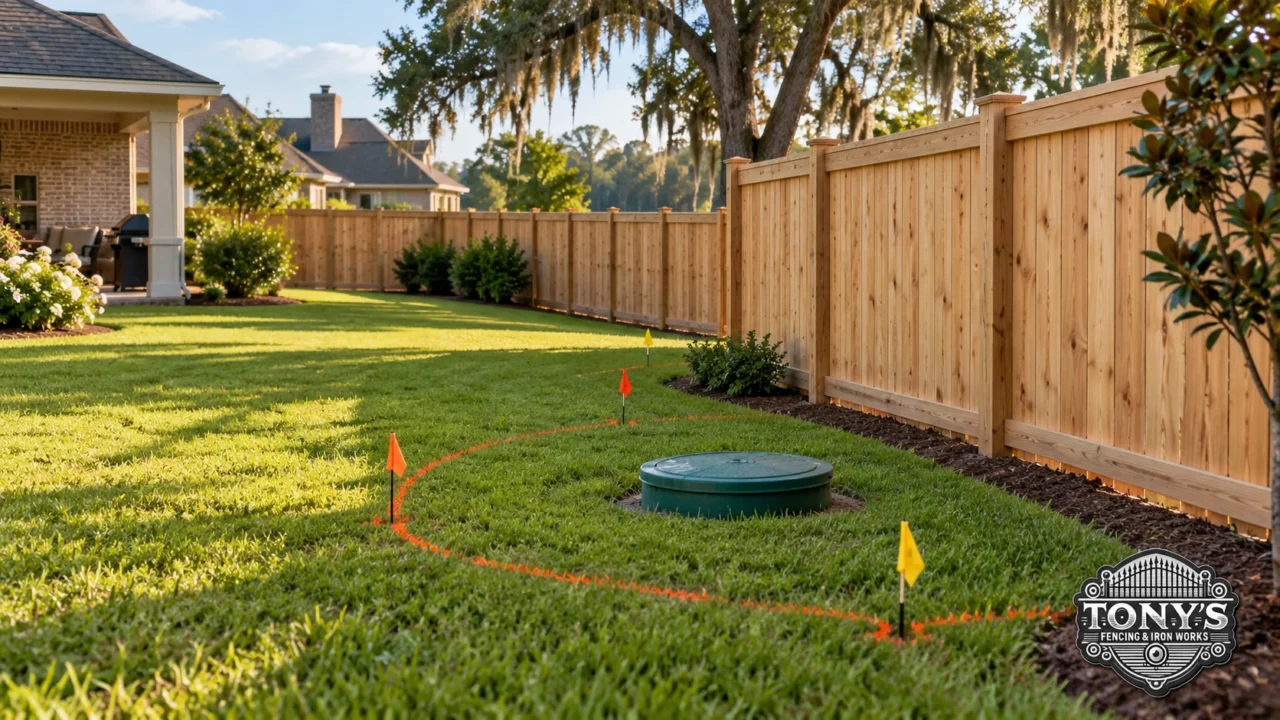
Building a fence near a septic system in Louisiana requires more planning than simply choosing a fence line. Septic tanks, treatment units, drainfields, buried pipes and future service access can all affect where posts and gates should go.
Ponchatoula • Hammond • Covington • Mandeville • Madisonville • Slidell • Folsom • Franklinton
Can You Put a Fence Near a Septic Tank or Drainfield?
Possibly, but never assume the planned fence line is safe. First, identify the septic tank, treatment equipment, drainfield and connecting pipes. Next, preserve access for pumping and repairs. In addition, avoid placing fence posts or heavy construction equipment where they could damage septic components or compact the drainfield.
There is no single setback number that applies to every property or every onsite wastewater system. Therefore, the correct layout should be confirmed for the specific system and property before digging.
Why Septic Systems Matter When Planning a Fence
Fence planning usually starts above ground. Homeowners think about privacy, pets, gates, property lines and appearance. However, some of the most important parts of the project may be underground.
This is especially true on properties with an onsite wastewater system. A septic system may include much more than the tank itself. Depending on the system, there may also be treatment equipment, distribution components, pipes and a drainfield spread across a surprisingly large part of the yard.
As a result, a fence that looks perfectly positioned from the surface may interfere with something underneath.
Before anyone digs fence-post holes, homeowners should know where those components are located and how the system will need to be accessed in the future.
What Parts of a Septic System Could Affect Your Fence?
Not every Louisiana property has the same type of onsite wastewater system. Therefore, homeowners should avoid assuming that the visible lid shows the entire system.
Septic Tank
The tank needs to remain accessible for inspection, maintenance and pumping.
Drainfield
The drainfield uses the surrounding soil as part of the wastewater-treatment process and should be protected from unnecessary disturbance and compaction.
Buried Piping
Pipes may connect the house, tank, treatment equipment and disposal area. Their route may cross a proposed fence line.
Treatment Equipment
Some properties use additional treatment components that need electricity, routine maintenance or clear service access.
⚠️ Do Not Assume Louisiana 811 Will Mark Your Septic System
Calling Louisiana 811 before fence installation is essential. However, homeowners also need to understand the difference between public utility markings and privately owned underground facilities.
Louisiana 811 explains that private utilities can include water, septic and irrigation systems. Because utility companies may not own or maintain these private systems, they may not appear in standard utility markings.
Therefore, an 811 request should be part of the planning process — not the only step.
Louisiana 811 Homeowner Information ↗
If you are unsure where privately owned underground lines or septic components are located, a qualified professional or private utility locator may be needed before excavation begins.
Planning a Fence? Start With Everything Underground
Septic components are only one underground consideration. Irrigation, landscape lighting, drainage lines, private electrical service, pool plumbing and other systems can also cross a fence line.
Why Fence Posts and Drainfields Need Careful Planning
A fence post needs a hole. Many fence posts also require concrete, equipment access and soil disturbance during installation.
A drainfield has a completely different job. It depends on soil conditions and the proper movement and treatment of wastewater.
The U.S. Environmental Protection Agency advises homeowners to avoid driving or building on a drainfield. Heavy vehicles and equipment can compact the soil and potentially damage buried components.
For that reason, do not treat a drainfield like an ordinary open section of lawn when designing a fence.
Do Not Fence Out the Septic Service Truck
Even when the fence itself avoids septic components, homeowners can accidentally create another problem: access.
Septic systems require maintenance. Eventually, a technician may need to reach the tank or treatment equipment with tools, hoses or other equipment.
Therefore, think about future service access while choosing gate locations.
Questions to Ask Before the Fence Goes Up
- Where does the septic service company normally enter the property?
- Will a gate provide enough usable access?
- Will the gate swing block a septic lid or treatment component?
- Could future repairs require equipment wider than the planned opening?
- Will landscaping eventually narrow the service path?
- Can the system still be reached without driving across the drainfield?
Planning this now can prevent a much bigger headache years later.
7 Things Homeowners Can Do Before Getting a Fence Estimate
Look through closing documents, permits, installation records and maintenance paperwork for diagrams or system information.
Identify visible lids, access ports, control panels or treatment equipment. However, do not assume those items reveal every underground component.
Request utility markings before excavation. Fence installation involves digging, so this should be part of every project.
Remember that septic, irrigation, landscape lighting and other customer-owned systems may require separate locating.
Use temporary stakes, flags or a garden hose to visualize the fence and gate locations before anyone starts digging.
Picture how a septic technician, lawn mower, trailer or repair crew would move through the finished fence.
If the proposed route appears close to a septic component or drainfield, confirm the layout with the appropriate septic professional or permitting authority first.
📸 Tony’s Easy DIY Tip: Make a Backyard Infrastructure Album
Take clear pictures of septic lids, utility markings, drainage features, irrigation valves and other important backyard features before fence construction begins.
Next, save those photos in one album on your phone. Include a few wide shots that show each feature in relation to the house, driveway and property line. Years later, those pictures may make landscaping, repairs or another home-improvement project much easier.
How Close Can a Fence Be to a Septic System?
This is one of the most important questions homeowners ask. Unfortunately, there is not a responsible one-number answer for every Louisiana property.
Required or recommended separation can depend on the type of wastewater system, the component involved, local requirements, maintenance needs and the specific property layout.
Therefore, be cautious with online advice that says every fence must be exactly a certain number of feet from every septic component.
Instead, identify the actual system first. Then, confirm the planned fence and post locations before installation.
Septic Tank vs. Drainfield: They Are Not the Same Thing
Homeowners sometimes use the phrase “septic area” to describe the entire system. However, a septic tank and a drainfield perform different jobs.
The Tank Area
Access must remain available for inspection, pumping and repairs. A fence or gate should not make that future work unnecessarily difficult.
The Drainfield Area
The surrounding soil plays an important role in treatment. Avoid unnecessary digging, soil compaction and construction until the planned work has been reviewed appropriately.
Can a Fence Gate Go Near a Septic System?
A gate can sometimes solve an access problem. Nevertheless, its location still needs careful planning.
Gate posts usually carry more load than ordinary fence posts. They also require enough room for the gate to swing or slide correctly.
In addition, a frequently used gate can direct foot traffic, lawn equipment and even vehicles through one concentrated area.
For those reasons, choosing a gate location over or directly beside septic components simply because “nothing is visible there” is not a good plan.
Instead, consider both the underground system and the way the opening will actually be used.
🚫 A Wide Gate Does Not Automatically Make the Drainfield a Driveway
Homeowners sometimes add a double gate so a trailer, mower, contractor or recreational vehicle can reach the backyard.
That is smart planning when the travel route is suitable. However, access through a fence should not encourage heavy vehicles to cross a drainfield.
The EPA recommends keeping vehicles and heavy equipment off septic drainfields because the weight can compact soil and damage buried components.
Septic-Aware Fence Planning Across the Louisiana Northshore
Properties across Southeast Louisiana can vary dramatically within only a few miles.
A subdivision lot in Covington or Mandeville may have a very different utility and wastewater layout than acreage near Ponchatoula, Hammond, Folsom or Franklinton.
Meanwhile, yards around Madisonville and Slidell may also have drainage, elevation and wet-soil considerations that affect a fence layout.
Larger rural lots present their own challenges. A long fence run may cross septic infrastructure, utility corridors, drainage areas, driveways and livestock access points before it reaches the back property line.
That is why Tony’s Fencing & Iron Works looks at how the entire property works — not just where the homeowner wants the boards to go.
✅ Fence + Septic Planning Checklist
☐ Identify visible lids and equipment
☐ Determine the approximate drainfield area
☐ Request Louisiana 811 markings
☐ Identify privately owned underground systems
☐ Confirm the property line
☐ Check local fence requirements
☐ Mark the proposed fence route
☐ Plan gates around future service access
☐ Avoid unnecessary vehicle traffic over the drainfield
☐ Review questionable fence-post locations before digging
☐ Photograph underground markings before they disappear
Don’t Stop at the Septic System
Once you start planning what is underneath a fence, check the rest of the property too.
A good fence layout should also account for property boundaries, drainage, utilities, gates, driveways and local requirements.
Have More Fence Questions?
Wondering about fence materials, maintenance, gates, repairs, permits or installation? Tony answers many of the questions Northshore homeowners ask most often.
Louisiana Onsite Wastewater Resources
Louisiana’s Department of Health oversees the state’s onsite wastewater program and provides information related to sewage-treatment systems, installers and maintenance providers.
If a fence layout raises questions about a septic system, treatment unit or required access, homeowners should use the appropriate wastewater professionals and local authorities rather than relying on assumptions.
Frequently Asked Questions About Fences and Septic Systems
Can I put a fence over my septic tank?
Avoid installing anything that interferes with septic access or creates a risk of damaging the tank or related components. Before placing fence posts near a tank, confirm the exact system layout and future maintenance needs.
How close can fence posts be to a septic tank?
There is no universal distance that applies to every Louisiana septic system and property. The correct location depends on the system, local requirements, service access and site conditions. Confirm questionable post locations before digging.
Can I install a fence through a septic drainfield?
Do not plan fence construction through a drainfield without professional review. Digging, concrete work, construction traffic and soil compaction may affect the system.
Will Louisiana 811 mark my septic system?
Do not assume it will. Louisiana 811 explains that septic systems can be privately owned underground facilities. Private systems may require separate locating even after an 811 request has been submitted.
Can I drive through a fence gate over my drainfield?
The EPA recommends keeping vehicles and heavy equipment off septic drainfields. Therefore, plan both the gate and the vehicle route so access does not unintentionally direct traffic across the drainfield.
How do I find my septic tank before installing a fence?
Start with property records, septic permits, installation paperwork and maintenance records. A septic professional may also help identify system components when their locations are unclear.
Should my fence have a gate for septic access?
If the finished fence would otherwise restrict access to the septic system, a properly located gate may make future service easier. Consider the usable opening width, gate swing and path to the system before installation.
Who installs fences in Ponchatoula, Hammond, Covington and the Northshore?
Tony’s Fencing & Iron Works installs cedar, pine, vinyl, chain link, ornamental iron, pool fencing, farm fencing and custom gates throughout Ponchatoula, Hammond, Covington, Mandeville, Madisonville, Folsom, Franklinton, Slidell and surrounding Northshore communities.
Keep Exploring Tony’s
Planning a fence involves more than choosing boards and posts. These Louisiana-specific resources can help you avoid surprises before installation day.
Planning a New Fence on the Northshore?
A good fence starts with a good plan. Tony’s Fencing & Iron Works can help you choose a practical layout for your property, gates, drainage, access needs and existing site conditions.
Based in Ponchatoula • Serving Southeast Louisiana and the Northshore