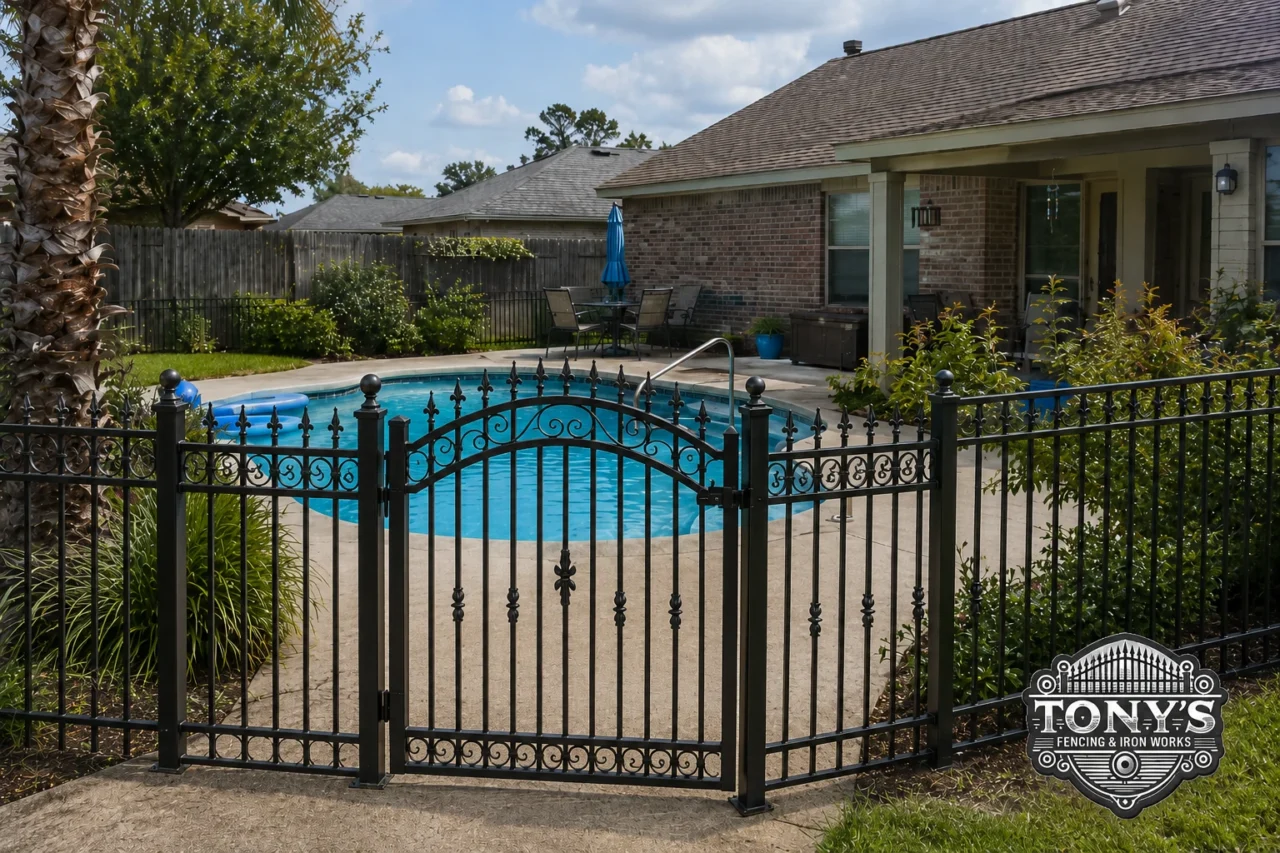
Pool Fence Installation Timeline in Louisiana: When Should the Fence Be Installed?
A pool fence installation timeline in Louisiana should begin before crews complete the deck, landscaping, drainage, utilities, gates, and final inspections. Early coordination can prevent misplaced posts, blocked access, damaged concrete, and expensive construction changes.
Quick Answer
When should a pool fence be installed during pool construction?
Begin planning before the pool builder finalizes the deck and landscaping. On many projects, installers add the permanent fence after excavation, plumbing, electrical work, and major concrete construction. However, the barrier should be complete before normal pool use or final project approval. Fence design, post locations, deck material, gate layout, permits, and local inspections all influence the exact schedule.
Why the Pool Fence Timeline Matters in Southeast Louisiana
Several contractors may work in the same backyard during a pool project. Excavators, plumbers, electricians, concrete crews, landscapers, drainage contractors, pool-equipment technicians, and fence installers all need room to complete their work. Without a coordinated schedule, one phase can easily interfere with another.
For example, a concrete crew might pour the deck across the planned fence line. Meanwhile, a landscaper could place a tree beside a future gate. Pool equipment may also occupy the space needed for a fence post. In addition, workers can accidentally cover a drainage swale before anyone studies how rainwater moves through the yard.
Southeast Louisiana conditions make early planning even more important. Heavy rain, soft ground, clay soil, standing water, and fast-growing plants can affect post placement and gate performance. Homeowners in Covington, Mandeville, Madisonville, Slidell, Ponchatoula, Hammond, and nearby communities should treat the fence as part of the original pool design rather than a final decorative addition.
Best Practice
Call the Fence Contractor Before the Pool Deck Is Poured
Homeowners do not always need the permanent pool fence in place before crews pour the deck. Still, a fence contractor should review the proposed layout before the concrete becomes permanent.
An early site visit gives the installer time to discuss fence lines, gate locations, equipment access, post foundations, drainage, setbacks, and usable space around the pool. Changing a drawing costs much less than cutting or replacing finished concrete.
From Design to Final Inspection
A Practical Pool Fence Installation Timeline
Design the Pool and Fence Together
Start with the pool shape, deck size, equipment location, house exits, property boundaries, and desired fence perimeter. A coordinated design leaves enough room for safe movement, routine maintenance, and future repairs.
Confirm Local Requirements
Next, review parish, municipal, subdivision, HOA, permit, and inspection requirements. Rules may differ between unincorporated areas and properties located inside city limits.
Mark Utilities and Private Lines
Before digging begins, locate public utilities and identify privately installed pool plumbing, electrical lines, gas lines, irrigation, drains, septic components, and low-voltage wiring.
Complete Heavy Construction
Large equipment should finish excavation, pool placement, plumbing, electrical work, backfilling, and major deck construction before the permanent fence closes off access.
Verify the Finished Grade
Once major construction ends, check final soil levels, deck elevations, slopes, drains, swales, and low areas. Installers should base gate clearances on finished surfaces rather than temporary construction grades.
Install the Permanent Fence
After disruptive construction ends, the fence crew can install the permanent barrier. Complete this step before normal pool use and according to the required inspection sequence.
Test Every Gate
Open each pedestrian gate from several positions. Make sure it swings freely, closes without assistance, latches completely, and clears both the deck and surrounding ground.
Finish Landscaping Carefully
Finally, place furniture, planters, trees, equipment, retaining walls, and decorative features where they cannot create footholds, obstruct the gate, trap moisture, or alter drainage.
Should the Pool Fence Be Installed Before or After the Concrete Deck?
The answer depends on the anchoring method. Crews may place posts in soil beside the deck, set them in prepared footings, install them through finished concrete, or use a suitable surface-mount system. Each option requires different preparation.
When posts will pass through or sit within the deck, the fence and concrete contractors should coordinate measurements before the pour. Their plan may include sleeves, block-outs, thicker concrete areas, separate footings, or clearly marked post centers.
Soil-mounted posts may allow the concrete crew to finish the deck first. Even so, everyone should confirm the fence line in advance so the deck edge does not consume space needed for posts, gates, or safe openings.
Questions to Settle Before the Concrete Is Poured
How Long After New Concrete Can a Pool Fence Be Installed?
No single waiting period works for every pool deck. Concrete gains strength over time, while the mix, slab thickness, weather, anchor method, post load, and hardware instructions all affect the installation schedule.
Rather than relying on a general internet estimate, ask the concrete contractor and fence installer to approve the drilling or mounting date. Proper curing can lower the risk of cracked edges, damaged finishes, loose anchors, and weakened mounting areas.
Pool Gates Often Determine the Entire Fence Layout
Gates deserve early attention because families use them repeatedly and rely on their moving safety hardware. A location that appears convenient on paper may fail once contractors establish the deck slope, landscaping, pool equipment, roof runoff, and walking paths.
Avoid squeezing the gate into a narrow leftover space. It needs room to swing, close, and latch without hitting furniture, planters, steps, walls, or uneven ground. Practical access should also accommodate pool maintenance, cleaning equipment, emergency responders, and future repairs.
Regular testing helps catch small problems before they become safety concerns. Open the gate from several positions and confirm that it closes and latches without a push.
During Construction
Temporary Barriers During Pool Construction
An active pool site may contain an open excavation, a partially filled pool, exposed reinforcement, construction materials, and unsecured access points. Ask the pool builder how the crew will control access and what temporary fencing, gates, warnings, and site-security measures they will use.
Temporary construction fencing does not automatically satisfy the requirements for a finished pool. The completed project must include the permanent barrier, gate hardware, alarms, covers, or other protective features required for that property.
Louisiana Drainage Can Change the Pool Fence Plan
Pool decks usually direct water away from the swimming area. However, roofs, downspouts, patios, neighboring lots, and landscaping may send additional runoff toward the fence line. A dry yard during the estimate can look very different after several days of rain.
Flowing water can wash soil away from a gate, create low spots, carry mulch into the opening, or keep the ground soft. Those conditions may change clearance and alignment over time. A gate that operates correctly during a dry week can begin dragging after repeated Louisiana storms.
Before installation, identify deck drains, channel drains, swales, catch basins, downspout outlets, French drains, and areas where water stands. A well-planned fence works with the drainage system instead of redirecting water toward the pool, home, or neighboring property.
Avoid Expensive Changes
Common Pool Fence Scheduling Mistakes
Waiting Until the Pool Is Finished
Late planning may leave too little room for safe post placement, reliable gate movement, maintenance access, or an attractive layout.
Pouring Across the Fence Line
Uncoordinated concrete work may force contractors to drill, cut, reinforce, or alter a newly finished deck.
Forgetting Equipment Access
A narrow pedestrian gate may block filters, heaters, pumps, furniture, service carts, and future renovation equipment.
Ignoring the Finished Grade
Later additions of soil, sod, pavers, mulch, or concrete can reduce gate clearance or create excessive openings beneath the fence.
Planting Beside the Fence
Trees, raised beds, planters, furniture, and decorative walls may obstruct a gate, trap moisture, or create climbing opportunities.
Skipping the Gate Test
Some gates close from a wide-open position but stop short when opened only a few inches. Testing several positions reveals problems sooner.
DIY Planning Tips
What Homeowners Can Do Before the Fence Estimate
These steps help with planning. Still, homeowners should leave drilling near pool plumbing, electrical systems, gas lines, or reinforced concrete to qualified professionals.
Choosing a Fence Material for the Construction Schedule
Aluminum remains a popular pool-fence choice because it preserves an open view and complements concrete, pavers, landscaping, and many home styles. Even so, every design needs suitable picket spacing, gate hardware, post anchoring, and a layout that meets applicable requirements.
Ornamental iron can create a more custom appearance, especially when homeowners want the fence to coordinate with gates, handrails, columns, or architectural details. Because pool areas expose metalwork to moisture, chemicals, humidity, and irrigation, property owners should also discuss protective finishes and maintenance.
Other materials may work when the design satisfies local safety and building requirements. The right choice depends on the home, budget, desired visibility, maintenance expectations, deck design, and approval process.
Pool Fence Planning Checklist
✓ Confirm the property line and applicable setbacks.
✓ Review city, parish, HOA, permit, and inspection rules.
✓ Share the pool and deck drawings with the fence installer.
✓ Coordinate post locations before the concrete pour.
✓ Identify public utilities and private pool lines.
✓ Plan gate width, swing direction, hardware, and clearance.
✓ Preserve access for pool equipment and future repairs.
✓ Study the finished grade and drainage paths.
✓ Keep climbable objects away from the barrier.
✓ Test every gate before anyone uses the pool.
Local Experience Matters
Local Planning in St. Tammany and Tangipahoa Parishes
A project in unincorporated St. Tammany Parish may follow a different review process than one inside Covington, Mandeville, Madisonville, or Slidell. Requirements may also differ among Hammond, Ponchatoula, and unincorporated sections of Tangipahoa Parish.
Flood zones, servitudes, drainage easements, corner lots, subdivisions, historic areas, and homeowner associations may add further considerations. Before construction begins, request project-specific information from the authority that governs the property.
Straight Answers for Homeowners
Frequently Asked Questions
When should I call a pool fence contractor?
Contact the contractor during the design stage or early construction. An early review gives the installer time to study the deck, landscaping, utilities, equipment locations, gates, and drainage before those details become difficult to change.
Does the pool fence go in before or after concrete?
Either sequence may work. Post locations, soil conditions, prepared sleeves, separate footings, deck design, and mounting methods determine the best order. Even when installers add the fence later, they should confirm the layout before the concrete pour.
Can a pool fence go through an existing concrete deck?
In some cases, yes. Before drilling, the installer must evaluate slab thickness, reinforcement, deck condition, edge distance, underground lines, the fence design, and the proposed mounting system.
How soon after concrete is poured can installation begin?
Ask the concrete contractor and fence installer to choose the date together. Concrete mix, weather, slab thickness, anchor design, and installation method all affect the appropriate waiting period.
Can the house form one side of the pool barrier?
Some plans use the home as part of the barrier. That choice may introduce requirements involving doors, windows, locks, alarms, or other protective features. Confirm the details with the local permitting authority.
Does an above-ground pool need a fence?
Above-ground pools may still need a compliant barrier or protected access. Pool-wall height, ladders, steps, decks, gates, and local requirements all influence the answer.
Who should arrange the pool fence?
Responsibility varies by contract. Some pool builders coordinate the fence, while other homeowners hire a separate installer. Put the schedule, permit duties, inspection responsibilities, and installation scope in writing.
How wide should a pool gate be?
Choose enough width for normal pedestrian use and the largest equipment that must pass through. Gate weight, hardware, post strength, accessibility, maintenance access, and local requirements also affect the final measurement.
Can landscaping go in before the pool fence?
Complete the permanent fence and establish gate clearances first whenever possible. Early landscaping may interfere with post holes, drainage, inspections, hardware, or barrier safety.
How often should homeowners check a pool gate?
Inspect it frequently and after storms, soil movement, landscaping work, repairs, or heavy use. During each check, open the gate from several positions and make sure it closes and latches without assistance.
Continue Planning
Helpful Resources From Tony’s Fencing & Iron Works
Additional Pool Fence Resources
Plan Before the Concrete Is Permanent
Building a Pool in Southeast Louisiana?
Tony’s Fencing & Iron Works can review the proposed pool area, discuss fence and gate placement, identify access concerns, and create a layout that works with the finished deck, drainage, landscaping, and backyard.
Serving Covington, Mandeville, Madisonville, Slidell, Ponchatoula, Hammond, St. Tammany Parish, Tangipahoa Parish, and surrounding Southeast Louisiana communities.