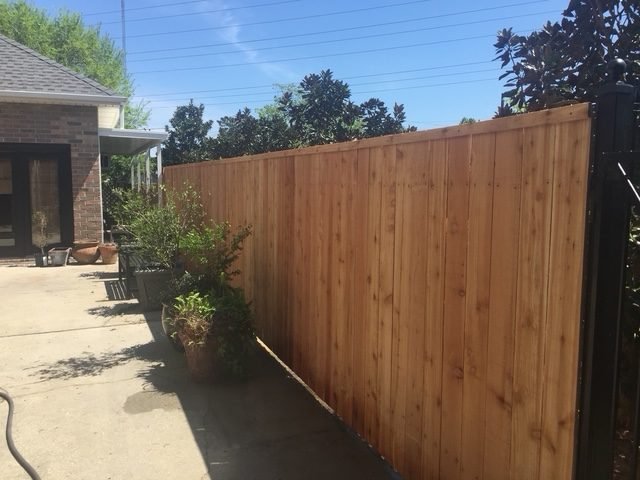
Your Fence Is a Structure — Not Just a Border
Many homeowners see a fence as a visual boundary. In reality, your wood fence is a living structure that constantly needs maintenance and responds to temperature, sunlight, and moisture. It expands and contracts, swells and dries, and absorbs everything Louisiana’s climate throws at it — rain, UV rays, and even minerals from the soil.
Over time, those environmental changes affect your fence’s stability and appearance. Ignoring small warning signs like a warped board, loose post, or dark discoloration can turn what was once a minor issue into a full-scale replacement project.
At Tony’s Fencing and Iron Works, we’ve seen it firsthand: neglected fences that could have lasted 20 years, cut short to seven because of missing maintenance.
The Role of Louisiana’s Climate in Fence Decay
Wood fences in Louisiana face one of the harshest climates in the country. The Gulf’s high humidity, combined with frequent rainfall and clay-based soil, accelerates every natural decay process wood goes through.
When wood fibers stay damp, they lose their natural resins — the oils that protect them from pests and rot. Combine that with prolonged UV exposure, which breaks down lignin (the compound that holds wood fibers together), and your fence begins to weaken from both the inside and out.
Even the best materials — like cypress and cedar — can’t resist these forces forever without proper sealing and cleaning. For that reason, wood fences in Louisiana typically need resealing every 2–3 years, compared to every 4–5 years in drier regions.
Common Signs Your Fence Needs Attention
It’s easy to miss early indicators of damage. Here’s what to watch for:
Soft spots near the base: A sign of moisture intrusion or rot.
Faded or gray color: UV rays have stripped away the protective finish.
Loose nails or screws: Hardware has expanded and contracted with weather changes.
Leaning posts: Shifting clay soil has loosened your foundation.
Greenish stains: Algae or mildew are feeding on your fence’s surface.
Catching these signs early means simple repair work. Ignoring them means higher replacement costs later — often between $2,500 and $6,000 for a typical yard.
How Neglect Affects Structure and Safety
Every board, rail, and post in your fence relies on balance. When one section weakens — from rot, corrosion, or soil movement — the pressure redistributes unevenly. Over time, this causes stress cracks, gate misalignment, and instability across the entire fence line.
A poorly maintained fence can even become a liability. Leaning sections pose fall risks, while broken rails can injure pets or children. For farms and rural properties, neglected fences may also fail to contain livestock securely, risking both animal safety and property damage.
“A fence doesn’t fall overnight,” said Tony, Owner of Tony’s Fencing and Iron Works. “It happens one loose screw, one wet post, one storm at a time. A small amount of upkeep protects you from big repairs.”
Why Type of Wood Matters
In Louisiana, not all wood is created equal. The best fence materials balance durability, cost, and resistance to moisture and pests.
Cypress: Naturally rot-resistant and sourced locally, it holds up exceptionally well against humidity.
Cedar: Contains natural oils that repel insects but requires sealing to protect against mold.
Pressure-Treated Pine: A budget-friendly option treated with preservatives to resist decay, but it must be stained regularly.
Many homeowners assume that all treated wood is maintenance-free — it’s not. The preservatives inside protect against decay, but the surface still needs UV and moisture protection to prevent splitting.
The Chemistry of Wood Breakdown
When moisture and sunlight meet wood, a slow chemical reaction begins. The cellulose and lignin that hold fibers together break down, creating a soft surface ideal for mold and mildew. As these microorganisms grow, they trap even more moisture, accelerating the cycle.
The solution is both simple and scientific:
Clean the surface yearly to remove organic buildup.
Apply a UV-resistant sealer that bonds chemically with wood fibers.
Avoid paint-only coatings, which trap moisture beneath and can cause hidden rot.
Regular sealing doesn’t just prevent discoloration — it physically reinforces the cell walls within the wood, helping your fence retain structural integrity even during wet seasons.
Insects: Louisiana’s Uninvited Guests
Termites and carpenter ants are a reality in our region. Once they find softened or untreated wood, they hollow it out from within, leaving a shell that collapses easily. Regular inspection of fence bases and posts — especially where wood meets soil — is crucial.
Tony’s Fencing recommends using cypress, cedar, or borate-treated wood in pest-prone areas. These species and treatments act as natural deterrents, minimizing risk without relying on harsh chemicals.
Soil and Drainage — The Hidden Factor
Even the strongest fence will fail if it’s built on shifting or waterlogged soil. Louisiana’s clay-rich ground expands when wet and contracts when dry, exerting force on fence posts. Over years, that motion creates tiny gaps that let water seep in.
Properly installed fences use deep-set concrete footings and gravel drainage bases, but homeowners can help, too. Keep mulch and soil 2 inches below the bottom of the boards, allowing air circulation. Redirect sprinkler systems and downspouts away from the fence line to minimize saturation.
Restoring an Aging Fence
If your wood fence is already showing its age, replacement isn’t always necessary. In many cases, power washing, re-staining, and replacing individual boards can restore both beauty and function.
The key is to inspect annually and act early. The cost to restore a fence is often 30–50% less than full replacement — and it keeps more lumber out of landfills. Sustainable restoration is part of Tony’s long-standing commitment to responsible building practices in Southeast Louisiana.
Educational Takeaway: Preventive Care Saves More Than Money
Fence neglect costs homeowners far more than repair bills. It shortens the lifespan of lumber, wastes natural resources, and increases replacement demand — driving up costs for everyone. Regular maintenance, on the other hand, builds resilience: for your fence, your property, and your investment.
About Tony’s Fencing and Iron Works
For over 30 years, Tony’s Fencing and Iron Works has built durable fences throughout Southeast Louisiana. The company specializes in wood, iron, vinyl, and farm fencing, as well as automatic gates and custom ornamental ironwork. With craftsmanship rooted in tradition and quality, Tony’s team focuses on longevity, safety, and education for homeowners across the Gulf South.