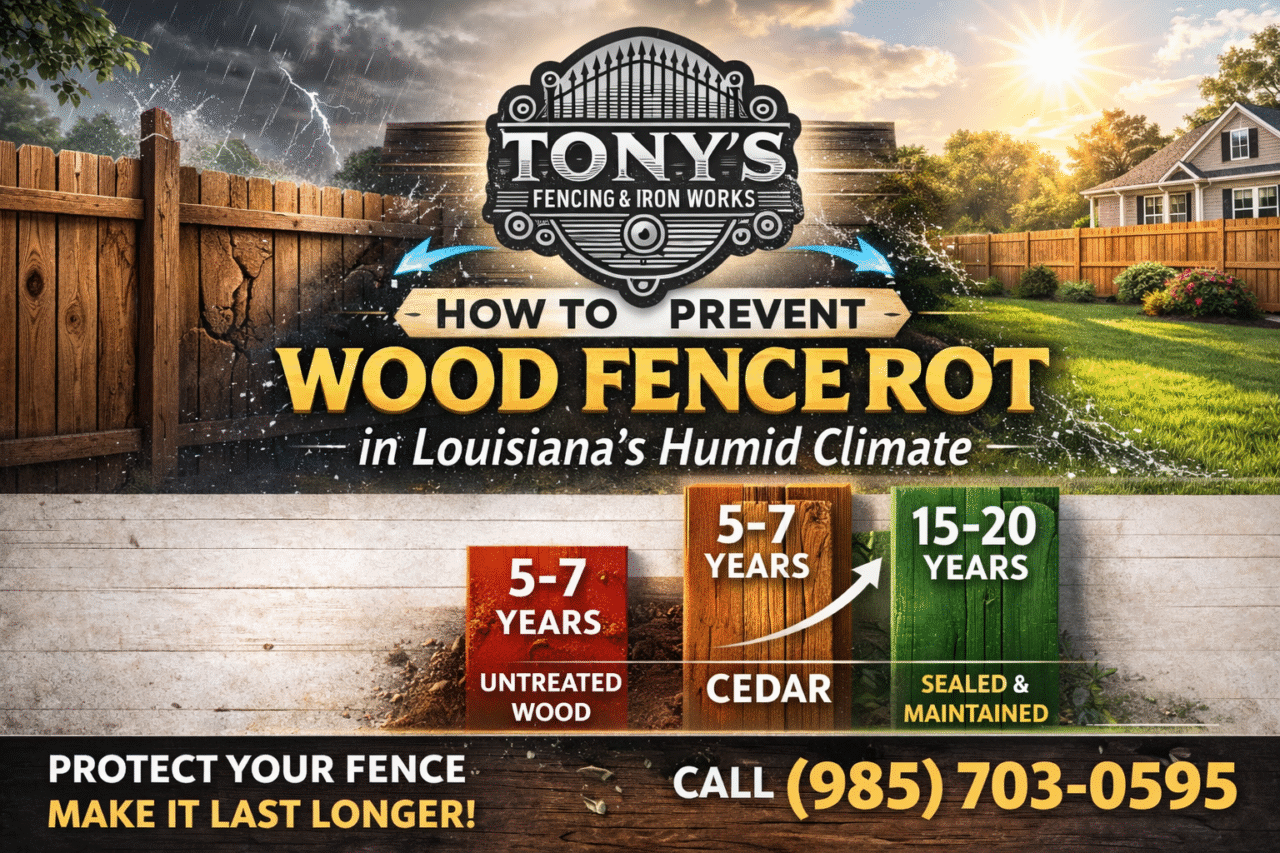
Wood fences look beautiful around homes, farms, and businesses across Southeast Louisiana. However, the same warm climate that helps plants thrive can also create the perfect conditions for wood rot, mold, and insect damage. High humidity, heavy rain, standing water, and termites are all common challenges for wood fencing in Louisiana.
If you want your fence to last 15–20 years instead of only a few seasons, proper materials, installation techniques, and regular maintenance are essential. Understanding how moisture affects wood fencing can help homeowners protect their investment and avoid costly repairs.
Below are the most effective ways to prevent wood fence rot in Louisiana’s humid climate.
Why Louisiana’s Climate Causes Fence Rot
Louisiana’s weather creates a perfect environment for wood decay. The region experiences:
• High humidity levels most of the year
• Frequent rainstorms and tropical systems
• Warm temperatures that accelerate decay
• Clay soil that holds moisture near fence posts
When wood stays damp for long periods, fungi begin breaking down the fibers. This process leads to rot, softness, and structural failure. Moisture also attracts termites and other wood-destroying insects.
That’s why protecting wood fencing from moisture exposure is the most important step in preventing rot.
Choose the Right Wood for Humid Climates
Not all wood performs the same in Louisiana weather. Some species resist moisture and insects much better than others.
Cedar is one of the best materials for fencing in humid climates because it naturally contains oils that repel insects and slow down decay. Cedar also absorbs and releases moisture more evenly than many other woods.
Pressure-treated pine is another common option because it is chemically treated to resist rot and termites. However, it must still be sealed and maintained properly to perform well over time.
For Southeast Louisiana homeowners, cedar fencing or pressure-treated lumber are typically the most reliable options.
Protect Fence Posts from Ground Moisture
Fence posts are the most vulnerable part of any wood fence. Because they sit directly in the soil, they are constantly exposed to moisture.
Several installation methods can dramatically reduce rot around fence posts:
• Setting posts in concrete to limit soil contact
• Using gravel drainage at the base of the post
• Applying post sealant or protective sleeves
• Keeping posts slightly above ground grade
Professional fence installers often elevate posts slightly or slope the concrete away from the wood so water drains away instead of pooling.
Proper installation alone can add many years to the life of a fence.
Seal and Stain Your Fence Regularly
One of the best ways to prevent wood fence rot in Louisiana is by sealing the wood with stain or waterproof coatings.
A quality fence stain provides several protective benefits:
• Blocks water from soaking into the wood
• Protects against UV sun damage
• Reduces cracking and splitting
• Helps prevent mold and mildew growth
In humid climates like Southeast Louisiana, fences should typically be sealed every 2–3 years. Transparent or semi-transparent stains work well because they allow the natural wood grain to show while still protecting the surface.
Improve Drainage Around the Fence
Standing water near a fence can dramatically shorten its lifespan.
Louisiana yards often collect water after heavy rain, which keeps the soil around fence posts wet for extended periods. To prevent this:
• Keep mulch and soil from piling against fence boards
• Ensure gutters and downspouts drain away from fences
• Improve yard grading if water pools along the fence line
• Avoid planting shrubs directly against the fence
Allowing air circulation and drainage helps wood dry faster after rainstorms.
Watch for Termites and Wood-Destroying Insects
In Southeast Louisiana, termites are a major concern for any wood structure. Damp wood is especially attractive to termites and carpenter ants.
Signs of termite activity near a fence may include:
• Mud tubes along fence posts
• Hollow sounding wood
• Soft or crumbling boards
Regular inspections can help detect problems early before major damage occurs.
Repair Small Problems Early
One of the easiest ways to extend the life of a fence is by addressing minor issues before they become major repairs.
Look for:
• Loose boards
• Cracked pickets
• Small areas of rot
• Rusting hardware
Replacing a few boards or tightening fasteners early can prevent larger sections of the fence from failing later.
Professional Fence Installation Makes a Difference
Proper fence installation is one of the most overlooked factors in preventing wood rot. A poorly installed fence may trap moisture, lean over time, or rot prematurely.
Experienced installers understand how Louisiana soil, drainage, and humidity affect fence durability. Choosing the right wood species, sealing the materials, and installing posts correctly can significantly extend the life of the fence.
For homeowners in Southeast Louisiana, working with an experienced local contractor can ensure the fence is built to withstand the region’s climate.
Protecting Your Fence Investment
A wood fence can be one of the most attractive and functional upgrades for a property, offering privacy, security, and curb appeal. With the right materials and maintenance, wood fencing can last many years even in Louisiana’s challenging climate.
By selecting rot-resistant wood, sealing the fence regularly, improving drainage, and inspecting for pests, homeowners can greatly reduce the risk of wood rot and structural damage.
If you are considering installing a new fence, visit Tony’s Fencing & Iron Works to learn more about professional wood fence installation in Southeast Louisiana.
Homeowners can also review wood decay prevention recommendations from the US Forest Service Wood Handbook, which explains how moisture affects wood structures.
FAQ – Preventing Wood Fence Rot
How long should a wood fence last in Louisiana?
With proper installation and maintenance, cedar or pressure-treated wood fences can last 15–20 years in Louisiana’s climate.
Does sealing a fence really prevent rot?
Yes. Sealing helps block water from penetrating the wood fibers, which slows the fungal growth that causes rot.
What wood resists rot best in Louisiana?
Cedar is one of the most rot-resistant natural woods for fencing, while pressure-treated pine is chemically treated to resist moisture and insects.
How often should a fence be sealed in humid climates?
Most fences in Louisiana should be sealed every 2–3 years to maintain water resistance.
What part of a fence rots first?
Fence posts usually rot first because they remain in constant contact with moist soil.
About Tony’s Fencing & Iron Works
For homeowners across Southeast Louisiana, protecting a fence from moisture and rot starts with proper installation and quality materials. Tony’s Fencing & Iron Works has been helping families throughout Covington, Mandeville, Slidell, and surrounding communities for over 30 years, building durable fences designed specifically for Louisiana’s humid climate. From cedar privacy fences and pressure-treated wood fencing to custom gates and ornamental iron work, every project is built with craftsmanship and long-term durability in mind.
If you’re planning a new fence or need repairs to extend the life of your current one, call Tony’s Fencing & Iron Works at 985-703-0595 to schedule a consultation and get expert advice on the best fencing solutions for your property.