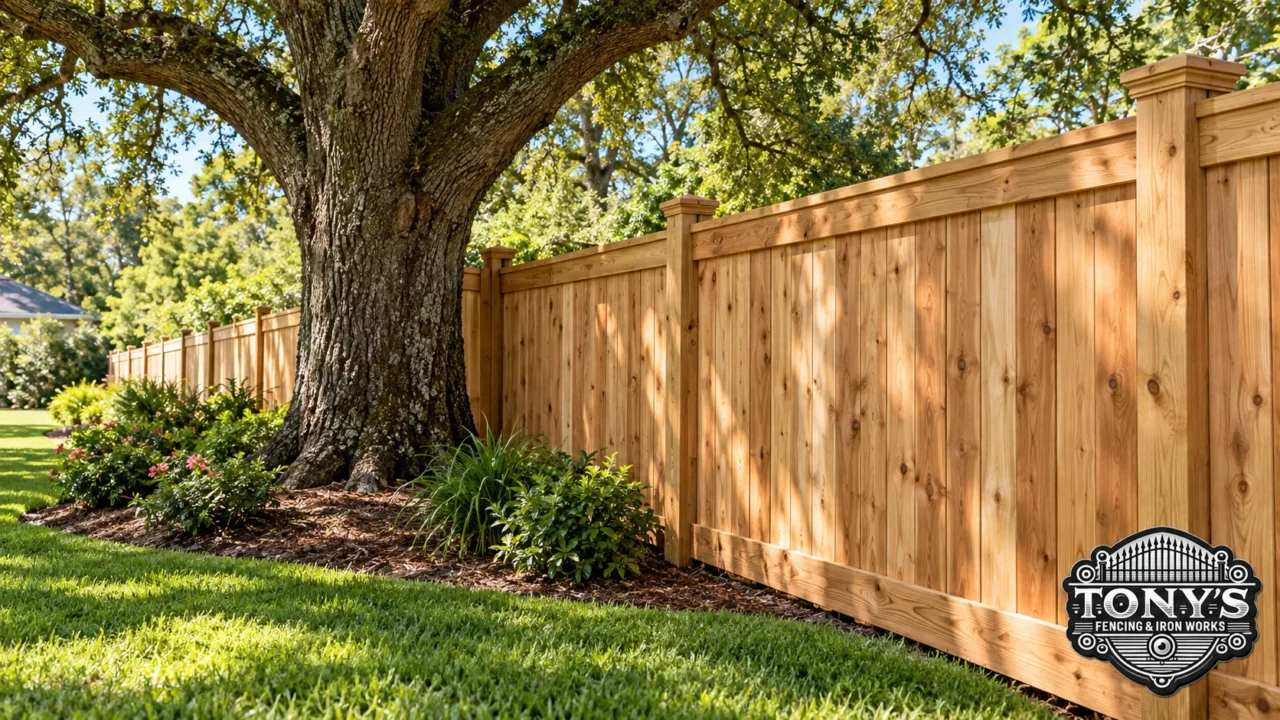
Can You Build a Fence Near a Tree in Louisiana? Roots, Posts & Property Planning
Building a fence near a tree in Louisiana can work, but the fence line should be planned around roots, future tree growth, drainage, underground utilities and long-term access. A small adjustment before installation may prevent fence and tree problems later.
Serving Ponchatoula • Hammond • Covington • Mandeville • Madisonville • Slidell • Folsom • Franklinton & surrounding Northshore communities
How Close Can a Fence Be to a Tree?
There is no single distance that works for every tree or every fence. The right layout depends on the tree’s size, visible roots, trunk location, fence material, post location and property conditions. Instead of automatically cutting through large roots or placing a post against a trunk, the fence line can often be adjusted or designed around the tree.
Tree roots can extend well beyond the trunk. At the same time, fence posts need stable ground to remain straight through Louisiana rain, soft soil and changing ground conditions. Therefore, good planning should protect both the fence and existing landscaping whenever practical.
Why Trees and Fence Posts Can Compete for the Same Space
A fence post needs stable ground. A tree needs healthy roots. Unfortunately, both may occupy the same area along a property line.
Large Roots
Major roots may interfere with the ideal location or depth of a planned fence post.
Wet Soil
Heavy Louisiana rain can soften soil and expose areas where roots and fence posts interact.
Limited Space
Trees near property lines may leave very little room to move the fence.
Future Growth
A layout that fits today should also consider how the tree may change over time.
Do Tree Roots Damage Fences?
They can. However, roots are not automatically a problem simply because a tree is near a fence.
Problems are more likely when a growing root presses against a post, when excavation damages an important root or when soil movement changes the relationship between the tree and fence.
For example, a fence may remain straight for years. Later, a root may become more prominent near one post. In another yard, erosion may expose roots that were previously underground.
Therefore, homeowners should look at the entire area rather than assuming every nearby root must be removed.
⚠️ Don’t Automatically Cut a Large Tree Root
If a major root is exactly where a fence post needs to go, moving the post or modifying the fence layout may be a better solution than simply cutting through the root. Significant root damage can affect tree health and stability. When a valuable mature tree is involved, consider having a qualified arborist evaluate the situation before significant roots are removed.
6 Ways to Plan a Fence Around Existing Trees
1. Move the Post
Sometimes the simplest solution is also the best. Moving a post a short distance may avoid a significant root while keeping the overall fence line nearly unchanged.
2. Adjust the Fence Line
If the property layout allows it, a slight offset can provide more clearance around the trunk and roots. However, homeowners should confirm the property boundary before changing the proposed fence location.
3. Create a Custom Section Around the Tree
A custom fence section can sometimes work around an established tree instead of forcing the tree and fence into the same space. This option can be especially useful with wood fencing because individual sections can be built for the property.
4. Choose the Right Fence Material
Material choice can affect layout flexibility. Wood, chain link, ornamental iron, aluminum and vinyl have different post and panel requirements. Therefore, a difficult tree location may influence which material makes the most sense.
5. Preserve Maintenance Access
Leave enough room to inspect the fence, trim vegetation and monitor the tree. A tiny space between a trunk and fence may look acceptable on installation day but become difficult to maintain later.
6. Plan for the Tree You Will Have Later
Finally, remember that a healthy tree will continue changing. The trunk may become wider, roots may become more visible and branches may extend farther over the fence. A little extra room today may prevent a problem later.
Have a Tree Right Where Your Fence Needs to Go?
Tony can look at the property, proposed fence line, trees, gates, drainage and access before recommending a layout.
Why This Matters More in Southeast Louisiana
Louisiana adds another layer to fence planning because our yards deal with frequent rain, humidity, fast vegetation growth, soft ground and tropical weather.
After heavy rain, soil around a tree and fence post may stay saturated. In addition, runoff can wash soil away and expose roots. Storm winds can also move large branches above a fence.
Consequently, the best layout considers what is happening above and below the fence line.
Before deciding exactly where a fence should pass a mature tree, look at the property after heavy rain. Standing water, exposed roots, runoff paths and soft ground can reveal issues that are easy to miss during dry weather.
Tree Roots Aren’t the Only Thing Underground
Fence posts require digging, so underground utilities also need to be considered. Louisiana 811 identifies fence construction as one of the projects where underground utilities may be damaged.
Homeowners should arrange for required utility locating before excavation begins. In addition, remember that privately installed lines may require separate attention.
DIY: Check a Tree Before Planning Your Fence
You do not need to start digging to learn a lot about a potential fence line. Instead, homeowners can perform a simple visual inspection first.
1. Visualize the Proposed Line
Use a string or other non-invasive markers to visualize where the fence could run. Avoid digging or driving stakes into the ground before utility locating requirements are addressed.
2. Look for Surface Roots
Walk the line and note large visible roots, raised soil and areas where roots cross the proposed fence.
3. Check Trunk Clearance
Look at how much space exists between the proposed fence and trunk. Remember that the tree will continue changing.
4. Look Up
Check for dead, damaged or low branches above the planned fence line.
5. Check After Rain
Look for pooling water, erosion or unusually soft soil near the tree and proposed fence line.
6. Take Photos
Photograph the tree, visible roots and proposed fence line. Photos can make it easier to discuss layout options during an estimate.
DIY Mistakes to Avoid
- Don’t cut major roots simply to make a post fit.
- Don’t attach a fence directly to a living tree. Trees grow and move over time.
- Don’t assume a row of trees marks the legal property line.
- Don’t dig before utility locating requirements are handled.
- Don’t pile soil or mulch against the bottom of a wood fence just to hide an uneven opening.
- Don’t ignore branches hanging over a new fence. Dead or weak limbs may become a future damage risk.
What If Tree Roots Are Already Pushing on Your Fence?
First, determine whether the problem is limited to one area. A single post or panel affected by a root does not necessarily mean the entire fence needs replacement.
Look for a post that has shifted, rails pulling apart, boards bowing outward, a gate losing alignment or a fence section beginning to lean.
Next, compare the affected area with the rest of the fence. If most posts and rails remain solid, a localized repair or redesign may be possible. On the other hand, widespread leaning, rot or repeated structural problems may make replacement more practical.
Which Fence Works Best Around a Wooded Louisiana Yard?
There is no universal winner. Instead, the best material depends on privacy needs, maintenance, budget, drainage, trees and how the property is used.
Cedar Fencing
Cedar provides natural beauty and privacy. It is a strong option for homeowners who want a premium wood fence around a landscaped or wooded backyard.
Explore Tony’s Cedar Fencing →
Pressure-Treated Pine
Pine provides traditional wood-fence privacy at a more budget-conscious price. Proper installation and ongoing maintenance are especially important in Louisiana’s humid climate.
Chain Link
Chain link can work well on large or wooded properties where visibility and practical containment matter more than complete privacy.
Ornamental Iron
Ornamental iron can preserve an open view of mature trees and landscaping while creating a defined, custom property boundary.
Fence Installation Around Trees Across the Northshore
Properties across Southeast Louisiana are rarely identical. A Covington subdivision may have mature backyard oaks and a narrow property line. A Ponchatoula property may have several acres with pine trees. Meanwhile, a Folsom or Franklinton property may need a long fence line through partially wooded land.
Tony’s Fencing & Iron Works serves Ponchatoula, Hammond, Covington, Mandeville, Madisonville, Slidell, Folsom, Franklinton, Abita Springs and surrounding Northshore communities.
Because the fence is built for the actual property, Tony can consider trees, visible roots, slopes, drainage, gates and access before the layout is finalized.
Fence Near a Tree Louisiana FAQs
Can you build a fence next to a tree?
Yes, in many cases. However, the layout should account for the trunk, visible roots, post locations, future tree growth and maintenance access.
How close should a fence post be to a tree?
There is no universal measurement for every tree. A large mature tree may require more planning than a young ornamental tree. Root location, trunk size, fence design and the property boundary all matter.
Can I cut a tree root to install a fence post?
Avoid automatically cutting large roots. Significant root damage can affect a tree. When an important root conflicts with a post, moving the post or adjusting the fence line may be a better option. For valuable mature trees, an arborist can evaluate root concerns.
Can I attach my fence directly to a tree?
Generally, a fence should have its own structural support instead of depending on a living tree. Trees grow and move, which can create problems for attached fence components.
What if a tree is directly on the property line?
Verify the actual property boundary before designing around it. An existing tree, old fence or landscaping feature does not automatically establish the legal property line. A surveyor may be appropriate when the boundary is uncertain.