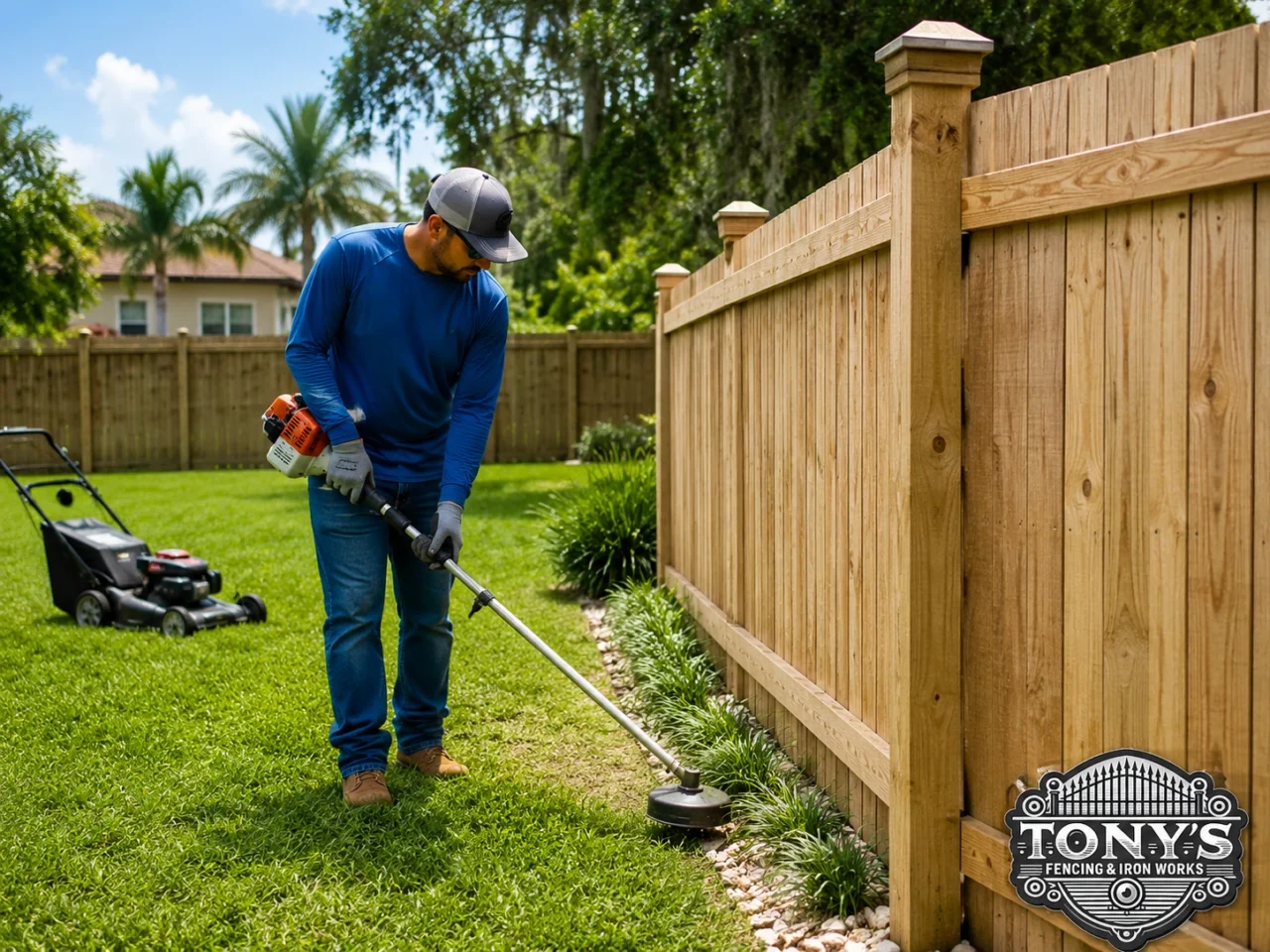
How to Protect Your Fence From Weed Eater & Lawn Mower Damage in Louisiana
Learning how to protect your fence from weed eater damage
can help prevent scratches, chipped wood, damaged finishes and unnecessary repairs.
In Southeast Louisiana, fast-growing summer grass means many fences see a string
trimmer every week.
Ponchatoula • Hammond • Covington • Mandeville • Madisonville • Slidell
How Do You Keep a Weed Eater From Damaging a Fence?
The easiest way to protect your fence from weed eater damage is to keep the
trimmer line from touching the fence. Maintain a narrow grass-free buffer,
trim carefully around posts, use mulch or landscape edging when appropriate,
and inspect the bottom of your fence regularly.
Small repeated impacts may seem harmless. However, over time they can wear
through protective finishes, damage wood fibers and create areas that eventually
require repair.
Lawn Equipment Can Be Tougher on a Fence Than You Think
A weed eater probably does not come to mind when you think about things that
can damage a fence. Louisiana homeowners usually worry about hurricanes,
heavy rain, humidity, insects or falling branches.
However, lawn equipment works directly beside a fence week after week.
Repeated contact from string trimmers, mower decks and other equipment can
scratch finishes, chew into wood and damage the lower portions of fence posts.
That matters even more during a Louisiana summer. Grass and weeds can grow
quickly around fence lines throughout Ponchatoula,
Hammond, Covington, Mandeville, Madisonville and Slidell.
Fortunately, most lawn-care damage is preventable.
Can a Weed Eater Really Damage a Fence?
Yes. A string trimmer cuts grass because the line moves quickly. When that
same line repeatedly strikes a fence, it can mark, scrape or wear away
different materials.
Damage often begins near ground level, where homeowners may not notice it
for months.
🪵 Wood Fences
String trimmers can rough up pickets and posts, expose fresh wood and
create grooves near ground level. Repeated damage may also remove stain
or other protective finishes.
🏡 Vinyl Fences
Repeated contact can leave scuffs and marks. Harder impacts may also
damage edges or lower fence components.
🔩 Metal & Chain Link
Lawn equipment can scratch protective finishes. Trimmer line may also
catch around chain link wire, posts and hardware.
Why Fence Posts Need Extra Attention
Fence posts carry much of the structural load of a fence. Therefore,
damage around the base deserves more attention than a small cosmetic
scratch on a picket.
A post already deals with soil contact, moisture and Louisiana humidity.
Repeated mechanical damage adds another source of stress.
When mowing, avoid hitting posts with mower decks or wheels. Likewise,
do not use the fence post itself as a guide for your string trimmer.
If a wood post develops deep grooves, visible deterioration, movement or
softness near the ground, it may be time for a closer inspection.
7 Ways to Protect Your Fence From Weed Eater Damage
Leave a Small Buffer Around the Fence
One of the easiest solutions is to create enough space that the trimmer
line never needs to touch the fence. Maintain a narrow buffer along the
fence line instead of trimming directly against every picket and post.
Use Mulch Carefully
A landscaped strip can reduce the amount of trimming required directly
beside a fence. Mulch can also help suppress weeds. However, avoid piling
mulch tightly against wood boards or posts.
Add Landscape Edging
Edging creates a clear stopping point for turf. It can also reduce the
amount of aggressive trimming required directly beside your fence.
Slow Down Around Posts and Gates
Posts, gate frames and corners require more control than long open
sections. Work toward those areas gradually rather than sweeping the
spinning line directly into the fence.
Adjust the Trimmer Angle
Position the cutting head so the outer edge of the line reaches the
vegetation without repeatedly hitting the fence.
Hand Pull Weeds in Tight Areas
Not every weed requires power equipment. Around hinges, decorative
iron, corners and other tight spaces, pulling weeds by hand may be
much safer.
Check the Fence After Lawn Service
Periodically walk the fence line after the yard is cut. Pay close
attention to the bottom several inches of posts and gates.
Adding Landscape Edging or a New Planting Bed?
If your project requires digging or breaking ground, check underground
utility locations before you begin.
Louisiana 811 provides safe-digging information for homeowners planning
landscaping, fence and other excavation projects.
✓ DIY Fence-Line Maintenance Checklist
- Walk the fence line before mowing or trimming.
- Remove toys, hoses and loose objects.
- Look for loose pickets, wire or hardware.
- Check grass growth around fence posts.
- Identify areas where hand trimming may be safer.
- Keep mower wheels and mower decks away from posts.
- Avoid wrapping trimmer line around chain link fencing.
- Give gates extra clearance around hinges and hardware.
- Inspect the lower portion of the fence when you finish.
What About Chain Link Fences?
Chain link does not react to string-trimmer contact the same way wood does.
However, lawn equipment can still cause problems.
Trimmer line can catch around wire, posts or hardware. Therefore, avoid
forcing the trimmer directly into the chain link fabric.
For larger yards, pet areas, commercial properties and utility spaces,
chain link remains a practical fencing option.
Protecting Cedar and Pine Fences
Wood deserves particular attention because repeated trimming can remove
the outer surface and damage stain or protective finishes near ground level.
Cedar and pressure-treated pine are popular choices for Louisiana privacy
fencing. Even a well-built wood fence benefits from careful lawn maintenance.
🪵 Wood Fencing
Compare wood fence options for privacy, appearance and your property.
🌲 Cedar Fencing
Learn more about cedar privacy fencing for Northshore properties.
🏡 Pine Fencing
Explore pressure-treated pine fencing and traditional privacy styles.
Do You Need a Fence Guard Around Every Post?
Not necessarily.
Physical post guards may help in high-contact areas. However, better lawn-care
habits may be enough for many residential fences.
First, determine why the trimmer keeps contacting the post. Often, adjusting
the landscaping or creating a small grass-free area solves the problem
without adding anything to the fence.
Any guard or landscape feature should allow you to inspect the lower portion
of the post rather than permanently hiding it.
When Lawn Equipment Damage Becomes a Fence Repair
A superficial mark usually does not mean your fence needs professional
repair. Structural symptoms are more important.
Consider having the fence inspected if you notice:
- deep grooves in a wood post;
- soft or deteriorating wood near ground level;
- a post that moves when pushed;
- loose fence sections;
- a gate that suddenly sags or stops aligning;
- broken vinyl components;
- damaged metal finishes;
- or several damaged areas along the same fence line.
Repairing a limited problem can sometimes extend the useful life of an
existing fence. On the other hand, widespread structural deterioration
may make replacement more practical.
Lawn Care, Drainage and Fence Lines
There is another reason not to solve every fence-line weed problem by piling
material against your fence: drainage.
Heavy Louisiana summer rain can move through a yard quickly. Landscape
borders, soil, mulch and new planting beds should not unnecessarily redirect
water toward fence posts.
Before changing the grade around a fence, watch where water travels during
heavy rain. Keeping drainage in mind can help both your landscaping and
fence perform better.
📸 Easy DIY Tracking Trick
Take a picture of the same fence post every few months. Comparing photos
makes it easier to spot gradual grooves, leaning, discoloration or
deterioration that might otherwise go unnoticed.
🌿 Planning Landscaping Along Your Fence?
Tony’s has another Louisiana-specific resource covering plants, spacing,
drainage and landscaping near fence lines.
Frequently Asked Questions
Can a weed eater damage a wood fence?
Yes. Repeated direct contact can scratch and groove wood, especially around lower portions of pickets and posts.
How do I trim grass next to a wood fence without damaging it?
Slow down near the fence, maintain a small buffer, keep the trimmer line from touching the wood and hand pull weeds in tight spaces.
Will a string trimmer damage vinyl fencing?
Repeated contact may leave scuffs and marks. Harder impacts can also damage edges or lower components.
How can I protect fence posts from lawn equipment?
Maintain a clean buffer around the post and avoid allowing mower wheels, mower decks or string trimmer line to strike it.
Should mulch touch a wood fence?
Avoid piling mulch tightly against wood fence components. Keep the lower area visible so you can inspect and maintain it.
Can Tony repair only part of my fence?
It depends on the condition of the fence. Localized damage may be repairable, while widespread deterioration may make replacement more practical.
Who repairs wood fences in Covington, Hammond and Ponchatoula?
Tony’s Fencing & Iron Works serves homeowners and businesses throughout Ponchatoula, Hammond, Covington and surrounding Northshore communities. Call (985) 703-0595.
Should I contact Louisiana 811 before landscaping beside a fence?
If the project involves digging or breaking ground, check Louisiana 811 requirements before excavation.
Fence Repair & Installation Across Southeast Louisiana
Tony’s Fencing & Iron Works has served Southeast Louisiana and the
Northshore for more than 30 years.
Services include wood fencing, cedar fencing, pine fencing, chain link,
ornamental iron, custom gates and fence repairs.
Whether the problem is a damaged wood post, loose pickets, a worn fence
section or a backyard that needs a completely new enclosure, Tony can help
homeowners compare repair and replacement options.
More Fence Services & Helpful Resources
Planning another part of your fence project? Keep exploring Tony’s website
for materials, repairs and local fencing options.
Has Lawn Equipment Already Damaged Your Fence?
A few scratches may only need maintenance. However, damaged posts, loose
boards, leaning sections and structural problems deserve a closer look.
Tony’s Fencing & Iron Works can help determine the right next step
for your fence.