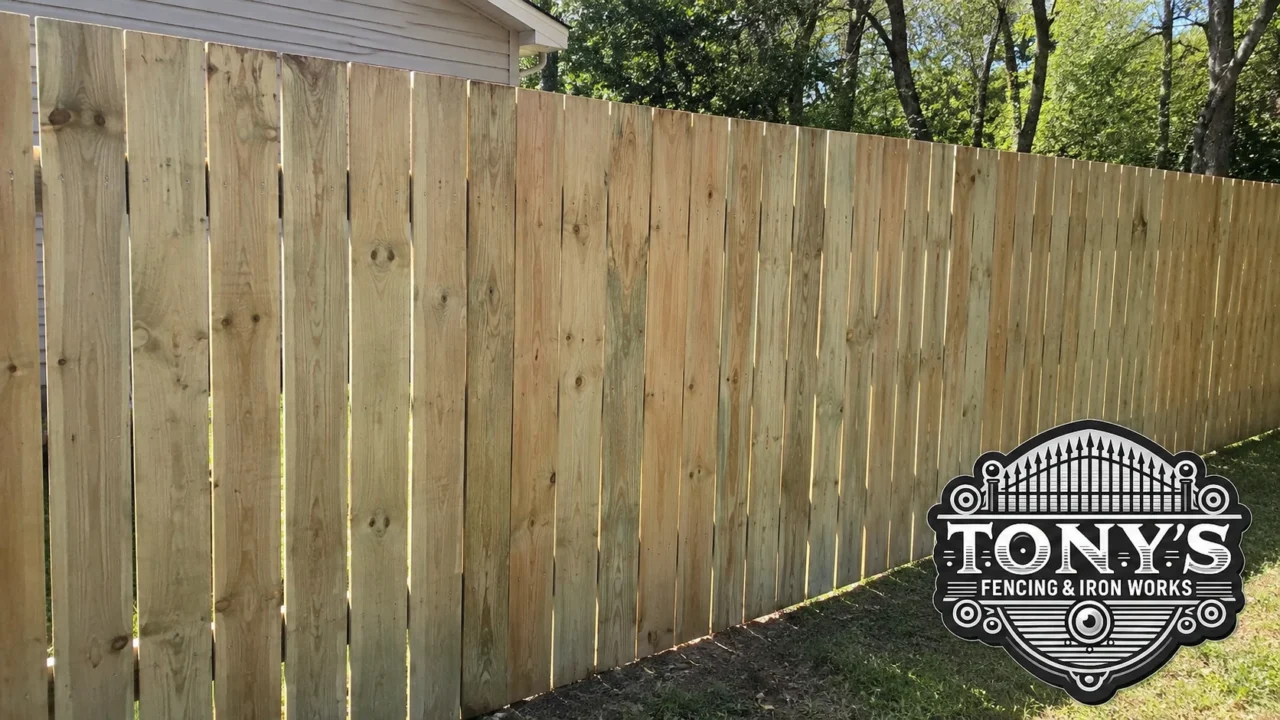
Why Are Gaps Appearing Between My Fence Boards?
Wood fence boards can become slightly narrower as they dry. As a result, a privacy fence that looked very tight on installation day may develop small spaces between boards later.
In many cases, small and fairly even spaces are normal. On the other hand, large uneven gaps, loose boards, leaning posts or sudden movement may point to a repair issue.
Your New Fence Changed. Is Something Wrong?
A new privacy fence may look almost completely closed when installation is finished. A few weeks or months later, though, homeowners may notice thin lines of daylight between some boards.
Naturally, that can raise questions. After all, the fence may not look exactly the way it did on day one.
Wood, however, behaves differently from vinyl, aluminum or steel. Because it is a natural material, it reacts to moisture and weather.
According to the USDA Forest Products Laboratory Wood Handbook, moisture plays an important role in how wood changes.
In simple terms, wood can absorb moisture and later dry out. Therefore, small changes in board width can happen over time.
Why Louisiana Makes Wood Fence Movement So Noticeable
Southeast Louisiana can put a wood fence through very different conditions in a short time.
For example, one week may bring heavy rain, damp soil and high humidity. Soon afterward, the same fence may sit under strong late-summer sun.
Because wood responds to moisture, those changing conditions can affect the boards.
Heavy Rain
Frequent rain can keep outdoor wood and nearby soil damp for longer periods.
Summer Heat
Meanwhile, strong sunlight and high temperatures can help wet boards dry faster.
Humidity
High humidity can slow drying and keep moisture levels higher around the fence.
Storm Season
In addition, wind, saturated ground and runoff can place extra stress on the fence structure.
Therefore, Louisiana homeowners should look at the whole fence instead of judging it by one small gap.
Does Pressure-Treated Pine Shrink After Installation?
Yes, pressure-treated pine can change size as its moisture level changes.
Pine remains one of the most practical choices for a Louisiana privacy fence. For one thing, it gives homeowners strong privacy and a traditional look at a lower upfront cost than many premium wood choices.
Treatment helps protect the lumber, but it does not make the wood moisture-proof. Therefore, the boards can still change as they adjust outdoors.
As the fence dries, some spacing may appear between the pickets. In many cases, that is a normal part of owning a real wood fence.
Why Not Leave Huge Gaps During Installation?
The installer has to consider how wet or dry the lumber is at the time of installation. For example, boards that already contain a lot of moisture may shrink later. If large spaces are left from the start, those openings could become much wider. That is why proper spacing requires judgment.
Does Cedar Shrink Too?
Cedar can change with moisture too because it is still natural wood.
Many homeowners choose cedar because it looks beautiful and has natural resistance to decay and insects. In addition, cedar is known for staying fairly stable compared with some other woods.
Even so, no natural wood fence stays exactly the same forever. Grain, moisture, sun exposure and the location of each board can all make a difference.
Therefore, homeowners comparing cedar and pine should consider more than first-day appearance. Budget, upkeep, privacy and long-term plans also matter.
Normal Wood Fence Gap or Actual Fence Problem?
One gap does not always tell the whole story. Instead, look for other signs around it.
✓ Usually Less Concerning
- Small, fairly even gaps
- Minor surface cracks
- Slight seasonal changes
- Boards that remain firmly attached
- Posts that stay straight and secure
- Gates that still open and close normally
⚠ Worth Investigating
- One gap becoming much larger
- Boards pulling away from rails
- Severe twisting or warping
- Fence sections beginning to lean
- Posts moving in the ground
- Gates that suddenly sag
- Soft or damaged wood near the bottom
Why Is One Fence Board Warping While the Others Look Fine?
Every piece of wood is a little different.
Even boards from the same bundle can have different grain patterns and moisture levels. Because of those differences, they may not dry in exactly the same way.
For example, one board may stay almost perfectly straight while another begins to cup or twist.
Small changes are common. However, a badly warped board can pull against fasteners, create a larger gap or make an otherwise straight fence look uneven.
Fortunately, one damaged board does not always mean the entire fence needs replacement.
6 Things Homeowners Can Check Before Calling for Repair
Before assuming your fence needs major work, take about ten minutes to look over the full fence line.
Walk Both Sides
First, look down the fence line from an angle. Leaning posts and warped boards may be easier to see this way.
Compare Several Gaps
Next, compare several boards instead of judging one opening by itself. A pattern can tell you more.
Check Attachments
Then, look for boards pulling away from rails or loose hardware. Be careful around sharp nails or screws.
Inspect the Posts
Also, check the posts. A shifting post can move several boards at once and affect a whole section.
Check After Heavy Rain
After a storm, look for standing water, washed-out soil or drainage problems around the fence line.
Take Comparison Photos
Finally, take photos from the same spot over time. A ruler in the photo can help you compare the gap later.
📸 Tony’s DIY Tracking Tip
If you are unsure whether a fence gap is actually getting larger, take a photo from the same place every few weeks. For better results, include a ruler or another fixed object in the picture. That way, you can compare the photos instead of relying on memory.
What NOT to Do About Normal Fence Gaps
✕ Do Not Caulk Between Fence Pickets
Outdoor wood needs room to react to moisture. Because of that, filling every opening can create more upkeep and may trap moisture.
✕ Do Not Force Boards Together
Instead, find out why the boards moved first. Forcing a warped or wet board into place may put extra stress on the wood and fasteners.
✕ Do Not Assume the Entire Fence Is Bad
In many cases, a few damaged pickets can be repaired while the posts and rails remain in good shape.
✕ Do Not Ignore a Moving Post
A loose post matters more than a small gap between boards because one weak post can affect an entire section.
Can Wood Fence Gaps Be Repaired?
Repairs are possible when a problem actually needs fixing.
However, the right repair depends on what caused the issue.
For example, a badly warped picket may only need replacement. Meanwhile, a loose rail may need extra support, while a damaged post may require more work.
On the other hand, replacing individual boards will not fix a whole section that shifted because a post moved or soil washed away.
Therefore, it is best to find the cause before choosing a repair.
Want Maximum Privacy? Choose the Right Fence Style Before Installation
If complete backyard privacy is your main goal, talk about that before construction begins.
Different wood fence styles handle normal board movement in different ways. Therefore, the right design can make a big difference.
Vertical Privacy
This classic Louisiana style uses side-by-side vertical boards to create a simple privacy barrier.
Board-on-Board
Because the boards overlap, this style can keep more visual privacy when boards change slightly.
Shadowbox
This option gives partial privacy while also allowing more airflow through the fence.
Horizontal
For a more modern look, horizontal boards can work well when the fence has the right support and spacing.
Pine vs. Cedar for Louisiana Privacy Fencing
Both woods can create a beautiful privacy fence. However, each one fits different needs and budgets.
Pressure-Treated Pine
- Lower upfront cost
- Traditional wood-fence look
- Strong privacy options
- Works with many stains and finishes
- Good choice for budget-minded projects
Cedar
- Natural color and grain
- Natural resistance to decay
- Natural insect resistance
- Premium curb appeal
- Strong choice for a long-term wood fence
Louisiana Weather Is Only Part of the Equation
Board shrinkage is one issue, but the fence structure matters too.
Across Ponchatoula, Hammond, Madisonville, Covington, Mandeville, Slidell, Abita Springs, Folsom and nearby Southeast Louisiana communities, outdoor conditions can affect the whole fence.
As a result, long-term fence performance depends on more than the pickets. Posts, rails, fasteners, gates, drainage and regular upkeep all matter.
What About the Fence Posts?
Fence boards get most of the attention because they are easy to see. However, the posts support the entire structure.
In Louisiana’s wet conditions, the right post material and proper installation are especially important. In addition, good drainage can help protect the fence line.
✓ Save This Louisiana Wood Fence Checklist
A quick fence check a few times each year can help catch small problems early. In addition, it only takes a few minutes.
Don’t Forget What Is Happening Around the Fence
Sometimes the lumber is not the main problem.
For example, sprinklers, standing water, mulch, plants and weed eaters can all affect the fence line.
Water that drains toward fence posts may keep the area too wet. Likewise, repeated weed-eater contact can slowly damage the lower part of a picket or post.
Therefore, caring for the area around the fence can be just as important as caring for the fence itself.
Shrinkage Is Not the Same Thing as Rot
A visible space between boards is different from damaged or rotting wood.
Rot may make wood soft, weak, crumbly or badly discolored. By comparison, normal shrinkage may simply create a small gap while the board stays solid.
Therefore, homeowners should look at the condition of the wood instead of judging the fence by spacing alone.
If moisture appears to be damaging the wood, Tony’s has another Louisiana-specific resource that explains what to watch for.
Frequently Asked Questions About Wood Fence Gaps
Is it normal for a new wood fence to develop gaps?
In many cases, yes. Small gaps can appear as wood loses moisture and changes size. However, the amount can vary based on the wood, weather and fence design.
Why did my privacy fence have no gaps when it was installed?
The boards may have held more moisture on installation day. As they dried, they may have become slightly narrower and created visible spaces.
Will the gaps close when it rains?
Sometimes wood can swell after taking on moisture. Even so, homeowners should not expect every gap to disappear completely after rain.
Does pressure-treated pine shrink?
Pressure-treated pine can still change size as it gains and loses moisture. Treatment helps protect the lumber, but it does not stop normal wood movement.
Does cedar shrink?
Cedar can also change with moisture because it is a natural wood. However, many homeowners choose cedar because it tends to stay fairly stable.
Should wood fence boards touch when installed?
There is no single spacing rule for every fence. Instead, the installer should consider the moisture level, lumber type, fence style and privacy goal.
How much gap between fence boards is too much?
One measurement does not tell the whole story. For example, a small even gap may be normal, while one unusually wide opening with a warped or loose board deserves a closer look.
Can Tony’s replace individual fence boards?
Often, a damaged picket can be replaced if the posts and rails are still in good shape. Therefore, a small repair may be enough in some situations.
Why is my fence leaning as well as developing gaps?
A leaning fence may point to post movement, wet soil, erosion, drainage trouble or other structural issues. In that case, normal board shrinkage may not be the main cause.
Is board-on-board fencing better for privacy?
It can be a good choice because the boards overlap. As a result, small changes in board width are less likely to create a straight sightline through the fence.
Do small gaps mean my fence was installed incorrectly?
Not necessarily. Since natural wood changes with moisture, small gaps can happen even when a fence was installed properly. Look at the full fence before assuming there is a problem.
Who repairs wood fences in Ponchatoula, Hammond and Covington?
Tony’s Fencing & Iron Works provides wood fence installation and repair throughout Ponchatoula, Hammond, Covington, Mandeville, Madisonville and nearby Northshore communities. For help, call (985) 703-0595.
More Louisiana Fence Help
Planning a new fence or trying to make your current fence last longer? These Tony’s resources can help.
Wood Fence Installation & Repair Across Southeast Louisiana
Louisiana yards are not all the same. For example, soil, drainage, trees, sun exposure, lot layout and neighborhood rules can vary from one property to another.
Tony’s Fencing & Iron Works serves the Northshore and surrounding Southeast Louisiana communities, including Ponchatoula, Hammond, Covington, Mandeville, Madisonville, Slidell, Folsom, Franklinton and Abita Springs.
In addition to pine and cedar fencing, Tony’s installs and repairs ornamental iron, chain link, vinyl, farm fencing, pool aluminum fencing, custom gates and automatic gates.
Whether you are trying to understand a small change in an existing privacy fence or planning a new enclosure, choosing the right materials and design for Louisiana conditions can help improve long-term results.
Not Sure If Your Fence Gap Is Normal?
A few small spaces may simply be part of owning a natural wood fence. However, large gaps, badly warped boards, moving posts, leaning sections or sagging gates may need a closer look.
Tony’s Fencing & Iron Works can help you compare repair and replacement options and choose the right wood fence for your property.
Serving Ponchatoula, Hammond, Covington, Mandeville, Madisonville, Slidell and surrounding Southeast Louisiana communities.