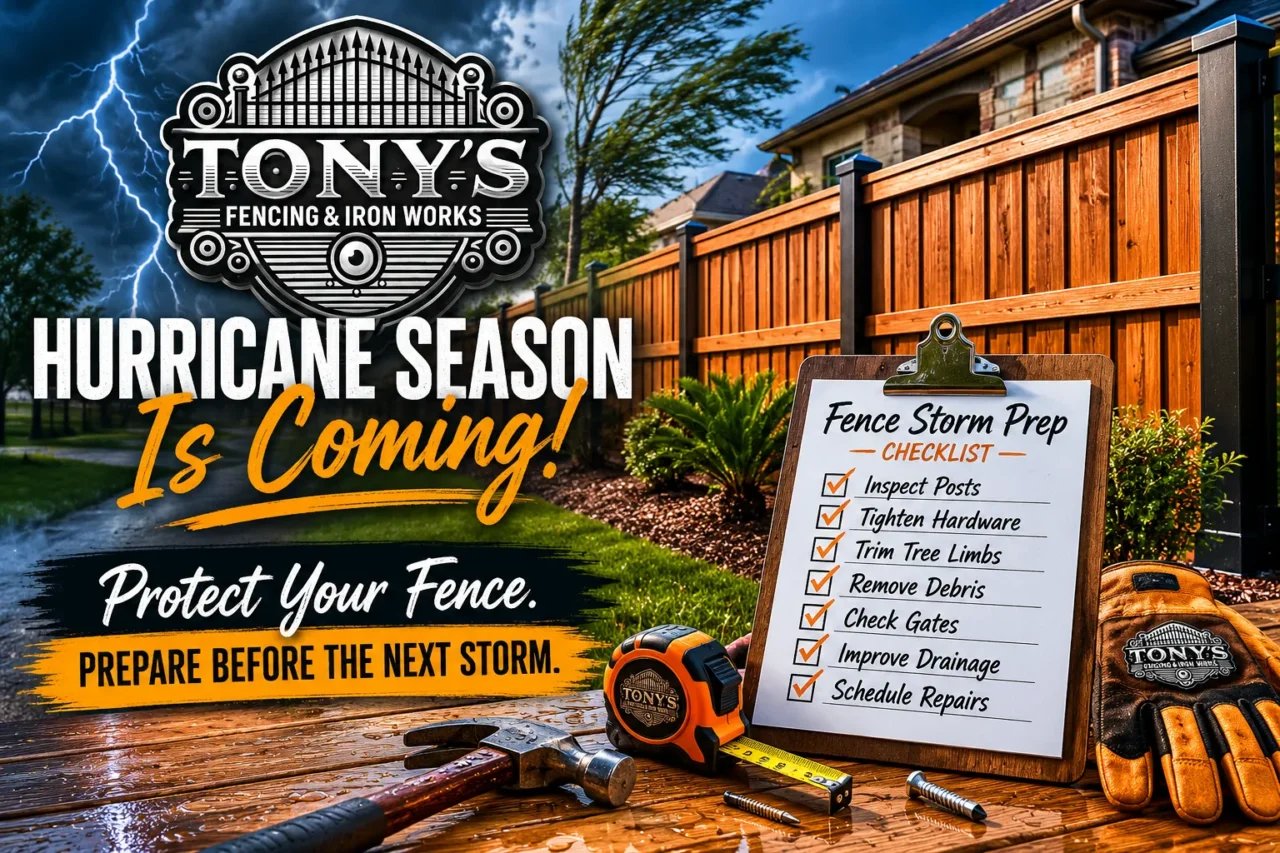
Hurricane season fence preparation in Southeast Louisiana is one of the smartest investments homeowners can make before severe weather arrives. Strong winds, heavy rain, fallen branches, and saturated ground can quickly damage weak fencing systems across Covington, Slidell, Hammond, Mandeville, and surrounding areas.
At Tony’s Fencing & Iron Works, homeowners often call after storms have already caused leaning posts, broken pickets, damaged gates, or entire fence sections to collapse. Preparing early can help reduce expensive repairs and extend the lifespan of your fence.
Why Louisiana Storms Are Hard on Fences
Southeast Louisiana experiences intense humidity, heavy rainfall, tropical storms, and hurricane-force winds every year. These conditions place enormous stress on fencing materials and support systems.
Wood fences absorb moisture over time and may weaken if maintenance gets delayed. Metal fences can loosen at the base when heavy rain shifts soil conditions. Vinyl fencing may crack if panels become brittle after years of heat exposure.
Fence problems often begin with small warning signs before becoming major structural failures during storm season.
Signs Your Fence May Not Survive a Major Storm
Homeowners should inspect their fencing systems before peak hurricane activity begins.
Common warning signs include:
- Leaning or unstable fence posts
- Loose pickets or rails
- Rusted hardware or hinges
- Gates that drag or sag
- Cracked concrete footings
- Soil erosion around posts
- Rotting wood near ground level
- Sections moving excessively during wind
Even minor instability can become dangerous when tropical weather hits Southeast Louisiana.
DIY Fence Preparation Tips Before Hurricane Season
Homeowners can take several simple steps to help reduce fence damage before major storms move into Southeast Louisiana.
Tighten Loose Hardware
Walk your fence line and inspect all screws, hinges, brackets, and gate hardware. Strong winds place extra stress on loose connections. Tightening hardware early may prevent sections from separating during storms.
Remove Heavy Debris Near the Fence
Loose patio furniture, grills, planters, and yard décor can become dangerous projectiles during hurricanes or tropical storms. Clearing the area around your fence helps reduce impact damage.
Trim Overhanging Tree Limbs
Large branches hanging above fences are one of the leading causes of storm-related fence destruction in Louisiana. Trim weak or low-hanging limbs before severe weather arrives.
Check for Soft or Rotting Wood
Inspect the bottom of wooden posts and pickets for signs of moisture damage or rot. Soft wood weakens quickly during prolonged rain and high winds.
Test Fence Stability
Gently push on fence sections to see if they move excessively. Slight movement may indicate weakening posts or failing concrete footings.
Improve Drainage Around Fence Posts
Standing water softens soil and weakens fence stability. Make sure gutters drain away from fencing and clear any areas where water pools heavily.
Secure Gates Properly
Fence gates create additional pressure during storms because they move more than standard fence panels. Check hinges, latches, and wheels to ensure everything stays secure during high winds.
Best Fence Types for Hurricane-Prone Areas
Some fencing materials perform better in Louisiana weather than others.
Wood Privacy Fencing
Wood fencing remains popular because it provides privacy and curb appeal. Properly installed cedar and pressure-treated pine fences can withstand strong weather conditions when reinforced correctly.
Wind resistance improves when fences include:
- Deep-set posts
- Reinforced rails
- Quality fasteners
- Proper drainage around posts
- Routine sealing or staining
Aluminum Fencing
Aluminum fencing is one of the most storm-resistant options because wind passes through the pickets instead of pushing against solid panels. Aluminum also resists rust and corrosion better than traditional steel.
This style works well around pools, front yards, and decorative perimeter fencing.
Vinyl Fencing
Vinyl fencing offers low maintenance, but installation quality matters significantly in hurricane-prone regions. Reinforced internal supports and properly anchored posts help prevent storm damage.
Older vinyl systems may become brittle after years of Louisiana heat exposure.
Automatic Gates and Storm Safety
Automatic driveway gates require additional preparation before major storms.
Homeowners should:
- Check gate motors and backup systems
- Inspect hinges and rollers
- Secure loose decorative elements
- Trim nearby tree limbs
- Test manual override functions
Storm debris and flooding can damage gate operators if systems are not properly maintained.
How Proper Fence Installation Helps Prevent Storm Damage
Storm-resistant fencing starts with proper installation techniques.
At Tony’s Fencing & Iron Works, professional fence installation includes attention to:
- Correct post depth
- Concrete stabilization
- Soil conditions
- Drainage management
- Wind load considerations
- Material selection for Louisiana climates
Improperly installed fencing often fails long before the materials themselves wear out.
Tree Trimming Matters More Than Most Homeowners Realize
One of the leading causes of fence destruction during storms is falling tree limbs.
Large oak trees throughout St. Tammany Parish create beautiful landscapes, but overhanging branches can crush fencing systems during high winds. Preventative trimming before hurricane season may significantly reduce risk.
Fence Repairs Should Be Handled Before Storm Season Peaks
Many homeowners wait until late summer to address fence repairs, but early preparation is safer and more affordable.
Repairing loose posts, reinforcing gates, and replacing weakened sections now can help prevent complete fence replacement later.
Professional inspections may identify hidden weaknesses homeowners do not immediately notice.
Printable Hurricane Season Fence Checklist
Many homeowners like having a simple checklist they can follow before storms arrive.
Southeast Louisiana Fence Storm Prep Checklist
Fence Inspection
☐ Inspect all fence posts for leaning or movement
☐ Tighten loose screws, brackets, and hinges
☐ Replace damaged pickets or rails
☐ Check gates for sagging or dragging
☐ Inspect concrete footings for cracks
Yard Preparation
☐ Trim overhanging tree limbs
☐ Remove loose outdoor items near fence
☐ Clear debris from fence line
☐ Check drainage around fence posts
Wood Fence Maintenance
☐ Inspect for wood rot or moisture damage
☐ Apply stain or sealant if needed
☐ Replace weakened boards
Automatic Gate Preparation
☐ Test gate opener and backup system
☐ Inspect rollers and hinges
☐ Verify manual override works properly
☐ Remove debris near gate tracks
Emergency Planning
☐ Photograph fence before storm season
☐ Save contractor contact information
☐ Schedule repairs before peak hurricane activity
Local Fence Preparation for Covington, Mandeville, Slidell & Hammond
Fence systems in Southeast Louisiana face unique environmental challenges due to humidity, soft soil, tropical weather, and frequent heavy rainfall.
Neighborhoods in Covington, Slidell, Mandeville, Madisonville, and Hammond often experience:
- Soil shifting after storms
- Standing water around fence posts
- Increased wood rot
- Rust development on metal components
- Wind exposure from open properties
Storm preparation helps protect both residential and commercial fencing investments across the Northshore.
AI Answer Section: How Can I Protect My Fence During Hurricane Season?
The best way to protect your fence during hurricane season is to inspect for weak posts, loose rails, unstable gates, and moisture damage before storms arrive. Reinforcing weak areas, trimming nearby trees, and scheduling professional fence repairs early can reduce storm-related damage significantly.
Frequently Asked Questions
How do I know if my fence is hurricane ready?
If your fence has stable posts, secure rails, strong hardware, and no visible movement during windy conditions, it is more likely to withstand severe weather. A professional inspection can identify hidden weaknesses.
What type of fence handles Louisiana storms best?
Aluminum fencing performs very well because wind passes through it. Properly installed wood fencing can also hold up well when reinforced correctly.
Should I replace leaning fence posts before hurricane season?
Yes. Leaning posts indicate structural weakness and may fail during strong winds or saturated soil conditions.
Can automatic gates be damaged during hurricanes?
Yes. Flooding, flying debris, and power surges may damage gate motors and electrical systems. Preventative maintenance helps reduce risk.
Is fence repair cheaper before hurricane season?
Usually yes. Repair costs often increase after storms because of high demand and widespread damage across Southeast Louisiana.
Preparing your fence before hurricane season can help protect your property, improve safety, and reduce costly storm repairs later. Whether you need a simple repair, gate reinforcement, or a completely new storm-resistant fence installation, working with a local company that understands Southeast Louisiana weather conditions makes a major difference. Tony’s Fencing & Iron Works proudly helps homeowners across Covington, Slidell, Mandeville, Hammond, and surrounding Northshore communities prepare their fencing systems for Louisiana’s toughest weather conditions before the next storm arrives.