Louisiana Storm Season • Fence Repair & Homeowner Tips
Fence Storm Damage in Louisiana: What to Photograph Before & After a Storm
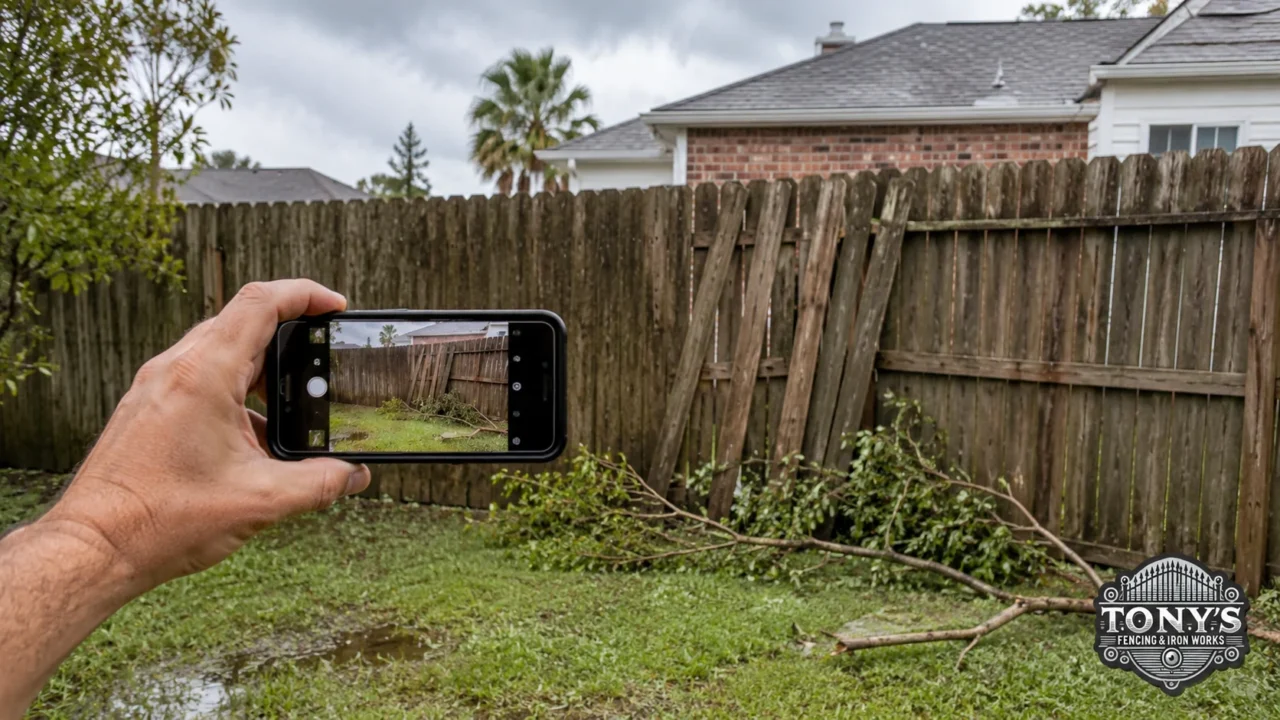
Fence storm damage in Louisiana can happen quickly when high winds, falling branches, heavy rain and saturated soil hit Southeast Louisiana. Fortunately, a few minutes with your phone before and after a storm can help you document changes, spot hidden problems and make smarter repair decisions.
Serving Ponchatoula • Hammond • Covington • Mandeville • Madisonville • Slidell • Folsom • Franklinton • New Orleans • Baton Rouge & surrounding Southeast Louisiana communities
Quick Answer
What Should You Photograph on Your Fence Before a Storm?
Before severe weather, photograph the entire fence line, individual posts, gates, hinges, latches, rails, existing damage and the ground around important posts. Then, after the storm, take similar photos from the same locations before moving damaged materials or beginning permanent repairs when it is safe to do so. As a result, you will have a simple visual record of what changed.
Why It Matters
Why Fence Documentation Matters in Southeast Louisiana
Louisiana homeowners are used to preparing roofs, windows, vehicles and generators when tropical weather approaches. However, the fence around the property often gets much less attention.
That lack of attention can create problems later. A fence may include hundreds of individual components, including posts, boards, rails, hinges, latches, concrete footings and gates.
In addition, each component can react differently to wind, standing water and saturated ground. Some storm damage is obvious, while other problems develop slowly.
For example, one panel may be on the ground immediately. Meanwhile, another section may look normal until wet soil begins settling around a loosened post several days later.
Therefore, clear before-and-after photographs give homeowners something useful to compare. They can also make it easier to explain the problem when requesting a professional fence inspection or repair estimate.
📱 Louisiana Officials Recommend Documenting Property
The Louisiana Department of Insurance recommends taking photographs or video of property and belongings as part of storm preparation. Additionally, after property damage occurs, it recommends documenting damage before cleanup and temporary repairs when possible.
Insurance coverage varies by policy. Therefore, Tony’s Fencing & Iron Works cannot determine whether a particular fence repair or replacement is covered. Contact your insurer or agent with coverage questions.
Before the Weather Arrives
7 Fence Photos to Take Before a Major Storm
You do not need professional photography equipment. Instead, your phone is usually enough. The goal is simply to create clear reference pictures.
The Entire Fence Line
First, stand back and photograph each long section. Wide photos make it easier to compare overall alignment before and after the storm.
Fence Posts
Next, get closer pictures of important posts, especially corner posts, gate posts or posts near low and wet areas.
Existing Damage
Also document boards that were already cracked, warped, discolored or loose. This step helps separate older conditions from something that appeared later.
Gates & Openings
Be sure to capture gate alignment, hinges, latches, wheels and the gap around each gate. These areas can shift when posts move.
Ground Around Posts
In addition, document erosion, standing water, cracks around concrete and low areas that already hold water.
Nearby Trees
If large limbs, leaning trees or branches hang directly over the fence, include them in a few wider photos.
The Street Side Too
Finally, when it is safe and accessible, photograph both sides of the fence. Damage can look very different from the opposite side.
📸 Tony’s DIY Tip: Use the Same Photo Spots
Pick several easy-to-remember locations around your yard and take your pictures from those same places each time.
For example, take one picture from the patio, another from the driveway, one from each back corner and a close-up of every gate. By using matching angles, before-and-after comparisons become much easier.
Not Every Change Is Storm Damage
Did Gaps Appear Between Your Wood Fence Boards?
Louisiana heat and changing moisture levels can cause real wood boards to expand and shrink. Therefore, small and even gaps may be normal wood movement rather than storm damage.
What Should You Check After the Storm?
Safety comes first. For that reason, never inspect a fence while dangerous weather is still occurring. Also, stay away from fallen or damaged electrical lines, unstable trees, floodwater and other hazards.
Once conditions are safe, walk the fence slowly instead of looking only for missing panels. In particular, watch for subtle changes in posts, rails, gates and ground conditions.
✅ Post-Storm Fence Inspection Checklist
Posts
☐ Newly leaning posts
☐ Posts that move
☐ Erosion around the base
☐ Cracked or exposed footing
Wood Sections
☐ Broken boards
☐ Rails pulling loose
☐ Splintered wood
☐ Sections bowing or leaning
Gates
☐ Gate suddenly dragging
☐ Latch no longer lining up
☐ Bent or loose hinges
☐ Gate opening differently
Ground Conditions
☐ Washed-out soil
☐ New standing water
☐ Soft soil around posts
☐ Debris against the fence
A Fence Can Be Damaged Without Falling Down
One important point for Louisiana homeowners is that visible collapse is not the only sign of storm damage.
In fact, a fence does not have to be flat on the ground to have a problem. Wind can place pressure on a long section and loosen a post without completely pulling it out.
Likewise, heavy rainfall can saturate the soil around a footing. As a result, the fence may still look upright immediately after the storm even though the support has shifted.
Several days later, however, a gate might begin dragging or a section may start leaning. Meanwhile, additional rain may wash more soil away from a weakened post.
Therefore, consider checking the fence once when conditions become safe and then again several days later.
Why Fence Posts Matter So Much in Louisiana
Wet soil and ground contact put tremendous stress on wood fence posts. Because of those conditions, proper materials and installation matter. Learn how modern ground-contact wood posts are designed for Louisiana conditions and why the foundation of the fence deserves attention.
Does Storm Damage Mean the Whole Fence Needs Replacement?
No. Fortunately, many fences can be repaired without replacing the entire fence.
The right choice depends on the condition of the posts, rails, boards, gates and surrounding sections. In addition, the age and overall condition of the fence matter.
For example, replacing a few damaged pickets may make sense when the posts and rails remain strong. On the other hand, a large section with multiple shifted posts may require more extensive work.
🔨 Repair May Make Sense When…
• Damage is limited to one area
• Most posts remain stable
• Only several boards or rails broke
• A gate needs realignment or hardware
• The surrounding fence remains structurally sound
🏗️ More Extensive Work May Be Needed When…
• Several posts shifted or failed
• Large sections are leaning
• The fence had significant rot before the storm
• Rails separated across multiple sections
• Repairing isolated pieces would not restore stability
Different Fence Materials Show Storm Damage Differently
Because fence materials behave differently, the warning signs can vary. Therefore, inspect the fence based on the material you have instead of expecting every type to show the same damage.
🌲 Wood
With wood fencing, look for cracked rails, missing pickets, pulled fasteners, leaning posts and fresh splits around connection points.
⛓️ Chain Link
For chain link, check tension, bent posts, damaged top rails, loosened fabric and impact damage from trees or debris.
✨ Ornamental Metal
On ornamental metal fencing, watch for bent sections, shifted posts, damaged welds, loose connections and gate alignment problems.
🏡 Vinyl
With vinyl, inspect panels for cracks, loose components, shifted posts and sections that have pulled away from their supports.
Do Not Forget the Gate
Gates deserve extra attention after high winds and heavy rain because their weight is concentrated on a smaller number of support points.
Therefore, compare your before-storm pictures with the gate afterward. Look at the gap above the ground, latch position and distance between the gate and post.
Even a small alignment change can reveal movement at a gate post. In some cases, that subtle change may be the first sign of a larger support problem.
Easy DIY Fence Documentation Method
Homeowners do not need to photograph every nail. Instead, use a simple three-level system that provides both context and detail.
1
Wide Photo
First, show the whole fence section and surrounding yard.
2
Medium Photo
Next, show the damaged panel, post or gate in relation to nearby components.
3
Close-Up
Finally, capture the split, loose fastener, crack, bent hinge or other specific problem.
Together, these three views give you useful context without filling your camera roll with hundreds of nearly identical pictures.
⚠️ What Not to Do After Fence Storm Damage
Some storm cleanup situations require professional help. Above all, do not put yourself at risk simply to inspect or photograph a fence.
Stay away from a fence tangled with electrical lines.
Avoid standing beneath unstable trees or hanging limbs while inspecting damage.
Never enter unsafe floodwater simply to photograph a fence.
Likewise, avoid forcing a severely bent or tensioned section back into place if it could move unexpectedly.
In short, take photographs only when the area is safe to access.
🔧 Replacing Part of the Fence After a Storm?
A storm-damaged section sometimes becomes an opportunity to rethink gate placement, drainage, post locations or the overall fence layout.
Before rebuilding, consider property lines, underground utilities, drainage paths and access. By planning first, you may prevent the new section from creating another problem later.
Planning a Repair That Requires Digging?
Storm repair can involve replacing damaged posts or moving sections of a fence. Therefore, underground utilities still matter before digging begins.
Louisiana homeowners can use Louisiana 811 before excavation. However, privately installed lines such as irrigation, pool equipment, private electrical runs or other systems may require separate identification.
Built for Louisiana Conditions
Fence Storm Damage Looks Different Across Southeast Louisiana
In Covington, a fence may be affected by trees, wet soil and neighborhood drainage. Meanwhile, properties near Slidell can experience different wind and water exposure.
Larger properties around Hammond, Ponchatoula and Folsom may have longer fence runs, open fields or farm fencing exposed to stronger wind. In addition, Mandeville and Madisonville homeowners often deal with mature trees, saturated yards, gates and drainage conditions that can influence fence movement.
Because every property is different, Tony’s Fencing & Iron Works looks at the fence material, soil conditions, gates and damaged sections together instead of treating every repair the same way.
💨
Want a Fence Better Prepared for Louisiana Weather?
Storm performance starts before the storm. In fact, post installation, fence design, material choice and overall condition all play a role in how a fence handles wind and wet ground.
Quick Answers
Frequently Asked Questions About Fence Storm Damage in Louisiana
Should I photograph my fence before hurricane season?
Yes. Before-storm photographs can help you track the fence’s condition and compare alignment, posts, gates and existing damage after severe weather.
When should I photograph storm damage?
Once conditions are safe, photograph visible damage before cleanup or permanent repair when practical. In addition, Louisiana insurance officials recommend visually documenting property damage before cleanup.
Can a fence have storm damage even if it is still standing?
Yes. For example, posts can loosen, rails can separate, soil can erode and gates can shift without the entire fence falling over.
Why is my gate dragging after heavy rain?
Wet soil, post movement, swelling wood or erosion can change gate alignment. Therefore, a dragging gate can be a clue that the surrounding structure moved.
Should I repair a damaged fence immediately?
Safety hazards should be addressed promptly. However, the correct repair depends on the type and extent of damage. When it is safe, photograph the condition first and contact a qualified professional for structural problems.
Does homeowners insurance cover fence storm damage?
Coverage varies by insurer, policy, cause of damage and deductible. Therefore, contact your insurance company or agent for an answer based on your specific policy.
Can Tony’s repair only part of a wood fence?
Depending on its condition, a damaged fence may be repairable without replacing every section. In that case, Tony’s can evaluate the damaged area and surrounding fence to determine practical options.
Should I inspect the fence again a few days after a storm?
Yes. Because saturated ground can continue settling after the weather passes, a second inspection may reveal leaning posts, erosion or gate alignment changes that were not obvious immediately after the storm.
Where can I find answers to other Louisiana fence questions?
Tony’s Fencing & Iron Works also maintains a frequently asked questions page covering fence materials, maintenance, repairs, gates, estimates and more.
Keep Exploring Tony’s
More Louisiana Fence Resources
Whether you are planning, repairing or maintaining a fence, these Tony’s resources can help you keep learning.
🔨
Storm Leave Your Fence Leaning, Broken or Out of Alignment?
Tony’s Fencing & Iron Works installs and repairs fencing across Southeast Louisiana. Whether you have several damaged boards, a leaning section, a gate that stopped working correctly or need a completely new fence, we can help you figure out the next step.
This information is provided for general educational purposes. Because storm conditions and property damage vary, always avoid damaged electrical lines, floodwater, unstable trees and other hazards. For insurance coverage or claim questions, contact your insurance company, agent or the Louisiana Department of Insurance.