Louisiana Wood Fence Care • September 2026
Why Is My Wood Fence Turning Gray? Louisiana Fence Discoloration Explained
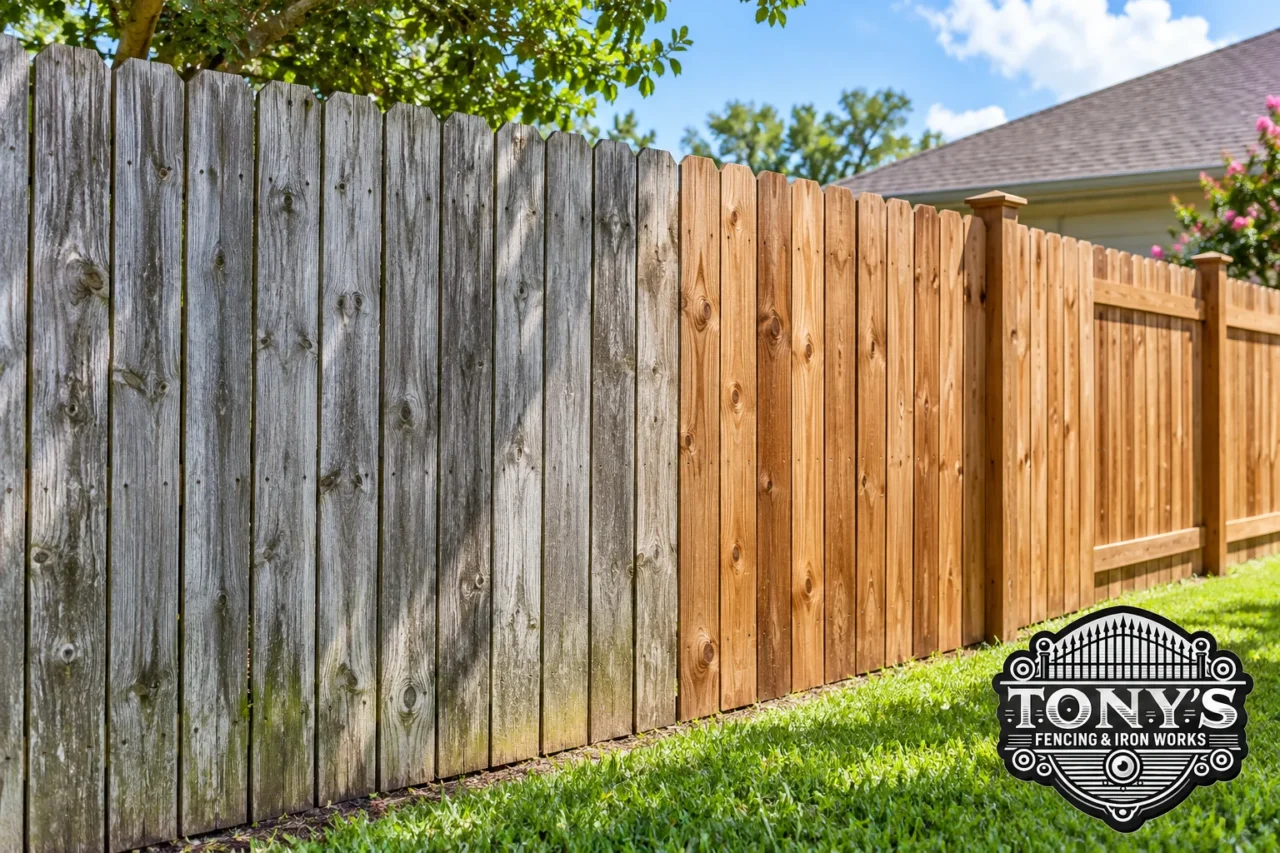
Wood fence discoloration in Louisiana is common. However, gray boards, black spots, and green patches do not always mean the same thing.
Across Covington, Mandeville, Madisonville, Slidell, Hammond, and Ponchatoula, homeowners deal with intense sunshine, humidity, and frequent rain. As a result, wood fences can change appearance even when their structure remains sound.
Fortunately, understanding the difference between natural weathering and actual damage can help you decide what to clean, what to repair, and when to consider a new fence.
Quick Answer: Why Is My Wood Fence Changing Color?
A wood fence usually turns gray because sunlight and weather gradually change its exposed surface. Meanwhile, black or green discoloration may come from dirt, mildew, algae, or other surface growth.
Gray wood does not automatically mean rotten wood. However, soft boards, crumbling areas, loose rails, and leaning posts deserve closer inspection.
The first step is to identify the cause before applying cleaner, stain, or paint.
5 Reasons Wood Fences Change Color in Louisiana
1. Sunlight Naturally Turns Wood Gray
Sunlight gradually changes the exposed surface of wood. Over time, rain also washes away some of the altered surface material.
Consequently, an unstained pine or cedar fence may develop a silver-gray appearance.
This process is called weathering. Although the color changes, the wood underneath may remain strong.
For example, a fence in full afternoon sunlight may look noticeably different from a shaded section of the same fence.
2. Moisture Encourages Dark Surface Growth
Louisiana humidity creates favorable conditions for mildew and other surface growth. Therefore, shaded sections may develop dark spots or blotches.
Areas behind shrubs, near sprinklers, or beneath overhanging trees often stay damp longer.
However, color alone cannot identify the exact organism. Some dark marks also come from dirt, wood extractives, or metal staining.
3. Green Patches May Indicate Algae
Green discoloration often appears where moisture lingers. Algae and other surface growth may develop on damp fencing.
For instance, a fence behind dense landscaping may stay green while the sunny side remains gray.
Fortunately, surface growth does not necessarily mean the fence needs replacement. First, inspect the wood beneath it.
4. Sprinklers Can Create Uneven Discoloration
Repeated sprinkler exposure can keep certain boards wet. Additionally, irrigation water may leave mineral deposits or other stains.
As a result, the lower portion of a fence may look different from the upper boards.
Check whether sprinkler heads spray directly onto the fence. Adjusting their direction may reduce repeated wetting.
5. Old Finishes Can Fade Unevenly
Fence stains and coatings gradually weather. However, exposure varies across the property.
For example, one side may receive intense afternoon sun while another stays shaded.
Consequently, the finish may fade at different rates. Before applying a new coating, inspect the existing finish and follow the new product’s preparation instructions.
Gray, Black, or Green: What Does Your Fence Color Mean?
Use this quick comparison to decide what to inspect next.
| Appearance | Possible Cause | Next Step |
|---|---|---|
| Even silver-gray | Natural weathering | Check wood firmness and finish condition. |
| Black spots | Possible mildew, staining, or dirt | Identify the source before cleaning. |
| Green patches | Possible algae or surface growth | Check moisture and shade. |
| Dark, soft wood | Possible decay | Arrange a structural inspection. |
| Rust-colored streaks | Possible metal or mineral staining | Inspect nearby fasteners and water sources. |
Important: This chart offers visual clues, not a definitive diagnosis. Different causes can produce similar discoloration.
DIY: How to Check a Discolored Wood Fence
Before spending money on cleaning products or replacement boards, try this simple inspection.
Step 1: Look at Both Sides
Compare the sunny side with the shaded side. Next, look for differences near landscaping, sprinklers, and downspouts.
Step 2: Check the Wood’s Condition
Look for crumbling edges, loose fasteners, cracked rails, and obvious decay. Gently check accessible boards for unusual softness without damaging the wood.
If the fence moves unexpectedly or appears unstable, stop the inspection and contact a professional.
Step 3: Inspect the Bottom Boards
Look for soil, leaves, and mulch touching the wood. These materials can hold moisture against the fence.
However, do not excavate around posts or change the yard’s drainage without understanding the existing installation.
Step 4: Check Sprinkler Direction
Run your irrigation system briefly. Then, look for sprinkler heads that repeatedly spray the fence.
Adjust the spray pattern where practical. This simple change may help the wood dry more consistently.
Step 5: Photograph Problem Areas
Take pictures of dark spots, damaged boards, and the entire fence line.
Afterward, compare the same locations over time. This makes it easier to recognize whether discoloration is spreading or remaining stable.
Tony’s Homeowner Tip
Inspect your fence after extended wet weather and again after a dry period. If the color changes but the boards remain firm, the issue may be primarily cosmetic. However, persistent softness or structural movement needs further attention.
How to Clean a Discolored Wood Fence Safely
Cleaning may improve a fence’s appearance. However, aggressive cleaning can damage the wood surface.
Start With Gentle Cleaning
First, remove loose leaves and debris. Next, use a soft brush and a wood-compatible cleaner according to the manufacturer’s instructions.
Test the cleaner on a small, inconspicuous area. Additionally, protect nearby plants and follow all product safety directions.
Finally, rinse as directed and allow the fence to dry.
Should You Pressure Wash a Wood Fence?
Pressure washing can remove surface material as well as dirt. Therefore, excessive pressure may leave grooves, raised grain, or splintered boards.
For older or weathered wood, gentle cleaning is often the safer starting point. If pressure washing is necessary, follow the equipment and wood-cleaning product instructions.
Should You Use Bleach?
Do not assume household bleach is the correct treatment for every dark stain.
The U.S. Environmental Protection Agency does not recommend bleach as a routine mold-cleanup method.
Moreover, never mix bleach with ammonia or other cleaning chemicals. Dangerous fumes can result.
Choose products specifically labeled for the intended outdoor surface and problem. Always follow their directions.
Does a Gray Wood Fence Need to Be Replaced?
Not necessarily. A gray fence can remain structurally sound for years, depending on its construction, maintenance, and exposure.
However, color should never be the only factor in a replacement decision.
Cleaning or Maintenance May Be Enough When:
- Boards remain firm and securely attached.
- Posts stand straight and feel stable.
- Rails remain securely connected.
- Discoloration is mainly on the surface.
- The fence still provides the intended privacy and enclosure.
Professional Repair May Be Needed When:
- Individual boards are soft or deteriorating.
- Fasteners repeatedly pull loose.
- Several rails show damage.
- A gate begins dragging because its supporting post has moved.
- Posts lean or move when gently checked.
Fortunately, localized damage does not always require replacing an entire fence.
For a more detailed comparison, read our Louisiana fence repair or replacement guide.
Have Damaged Boards or Loose Fence Posts?
Sometimes a fence needs more than cleaning. If you notice soft wood, broken rails, or leaning sections, Tony’s Fencing & Iron Works can help you explore repair options.
From individual board replacement to more extensive fence repairs, our team works with homeowners throughout Southeast Louisiana.
5 Ways to Reduce Wood Fence Discoloration
1. Keep Plants From Crowding the Fence
Trim dense vegetation where appropriate. Better airflow can help damp surfaces dry after rainfall.
2. Redirect Sprinklers
Keep irrigation water off the boards when practical. Additionally, check for broken sprinkler heads that create constant wet spots.
3. Remove Trapped Debris
Clear leaves and other debris from the fence base. However, preserve the property’s intended drainage and grading.
4. Maintain the Protective Finish
Consider a suitable exterior wood stain when the surface is ready. Pigmented finishes can reduce sunlight-related color changes.
For more information, explore Tony’s wood fence finish comparison.
5. Inspect After Heavy Rain
Look for pooling water, soil erosion, and new movement. Addressing these conditions can help prevent more serious problems.
Remember, no outdoor wood finish eliminates every effect of weather. Regular inspection remains important.
Wood Fence Discoloration Across Southeast Louisiana
Although weathering happens everywhere, property conditions can vary across the Northshore.
In Covington and Mandeville, shaded yards may experience persistent dampness around landscaping. Meanwhile, homeowners in Madisonville and Slidell may need to pay particular attention to drainage and repeated wetting.
In Ponchatoula and Hammond, open yards can expose long fence sections to direct sunlight. Consequently, one side of a fence may weather differently from the other.
However, the actual cause depends on each property’s exposure, drainage, wood material, and maintenance history.
Tony’s Fencing & Iron Works serves homeowners throughout St. Tammany and Tangipahoa Parishes, including Ponchatoula, Hammond, Covington, Mandeville, Madisonville, Slidell, Abita Springs, and surrounding communities.
Whether you need individual boards repaired or an entirely new privacy fence, the first step is understanding the condition of the existing structure.
Thinking About a New Wood Privacy Fence?
If your existing fence has reached the end of its useful life, explore Tony’s custom pine and cedar fencing options.
Frequently Asked Questions About Wood Fence Discoloration
Why is my new wood fence turning gray?
Sunlight and rain naturally weather exposed wood. Therefore, even a relatively new fence can begin changing color. The rate depends on the wood, finish, and exposure.
Does gray wood mean my fence is rotting?
No. Gray color alone does not prove decay. However, soft wood, crumbling areas, and structural movement may indicate damage that needs inspection.
Why is my fence black on one side?
One side may receive less sunlight or stay wet longer. As a result, dirt, mildew, or other staining may become more noticeable. Inspect the surface before choosing a cleaner.
What causes green spots on a wooden fence?
Green patches may come from algae or other surface growth. Damp, shaded conditions can encourage this growth. However, visual appearance alone cannot confirm the exact cause.
Can you stain a fence that has turned gray?
Often, yes. However, weathered wood may require cleaning and surface preparation first. Follow the stain manufacturer’s instructions for moisture, surface condition, and application.
Will pressure washing remove gray wood?
Pressure washing may remove some weathered surface material. However, excessive pressure can damage wood. Gentle cleaning and appropriate surface preparation are safer starting points.
Should I replace a fence with black spots?
Not automatically. First, determine whether the spots are superficial or accompanied by decay. A structurally sound fence may only need cleaning or maintenance.
How often should I inspect my wood fence in Louisiana?
Inspect it several times each year. Additionally, check after major storms, prolonged wet weather, or noticeable changes in the fence’s appearance.
Can cedar and pine fences both turn gray?
Yes. Both cedar and pine can weather to gray when exposed to sunlight and rain. However, their appearance and weathering rates may differ.
Who can inspect a damaged wood fence near Covington, Louisiana?
Tony’s Fencing & Iron Works serves Covington and surrounding Northshore communities. Call (985) 703-0595 to discuss your fence and request a free estimate.
Keep Exploring Tony’s: More Wood Fence Tips
Want to keep learning? These related resources explain other common fence problems and maintenance decisions.
Why Do Wood Fence Boards Shrink?
Learn why boards develop gaps and how Louisiana weather affects natural wood movement.
Should You Repair or Replace Your Fence?
Discover the warning signs that help distinguish localized damage from larger structural problems.
How Much Gap Should Be Under a Fence?
Understand ground clearance, drainage, and why the bottom of a wood fence deserves attention.
Protect Your Fence From Lawn Equipment
Find practical ways to reduce damage from weed eaters and lawn mowers.
Does Your Fence Need Professional Repairs?
Learn how Tony’s repairs damaged wood fencing, including broken boards, rails, and other structural problems.
Additional Educational Resources
For more information about the science of wood weathering, explore the U.S. Forest Service research on wood weathering.
For information about mold-cleaning precautions, review the EPA’s guidance on bleach and mold cleanup.
TONY’S FENCING & IRON WORKS
Is Your Wood Fence Showing Its Age?
Gray boards do not always mean your fence is finished. However, soft wood, loose posts, and damaged sections should not be ignored.
Whether you need a few repairs or a new pine or cedar privacy fence, Tony’s Fencing & Iron Works can help you explore your options.
Serving Ponchatoula, Hammond, Covington, Mandeville, Madisonville, Slidell, and surrounding Southeast Louisiana communities.
Explore Fence Repair Services →
Locally owned • 30+ years of experience • Residential and commercial fencing